The Painting That Scrolls Back - A Gina Beavers Interview
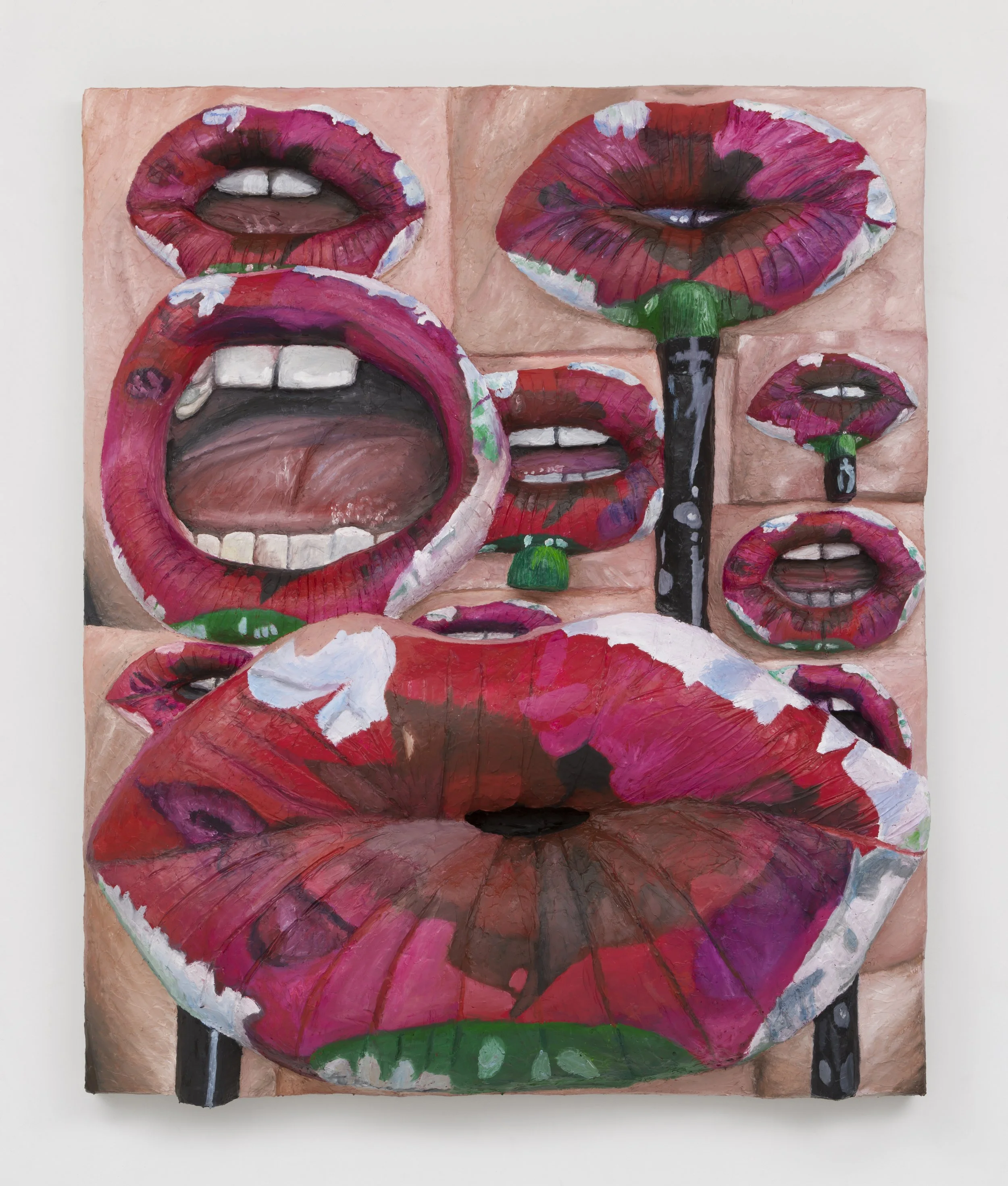
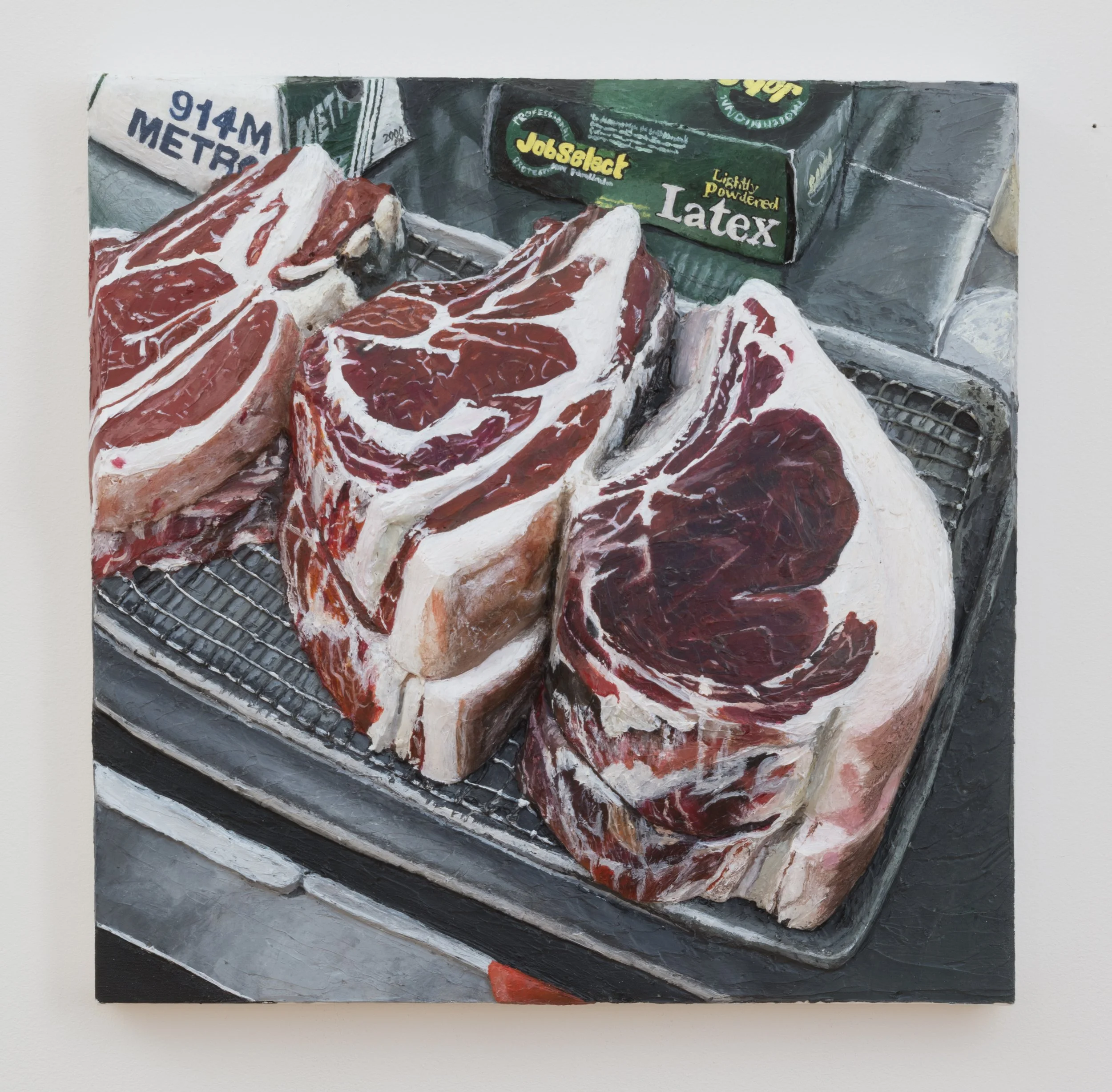
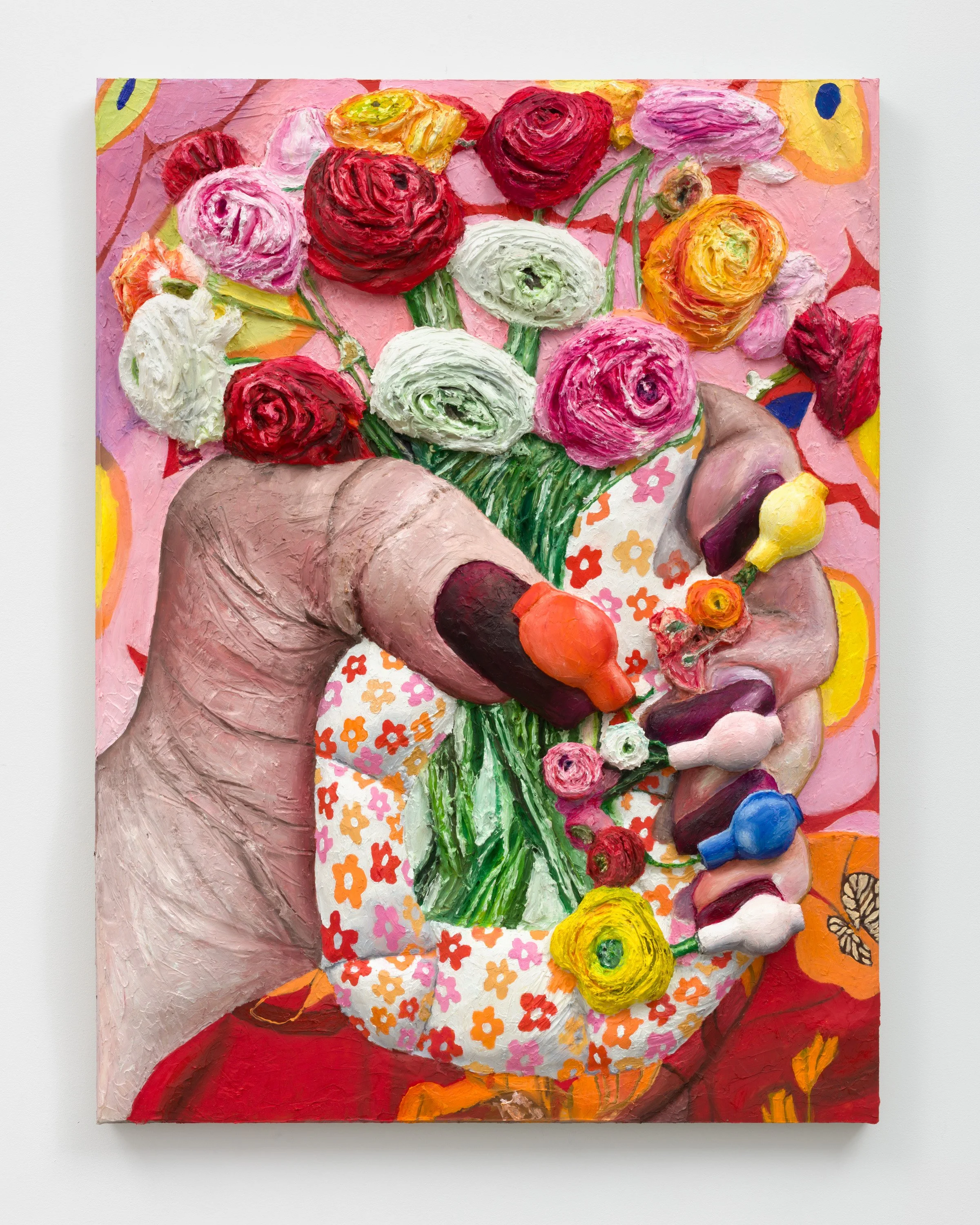
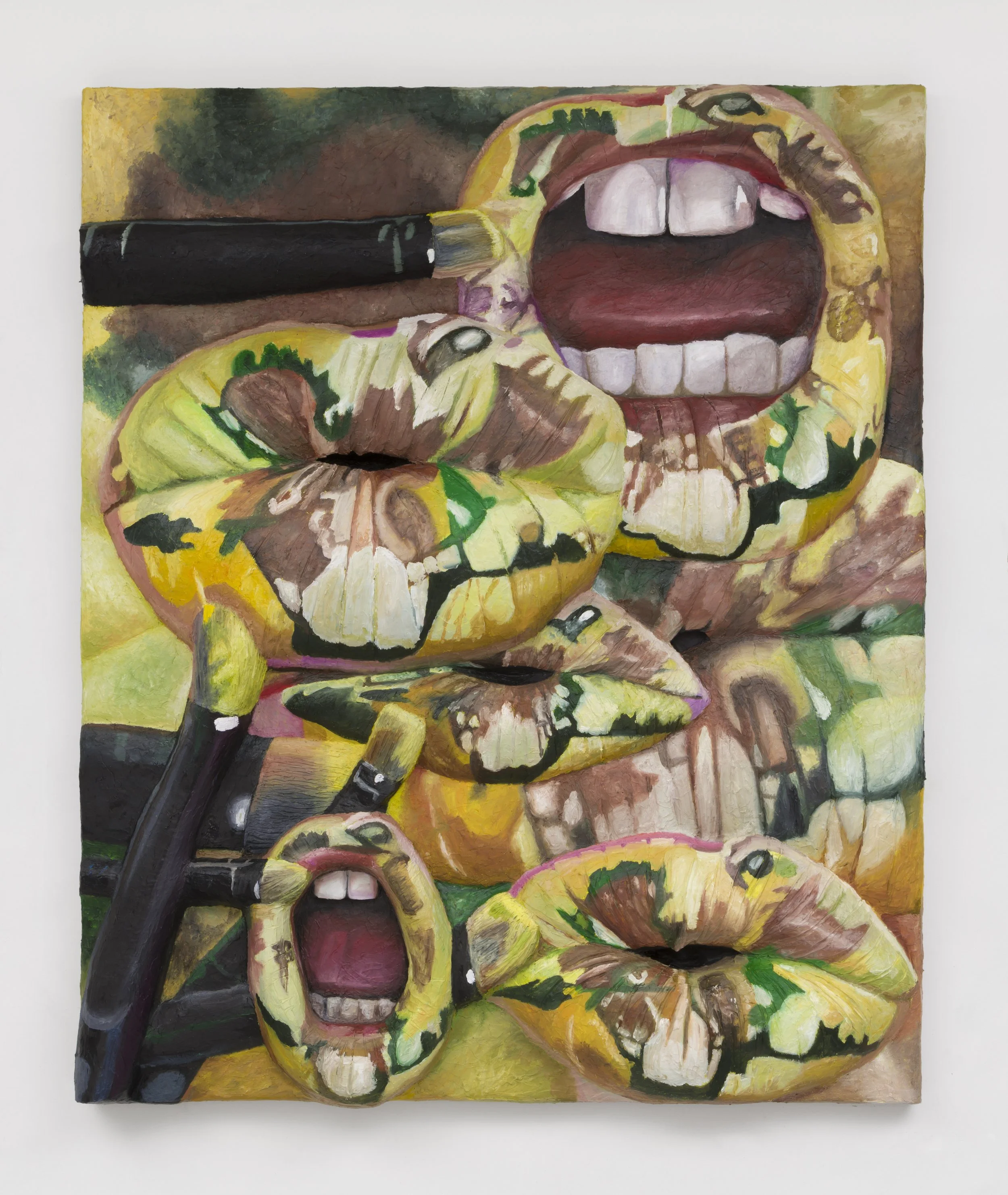
Gina Beavers doesn't just look at the internet — she builds it, layer by layer, in thick acrylic. Her canvases are almost grotesque in their abundance: frosting, skin, makeup, food.
Objects that feel too real, too digital, too much. In this conversation, she talks about painting the life inside her phone, the shamelessness of social media, and why excess has always been her language.
Your work often mimics digital textures using thick acrylic paint. At what point does an
image stop being digital and become physical in your practice?
I think there’s a certain kind of metabolizing that happens, where it gets fed through my experience and my hand and becomes something quite different, not only physically but a copy can still carry a new history.
In practical terms, I’m usually rendering from a flat screen or a printout, and then fighting these globs of paint to tame them into something that’s recognizable.
That space between the digital and physical is interesting to me, I’m interested in the works having two lives, one online and one IRL just like most of us do.
Your paintings feel almost sculptural — do you see them more as objects than images?
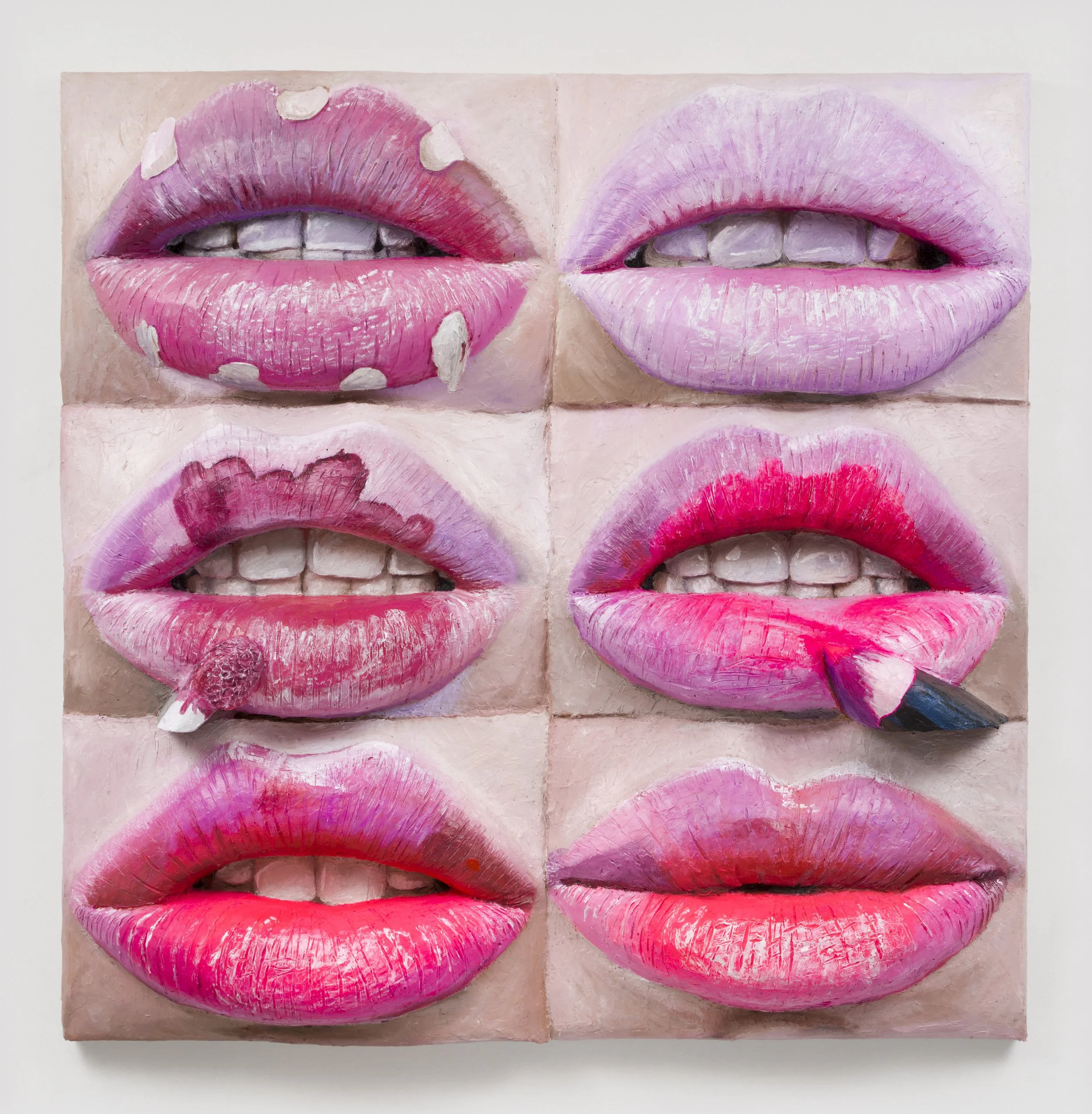
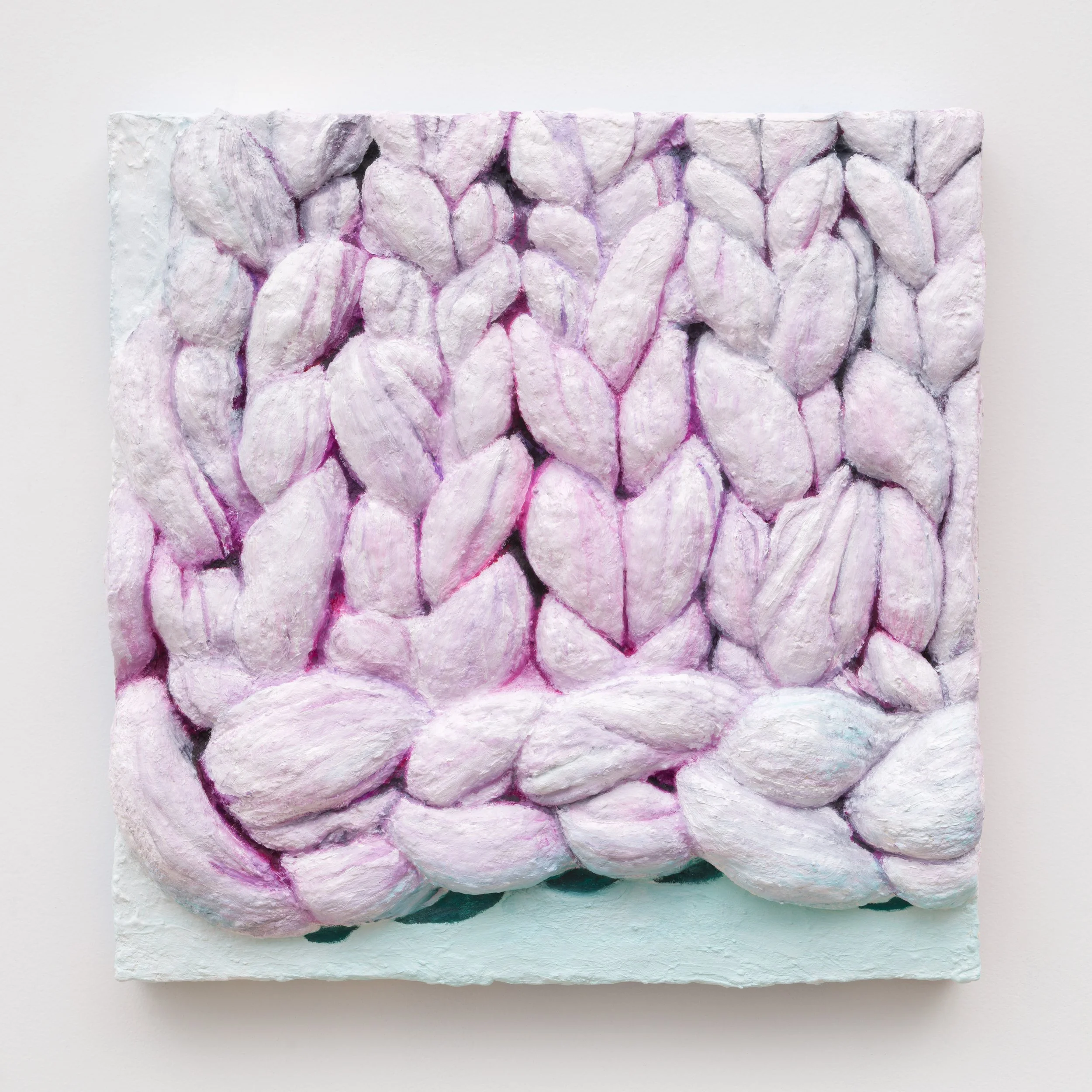
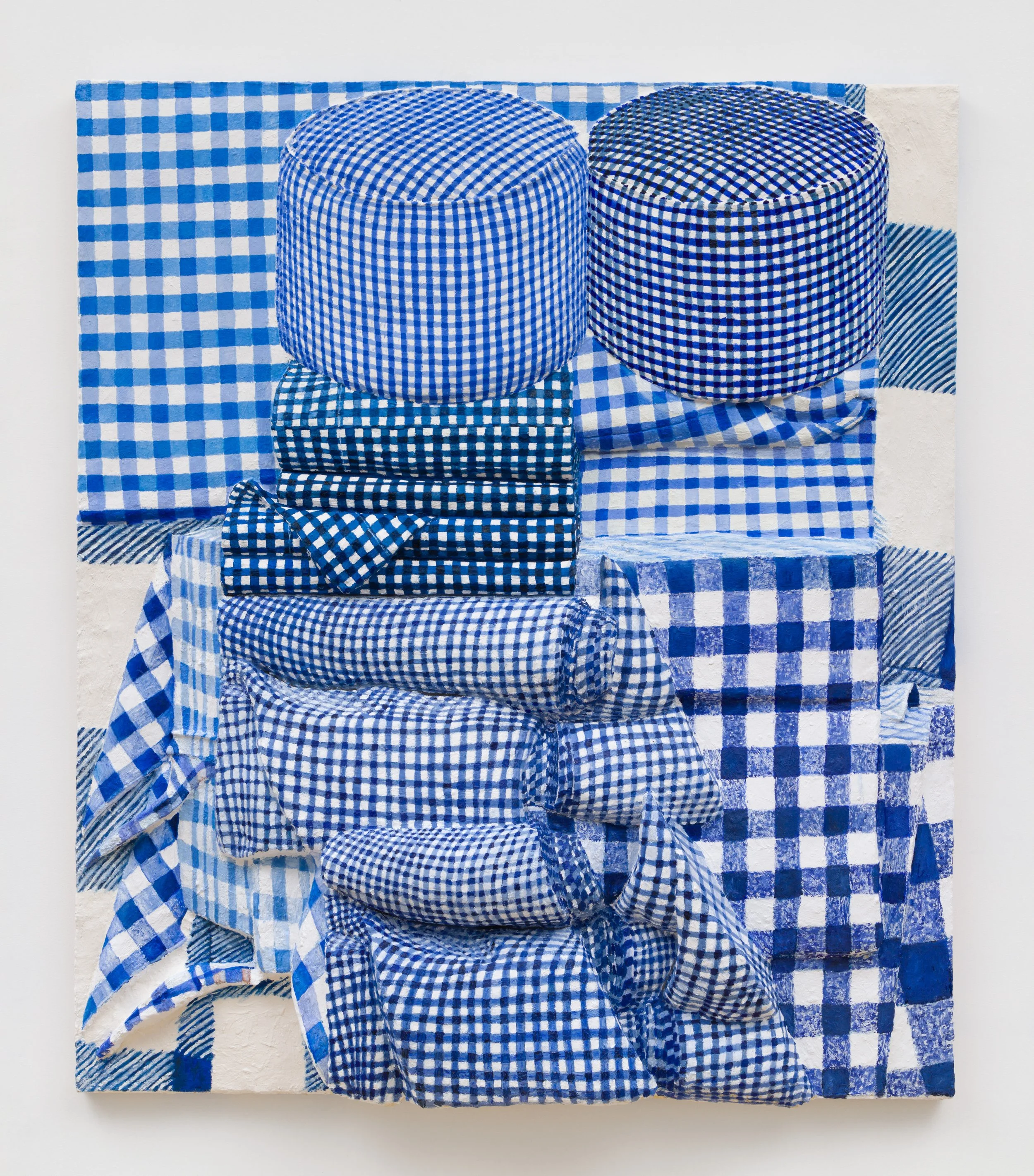
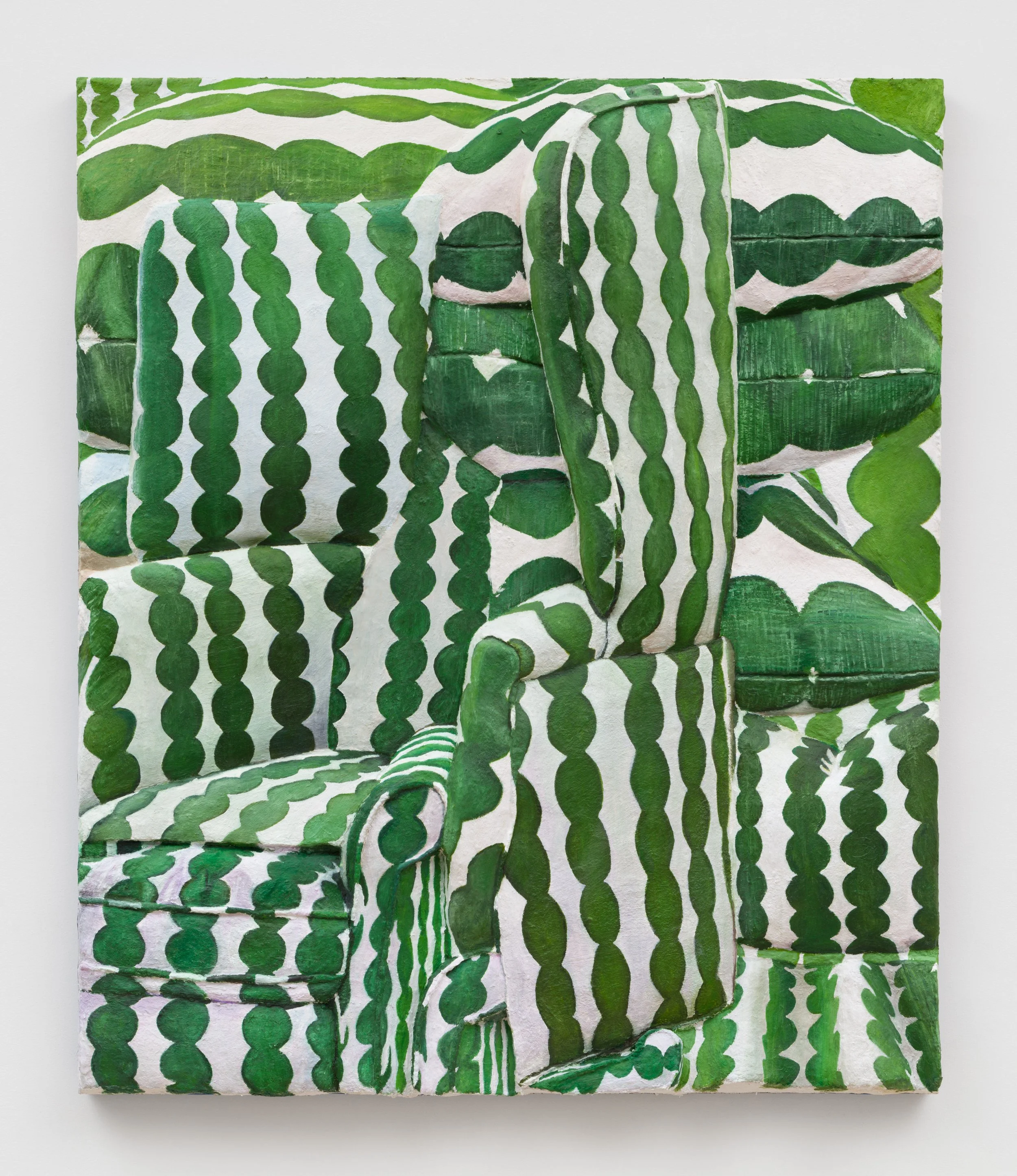
I think they’re both, although sometimes people have seen them circulate online and not realized there was dimension, so they can operate as either/or. But there are also Artists I really admire like Jack Whitten, Elizabeth Murray, Jasper Johns whose work mine that space of relief and painting as an object, that a painting can become so much of a thing that it forces itself into your space and becomes much more real rather than creating an illusion of something.
How important is excess — of texture, of color, of information — in your work
I’ve always made excessive works, in school I was using Day-Glo paint, tearing, almost attacking surfaces. It’s definitely a kind of acting out on my behalf, of performing (I was a theater kid) but as most of my work since 2010, post Instagram work has sort of taught me, I think it’s embodying a certain kind of shamelessness that’s inherent in social platforms, the dimension is symbolic of its extroversion, of seeking connection
You source a lot of imagery from social media. Do you see yourself as documenting a
specific era of the internet?
I never thought about it in those terms as I was making them but now looking back I can see them as a type of documentation because they highlight how much the visual language of social media has changed.
I was only ever trying to do what painters since the Impressionists have done and paint the life around me, in this case the life in my phone that I was looking at.
Are you more interested in the image itself, or in the behavior behind the image — the act of posting, performing, sharing ?
I think online those are one in the same and I don’t know how much you can separate the image from the context of its motivation to appear there.
Do you think your work critiques online culture, or simply mirrors it?
I’m only seeking to mirror; I don’t know if I could find the joy of making if it was purely critique. I am implicated myself in all the behaviors of online life, so they function as autobiography as well.
Having said that, I do believe they perform a certain aspect of critique when they appear in gallery spaces. The jolt of seeing these aspects of online culture in a new context reveals the most obvious impulses of the images you find there.
Many of your subjects revolve around beauty, food, and consumption. What draws you to these themes?
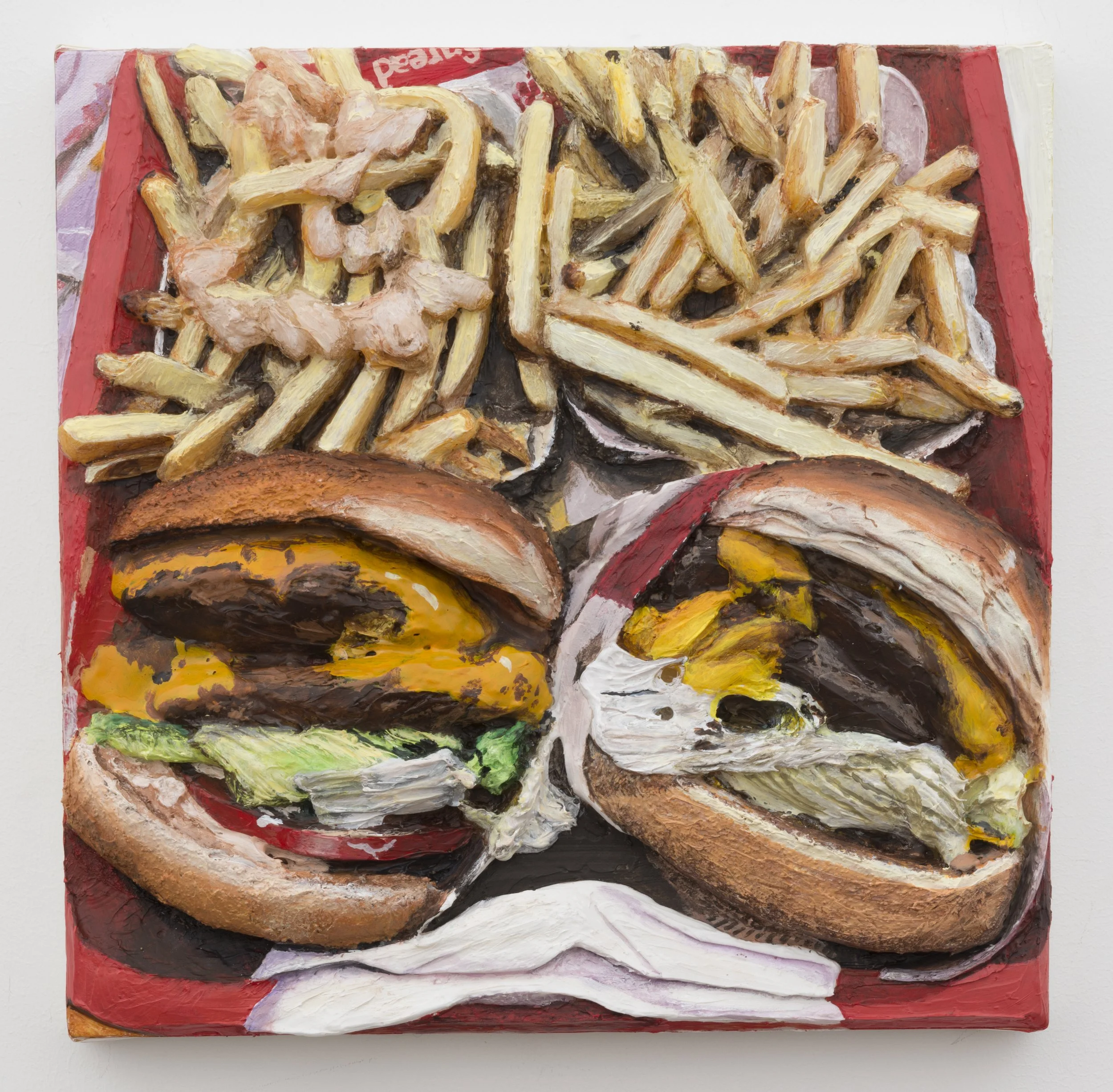
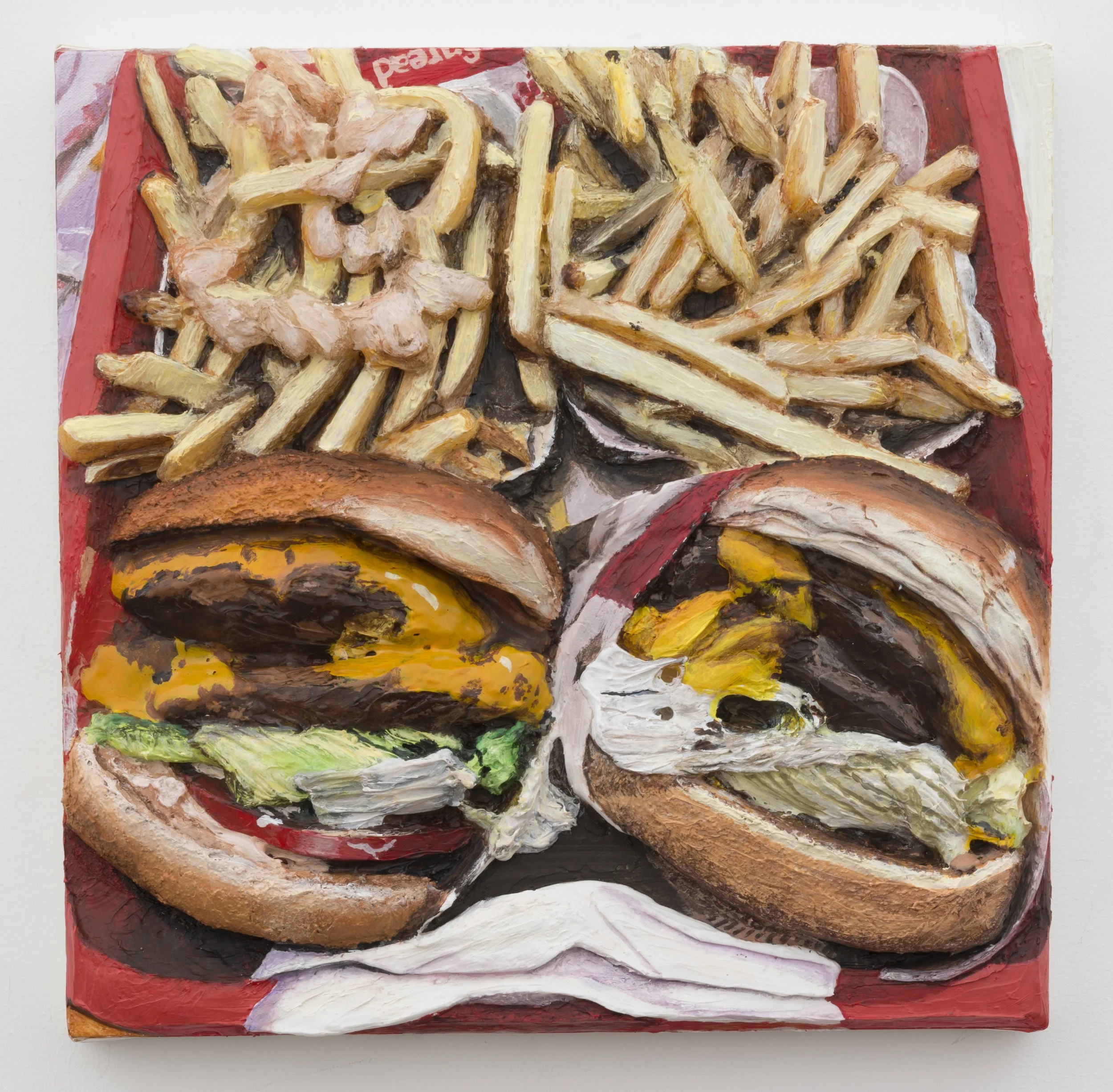
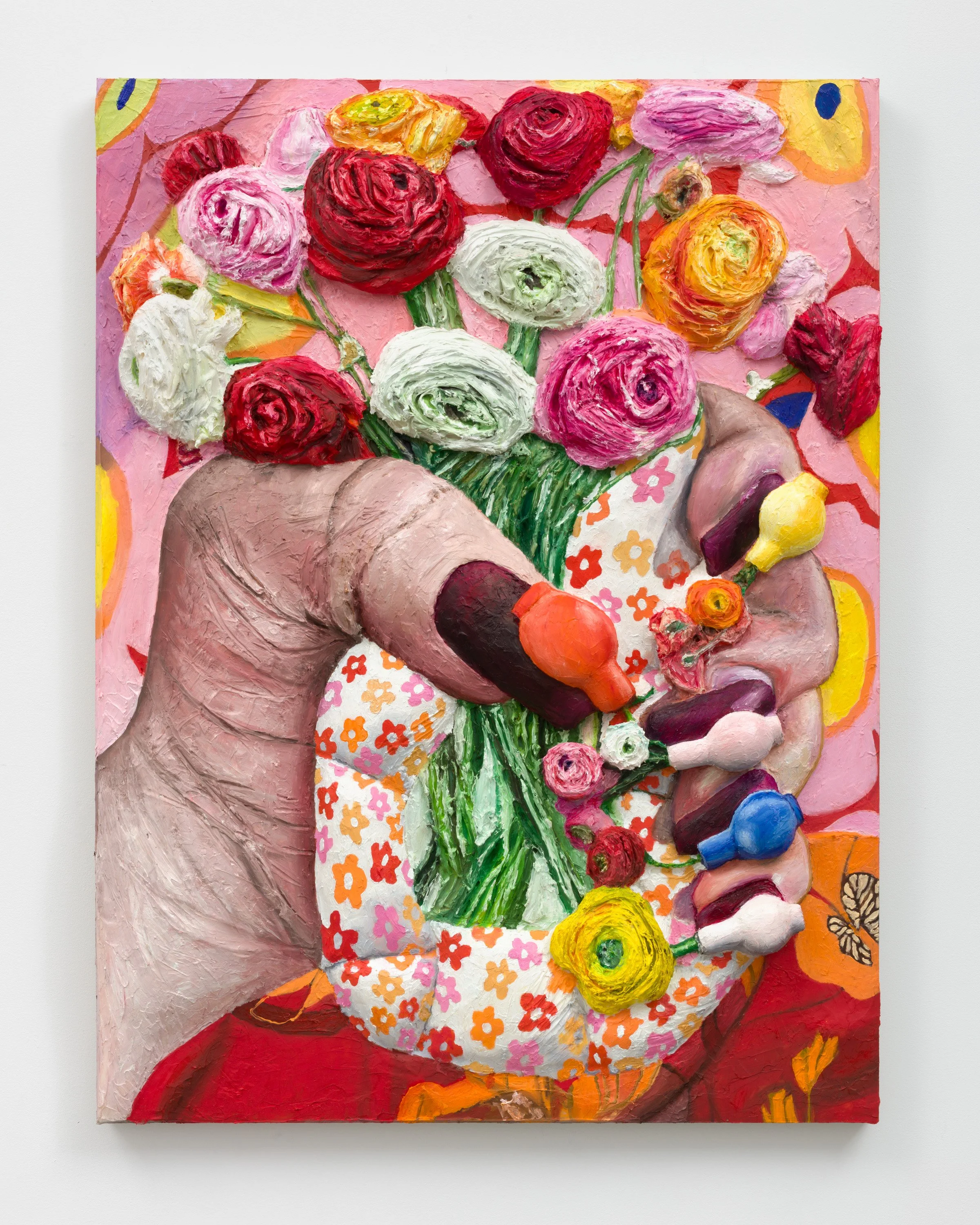
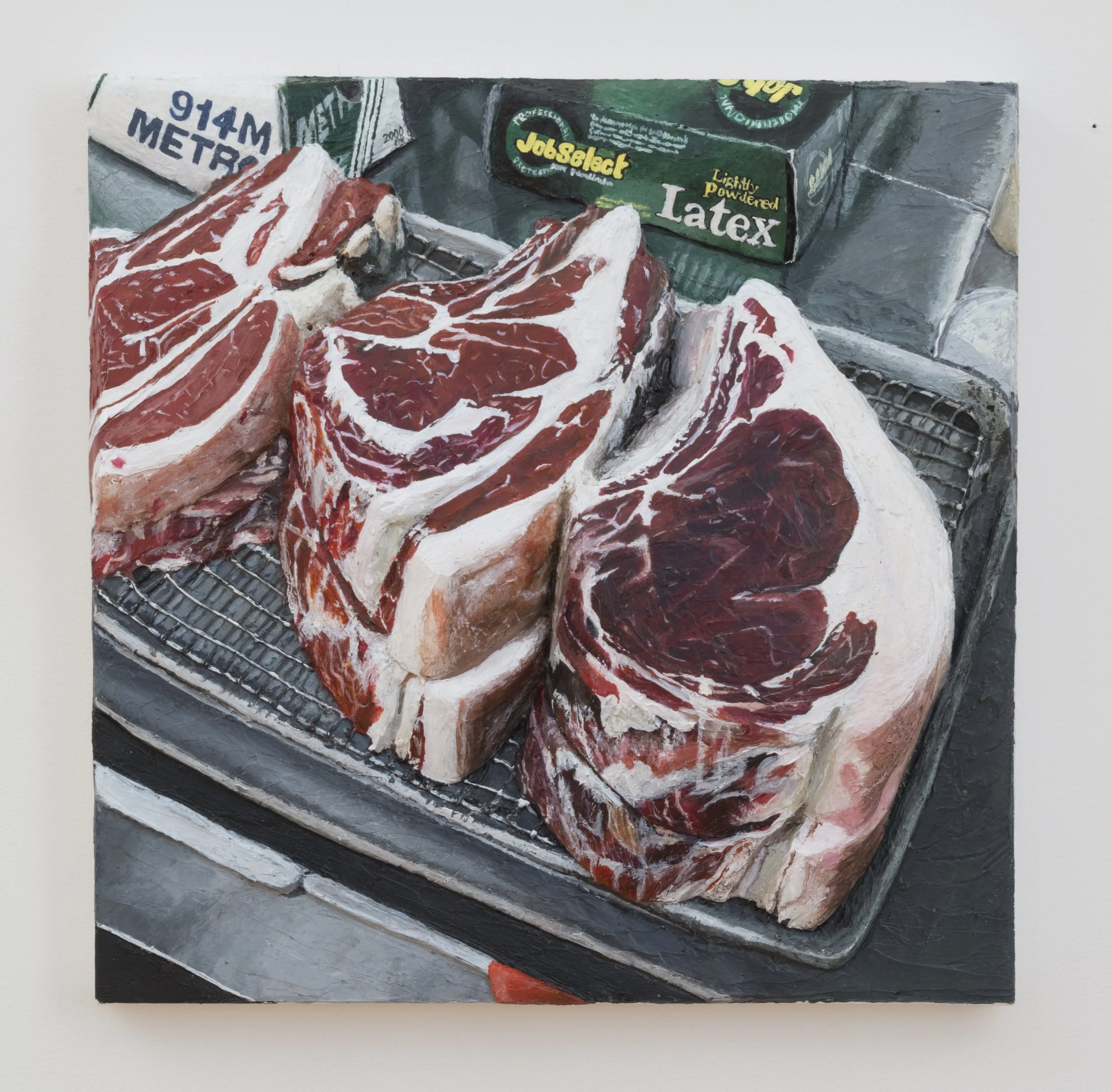
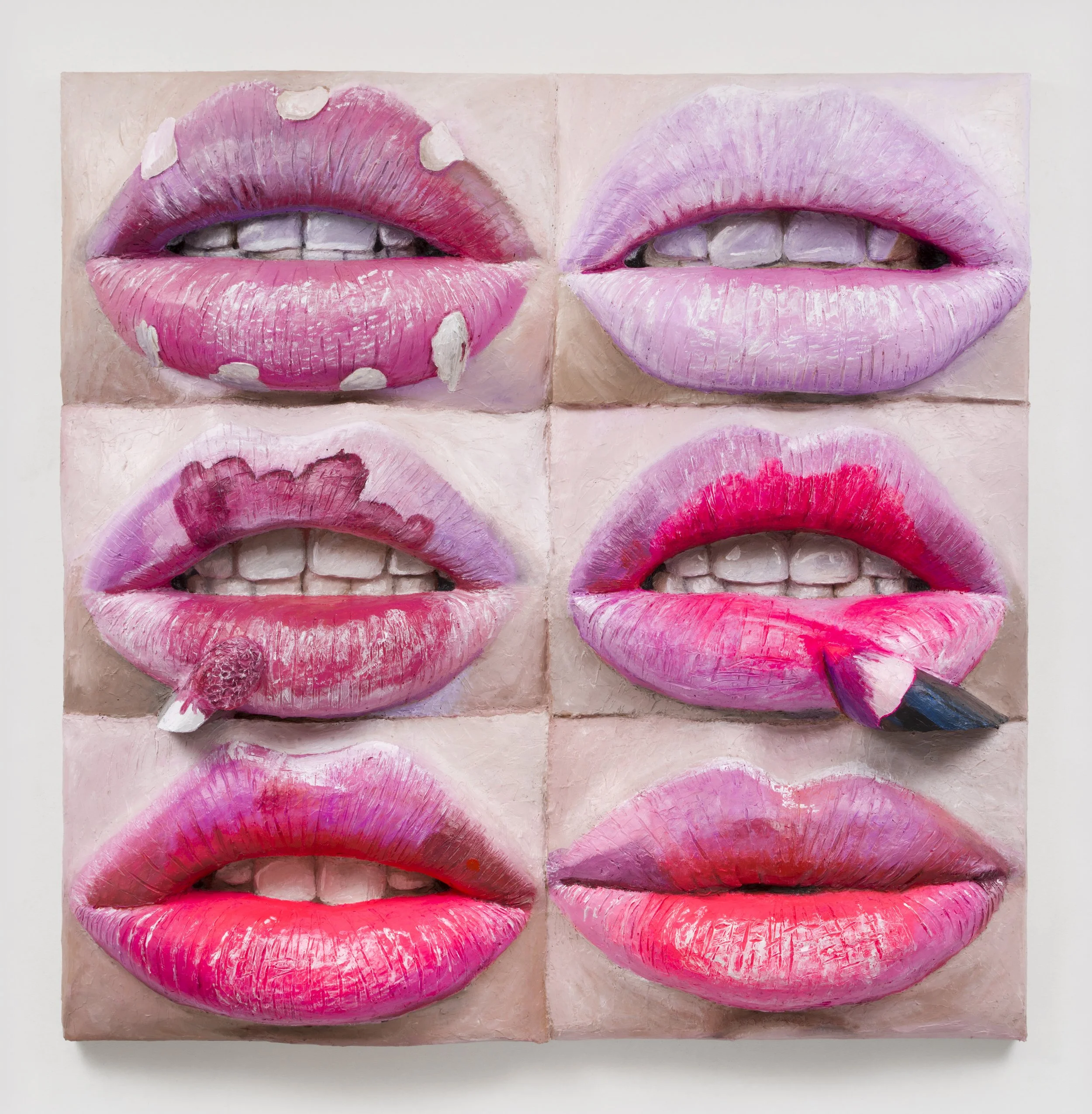
I love the visual satisfaction of these forms and how they mirror the constant scroll of consuming images of being on an app. The beauty images are often tutorial in nature, which so much online content is, the food as aspirational or a flex has almost replaced Art in the way that knowing a great restaurant, or chef or menu item, signals sophistication. I’m creating pop Art after 2010 basically.
There’s something both seductive and slightly grotesque in your paintings — is that tension intentional?
It’s not intentional, I do start out thinking things will look beautiful in the end, but in the process of making, of fighting the materials, it becomes something more over the top. I do struggle with beauty; I don’t know if an Artist can set out to make something beautiful if they’re being honest. They can only make what they see and feel and that doesn’t always line up with everyone’s idea of beauty, it’s very subjective.
Do you think contemporary beauty standards have become more extreme because of digital amplification?
I’m honestly not sure, I’ve read that people are getting plastic surgery to be in line with standards that social media ‘demands’ but I can only speak to Western beauty trends, which are often appropriated from cultures around the world, it’s hard to know what ‘extreme’ means. The ‘contoured’ face the Kardashians are known for comes from techniques honed for drag, Western hair trends are often copying Asia.
Your work is rooted in found imagery. Where do you draw the line between
appropriation and transformation?
I’m never appropriating and seeking to transform an image just enough to get away with copying something.
If I’m appropriating an image, it’s because it’s coming from a world that’s so different from the art world and I think it has something to say in our context that would make an interesting painting.
If I’m making a collage from appropriated fragments, it inherently becomes something completely different even if the pieces of photography come from something real.
Do you ever feel a responsibility toward the original creators of the images you use?
It depends on the kind of image. When I used to make lots of food paintings they normally came from a hashtag of 40 million images. A lot of people were taking pictures of their food and forgetting that they had even done that. Instagram became a place to store memories.
I’ve made paintings of friend’s photos of their meals, and they didn’t even remember taking the photo. Many make-up tutorials function in a totally different space and how make-up Artists and I make a living is completely different and not competitive. Memes can be more complicated. Most of the time they’re very old and I can’t figure out where they originated or I make my own.

What does it mean to be a painter in an era dominated by screens?
It means ideas travel very quickly. Fifty years ago, Artists would have to visit each other‘s studios or shows to see what other Artists were up to, now it’s constantly flickering by on screens which means the pace of styles or trends in painting is very sped up to the point where it’s almost meaningless.
Do you think painting has become a form of resistance, or just another way to circulate
images?
I think any act of Artistic creation is a form of resistance, particularly when consumption is made so easy and constant.
Painting does risk becoming just another kind of content though, which when you think how much time, energy and expense painters put into their work, is kind of depressing.
Your works often depict hyper-detailed surfaces — skin, frosting, makeup. What is your relationship to tactility and desire?
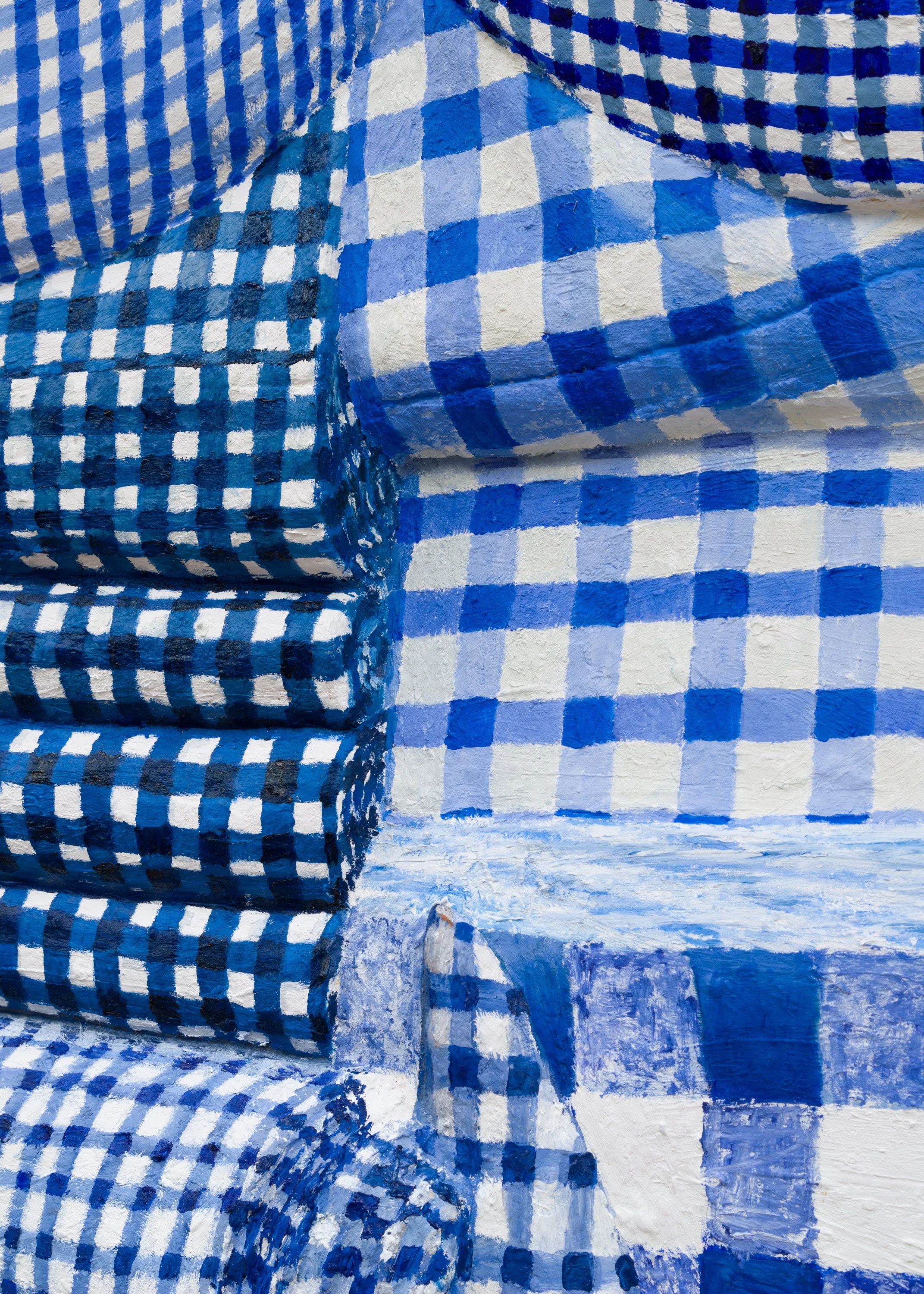
I think I just really like visual textures. I love shadows on textures. I just listened to the Artemis crew viewing the moon talking about the Terminator, which is the line of shadow that can be observed across the moon. They were so excited by it because of what it could show them about the textures of the moon.
I think I look at all textures like that. I also think I’ve just always wanted paintings to do more, to be activated in a certain way and texture enables me to do that.
Why do you think people are so drawn to images they can almost “feel” through the screen?
That’s interesting. I know for a while there was almost like an ASMR quality to building up paintings or surfaces with a lot of goopy-ness, like those videos with slime. Now that’s probably all been replaced by AI, but I think people online like to be fooled or tricked by things that appear one way and turn out to be something else, like the whole ‘is it real or is it cake’ phenomenon.
Do you ever feel overwhelmed by the amount of visual content you consume?
Yes, all the time! Although mostly because I find myself looking at things, although entertaining that have nothing to do with my work or what I’m interested in, just things the algorithm thinks I want to see but I could’ve just as easily turned on the TV! It feels very beside the point and like I’m wasting time.
Has working with internet imagery changed the way you personally use social media?
For a while, yes, before the algorithm but now I feel like I can rarely see what I would like to see.
I think overall I have so much more respect for a wider creative community after making body paintings, food paintings and makeup tutorials.
What kind of images do you deliberately avoid?
I don’t find myself deliberately avoiding anything, but I probably end up avoiding 90% of what I see because it’s just not speaking to me as a no subject for a painting.
If your work is a portrait of today, what do you think it will say about our time in 50 years?
I think aspects of it will seem innocent and quaint and sweet, as a portrait of social media in its’ infancy.
What would a “post-internet” version of your practice look like?
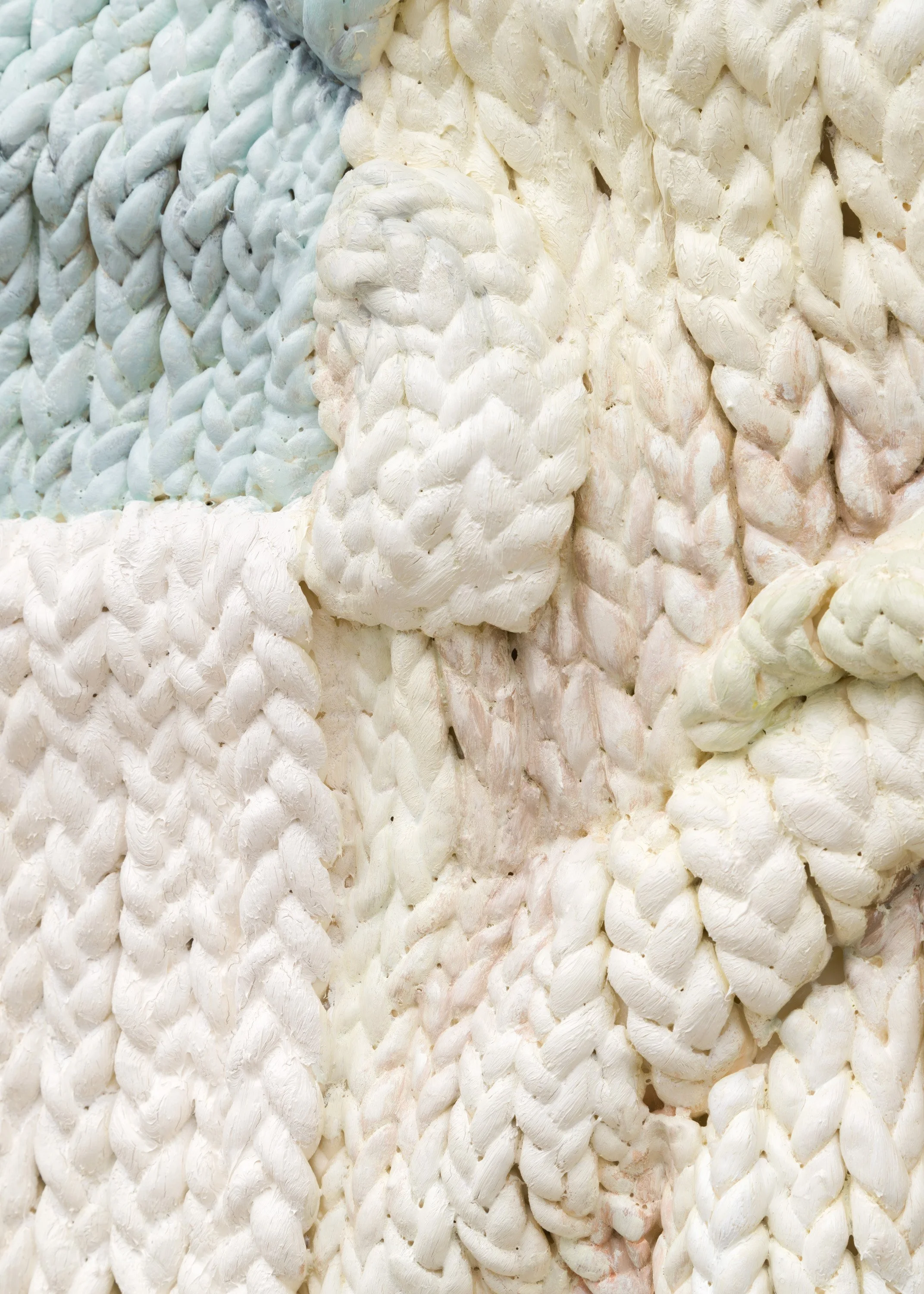
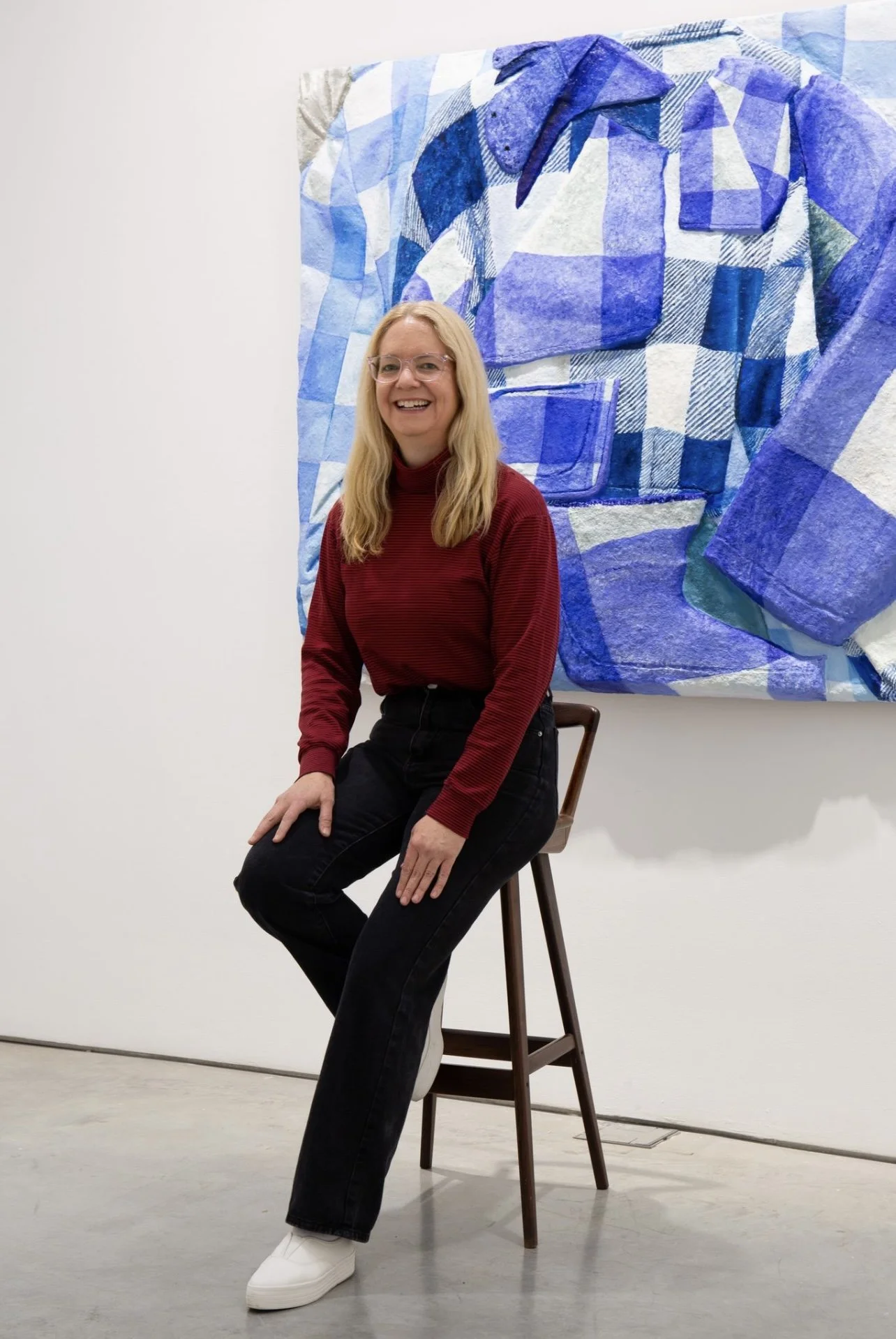
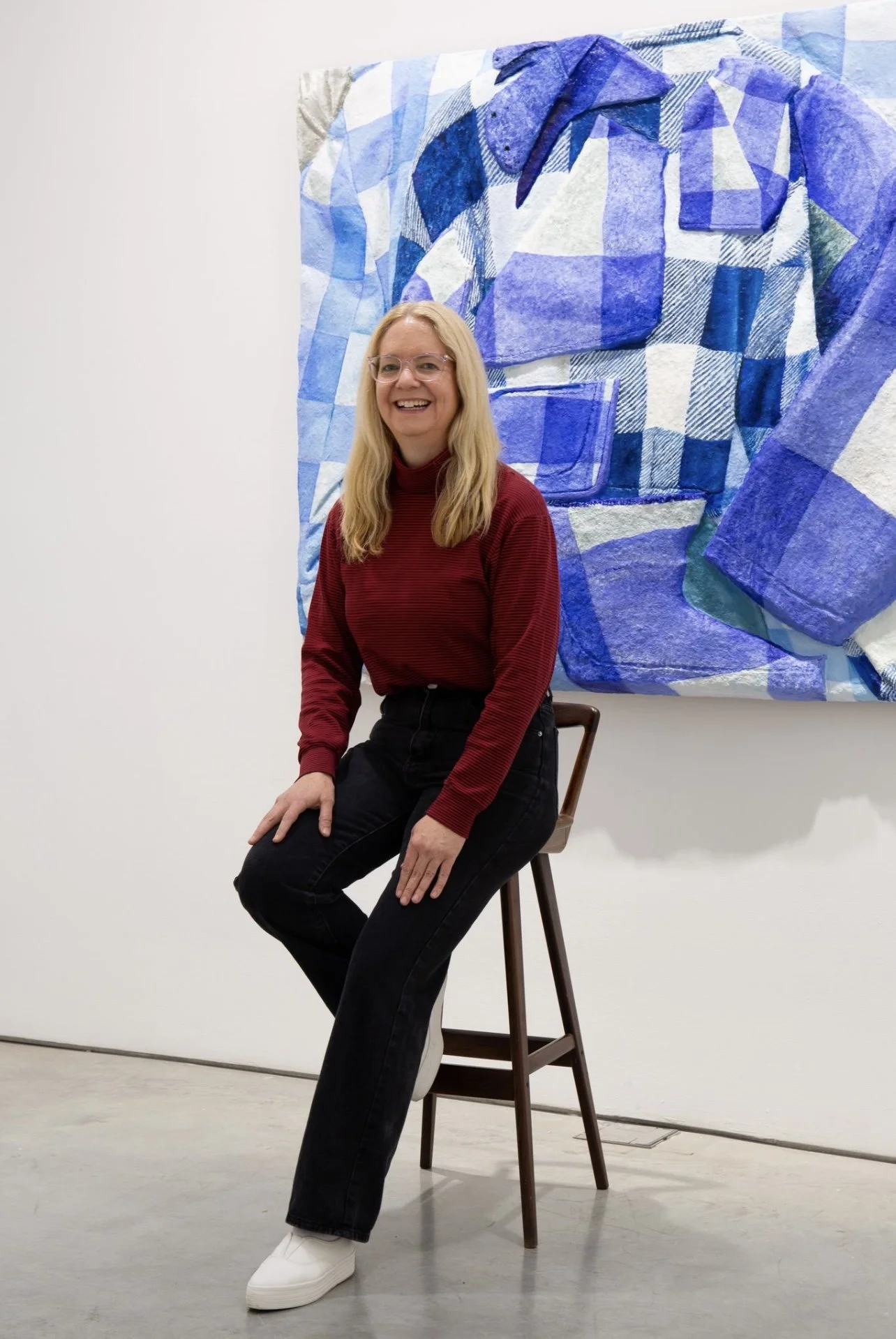
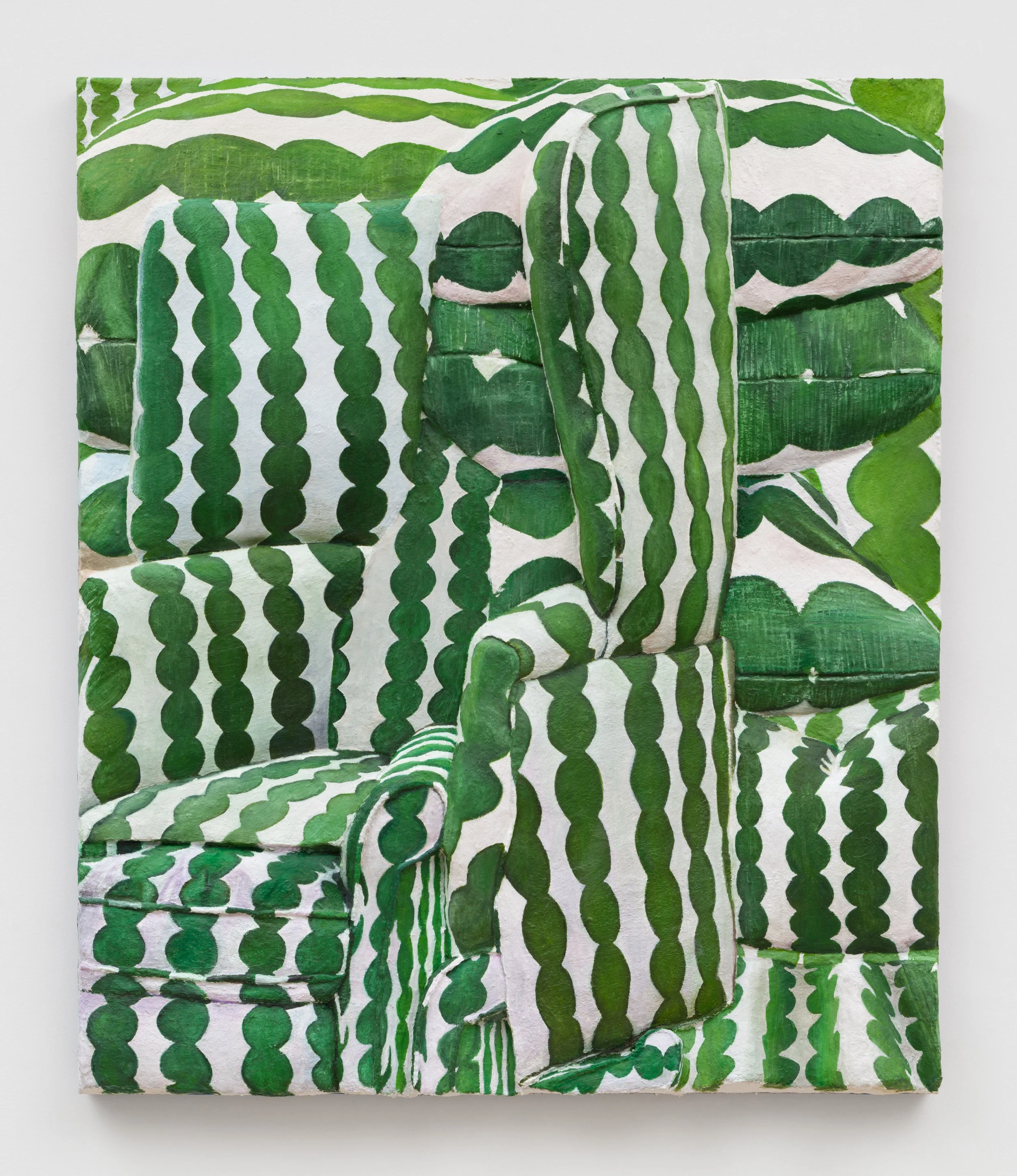
Probably just the world around me, my home, people I love, pictures I’ve taken or abstractions, in a way, kind of what I’m making now, which are based on fabric and textiles and all the ‘stuff’ that makes up a home.