"Foreign Everywhere": Marcela Florido on Memory, the Body, and the Language of Paint
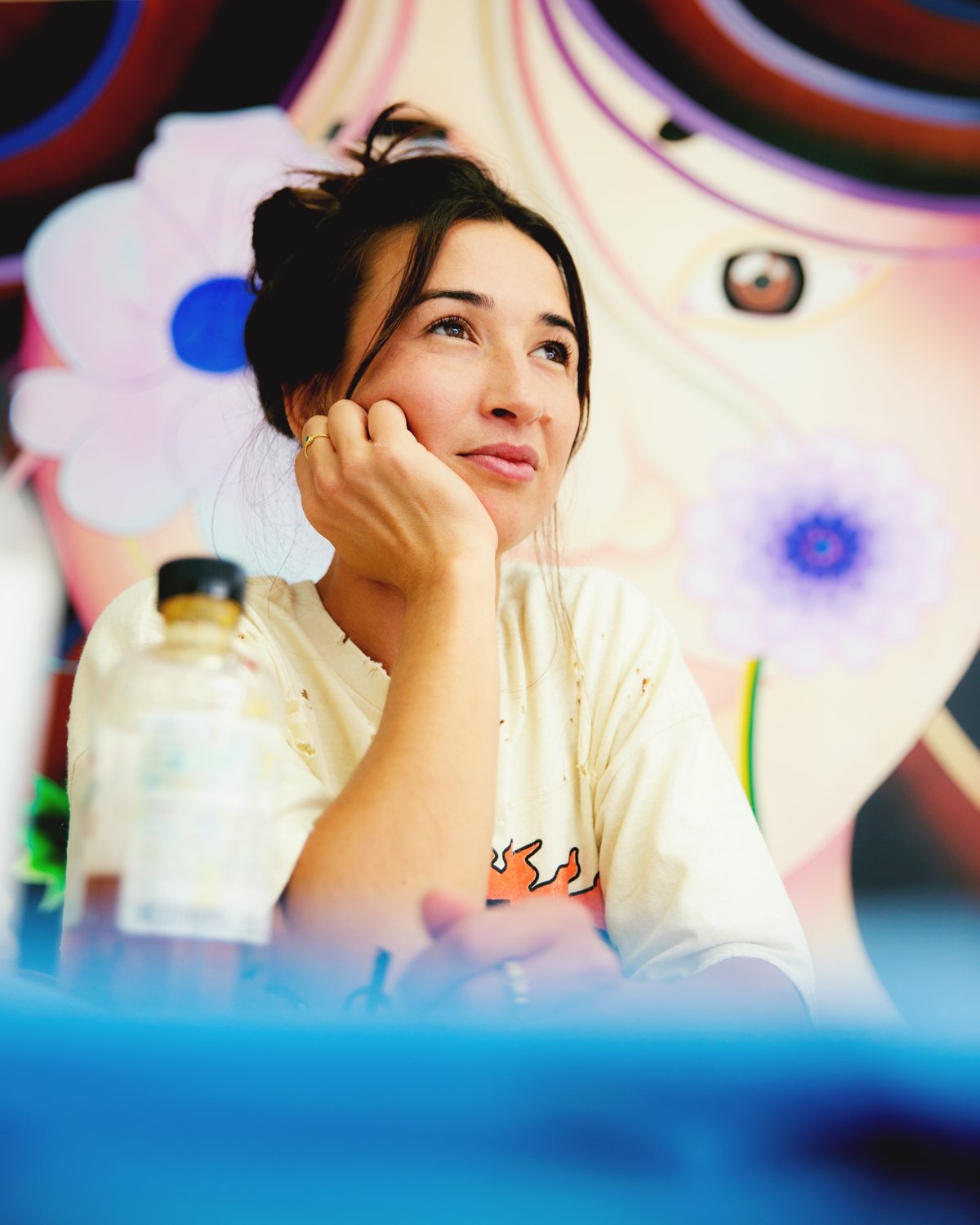
Marcela Florido arrived in London at eighteen with no painting experience and a scholarship to art school. What followed — the Slade, then Yale, then New York — shaped a practice built on displacement, layering, and the textures of a Brazilian childhood she can no longer quite return to. In this conversation, she speaks with striking candor about learning to stop thinking and start feeling; about the shift from geometric restraint to something larger, looser, and more honest; and about what it means to make work that will always be, at least in part, misread. Her paintings, she says, are for the body first — that moment before language catches up.
Can you tell us about your journey into painting and what first pushed you toward
abstraction?
The best decision I ever made was transferring to the Slade. I went to London at eighteen on a scholarship, initially to study at Central Saint Martins, and I had never touched paint before in my life. The Slade is one of those places that feels like what you imagine art school to be before you know what art school actually is. You walk in and you can smell decades of paint and turpentine in the floorboards, unhealthy but lovely. You were treated like an artist from the moment you arrived and I certainly felt like one.
I came in assuming I was a sculptor. But I started sitting in on the painting critiques and immediately fell in love with the medium. So I asked someone to teach me how to stretch a canvas, found a hardware store, and bought some house paint because I was too intimidated to try oil at first.
As for abstraction, funny you ask, because I don’t really define my work as either abstract nor figurative. But in the beginning it was very geometric and well-behaved. Rigid, actually. My peers at the Slade had grown up painting. They knew the history in their bodies in a way I just didn’t. So I told myself geometric abstraction was my lane because of my cultural inheritance of Neoconcretism.
It took me embarrassingly long to realize that staying there was just a very elegant way of making myself smaller. What I actually wanted to make was something completely different. Figurative, narrative, a little grotesque, a little funny.
Growing up between Brazil and the United States, how has this dual cultural background shaped your visual language?
I didn’t actually grow up between Brazil and the United States. I grew up in Rio, but my father had a small house near Ilha Grande and Paraty and a little boat. And the best memory I have, still in my body, is riding that boat back home after a long day at sea. We spent endless days in the ocean, and at night we would hunt crabs. A very specific kind of childhood that felt incredibly free and that I feel deeply nostalgic about now. Since I left Brazil I haven’t seen anything quite like it. Those long days, that lush landscape, those large bodies of water pressing against very dense vegetation.
When I arrived in London at eighteen I had no visual language for any of it. What I found at the Slade, through shows and books and my peers, were artists I fell completely in love with. Stanley Spencer, Dora Carrington, Frank Auerbach, Paula Rego, Victor Willing. Former Slade students carving out the tradition of British grotesque and psychological realism. It fascinated me completely. But those painters were describing a different world: cold, interior, shaped by the war. That language didn’t quite fit what I was carrying. I loved it, but it wasn’t mine. And my work from that time embodies this contradiction.
Then I moved to America reluctantly, at twenty five, because I got into Yale and it felt crazy to turn it down. Yale was the opposite of the Slade and at first I wasn’t interested in America, or in American painting, to be honest. But I fell in love with my friends here, mostly Americans. And since I spend my days sharing a studio and having endless arguments about art with them inevitably a lot of Americanism has soaked into my work.
Was there a specific moment when you felt your work “licked&” into what it is today?
I’m sitting in my studio right now, coming back from my second maternity leave, trying to figure things out. I never felt my work clicked, and especially now it feels very open. I think my work follows my body and it is very different after two pregnancies back to back.
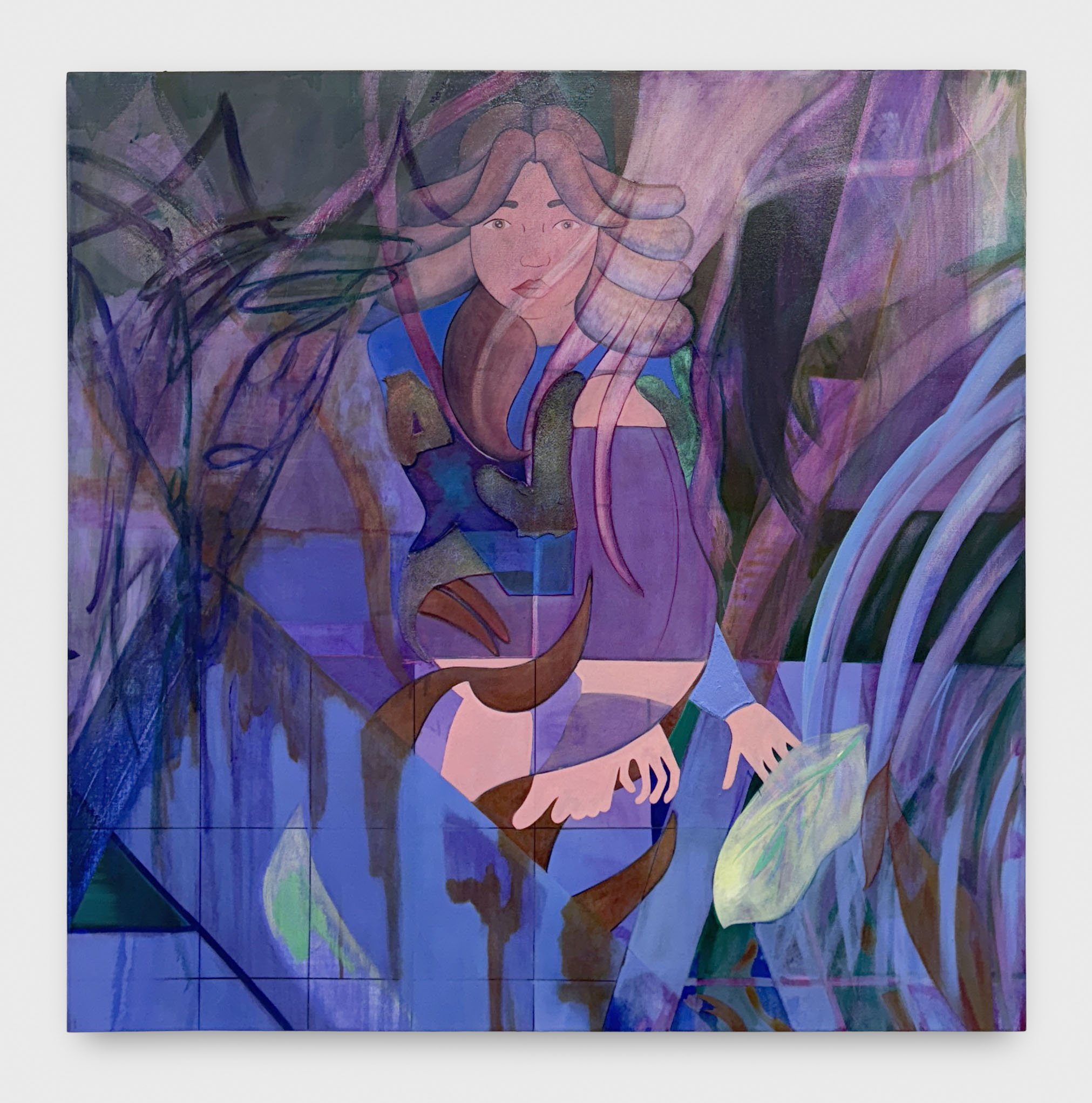
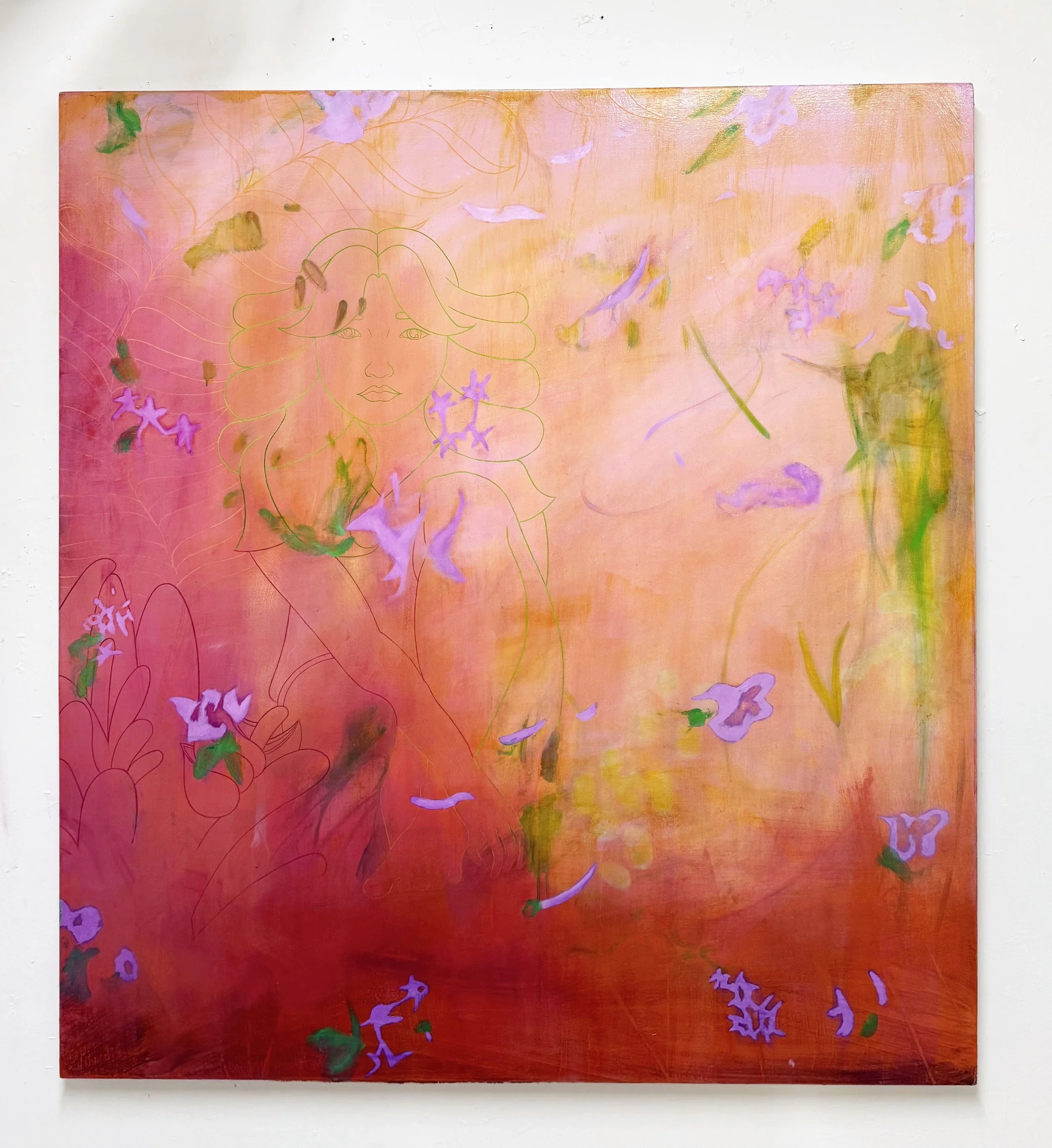
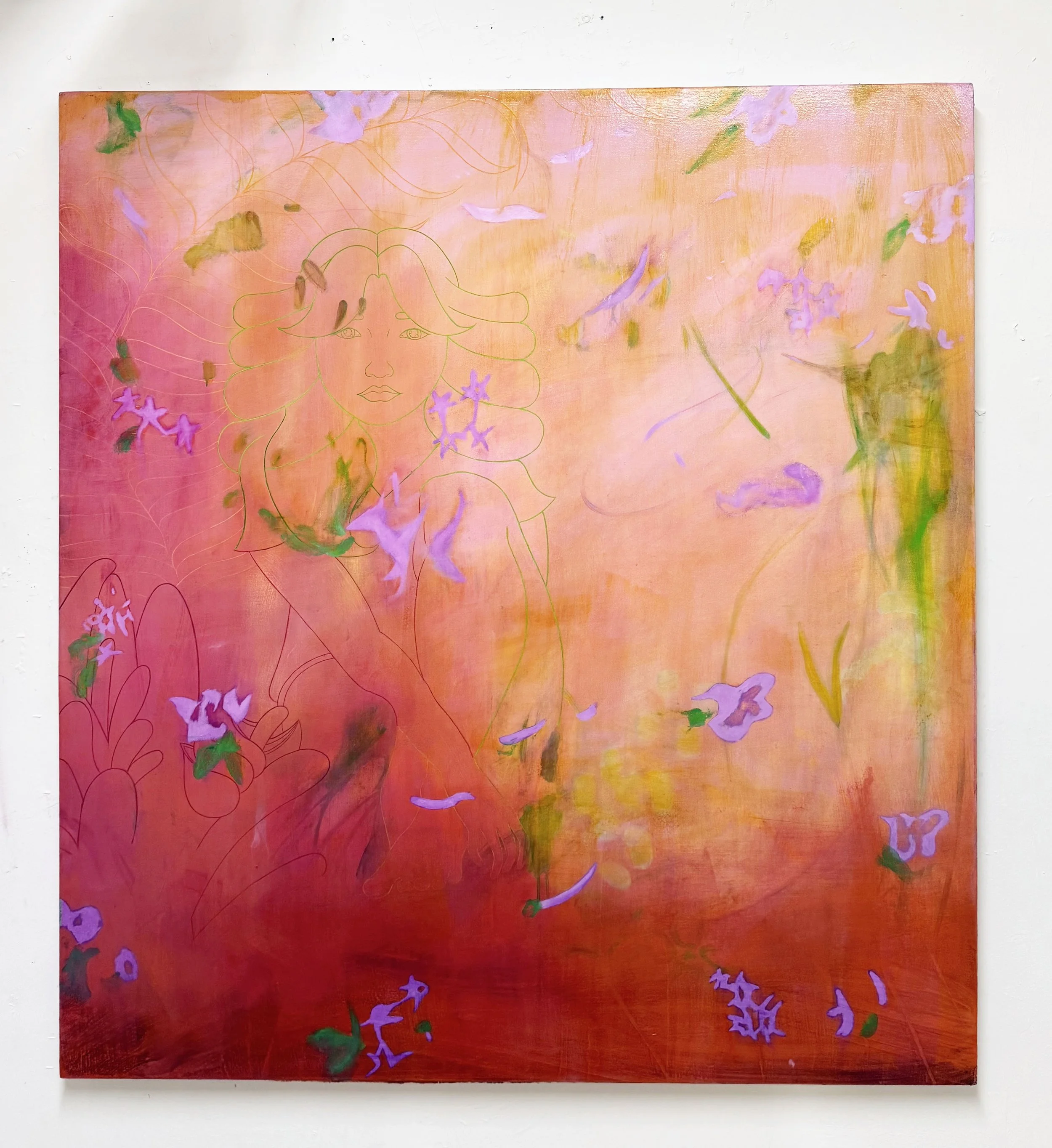
I aspire to be someone like Picabia. That ability to change, to borrow from completely different vocabularies, to have a sense of humor about it, to inhabit different roles without apologizing. In London I drank from the British Kool Aid. Now I’m drinking from the New York one. The language changes because the body changes. What I’m making now is very large, very layered, very watery. I see remnants of early works from the Slade, I see my Brazilian landscapes, and I see an American expressionist gesture. It’s all there somehow. One painting always leads to the next.
Your work feels both controlled and spontaneous — how do you navigate that balance in
your process?
There are both energies in the work. Some days I just want to come to the studio and throw a wrench into everything. Work on a scale bigger than my own body, big brushes and decisive grand gestures.
There’s a part of me that wishes I could work on a scale akin to Katharina Grosse. And then there’s this other part that wants to master tiny brushes, sit in front of an easel for hours and lose track of time with details, bending paint to my will. Almost contradictory, honestly. I am a Gemini, so.
I recently saw Sasha Gordon’s show at Zwirner and it blew my mind. That level of control, that precision, I have so much respect for it because I can imagine how fun those paintings were to make.
How important is intuition in your work versus conscious decision-making?
Both, always both. But the balance has shifted in ways I didn’t expect. Part of what drew me to painting in the first place was its history. The weight of it. The conversation you’re entering just by picking up a brush. I love that. I love knowing who I’m borrowing from, who I’m arguing with, where my visual vocabulary comes from and what it’s saying whether I intend it to or not. That kind of accountability feels important to me.
You don’t make work in isolation, and pretending otherwise is a kind of dishonesty. But for a while that awareness became its own problem. I was thinking so hard about the work that I stopped feeling it. And the paintings showed that. Something was missing, something that only comes from the body, from making, from being in the room with the paint and just following it.
Now it feels more like playing an instrument I’ve lived with for a long time. There’s a point where you stop thinking about where your fingers go. You’re just in sync with it, with the pace of the mark, the gesture. The body knows.
Color plays a central role in your paintings — how do you approach building your
palettes?
Color hits me before anything else. Before the image, before the idea. It’s already in my body somewhere. I think it comes from internalizing the quality of light from those boat rides. But I never really learned how to build a palette.
The Slade didn’t teach that and I came to painting without any formal training, so color has always been completely intuitive for me. Which I think is right, because it’s not a decision. It’s more like an act of surrender.
There’s a strong sense of layering and depth in your work. What draws you to that kind of visual density?
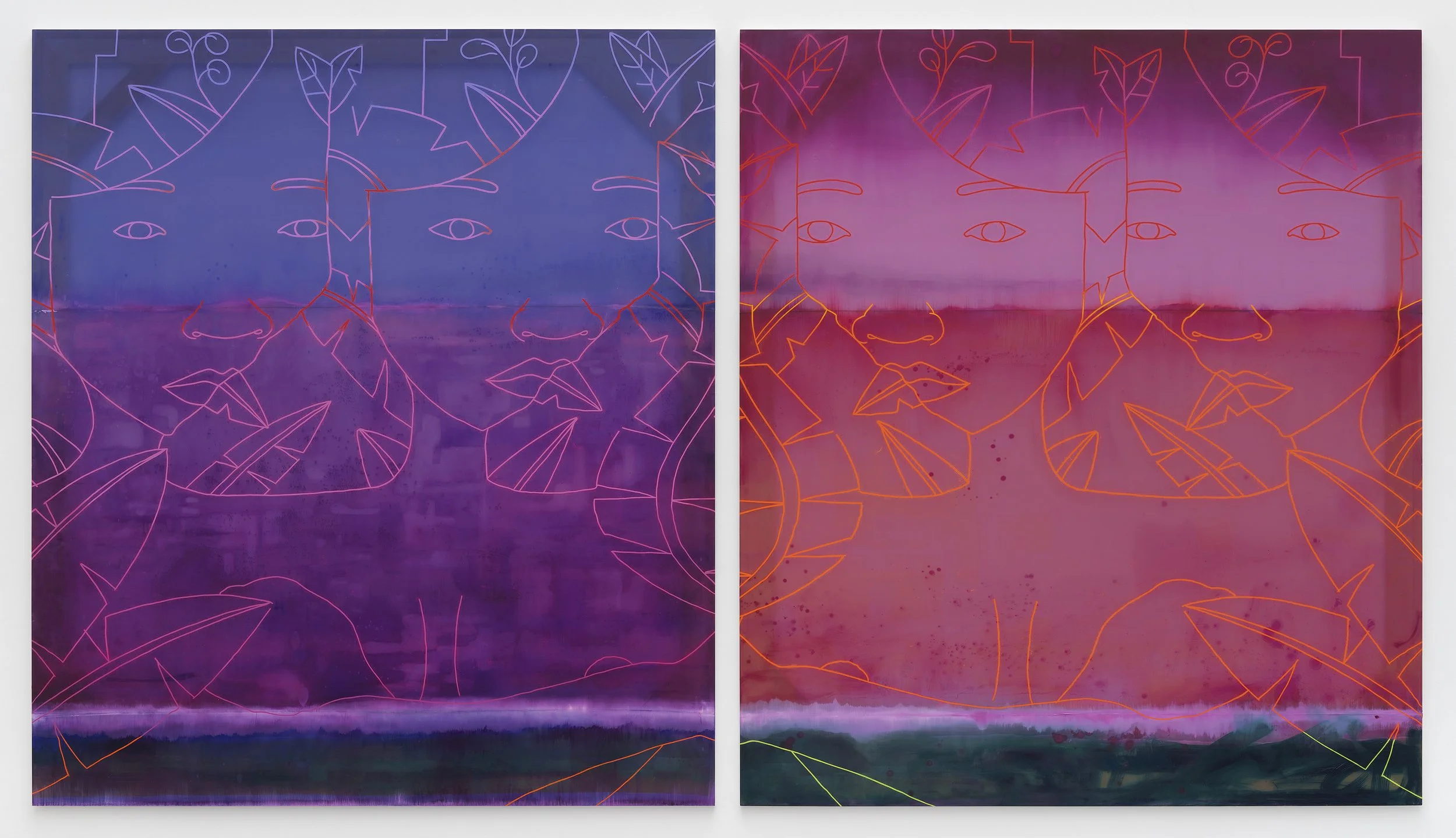
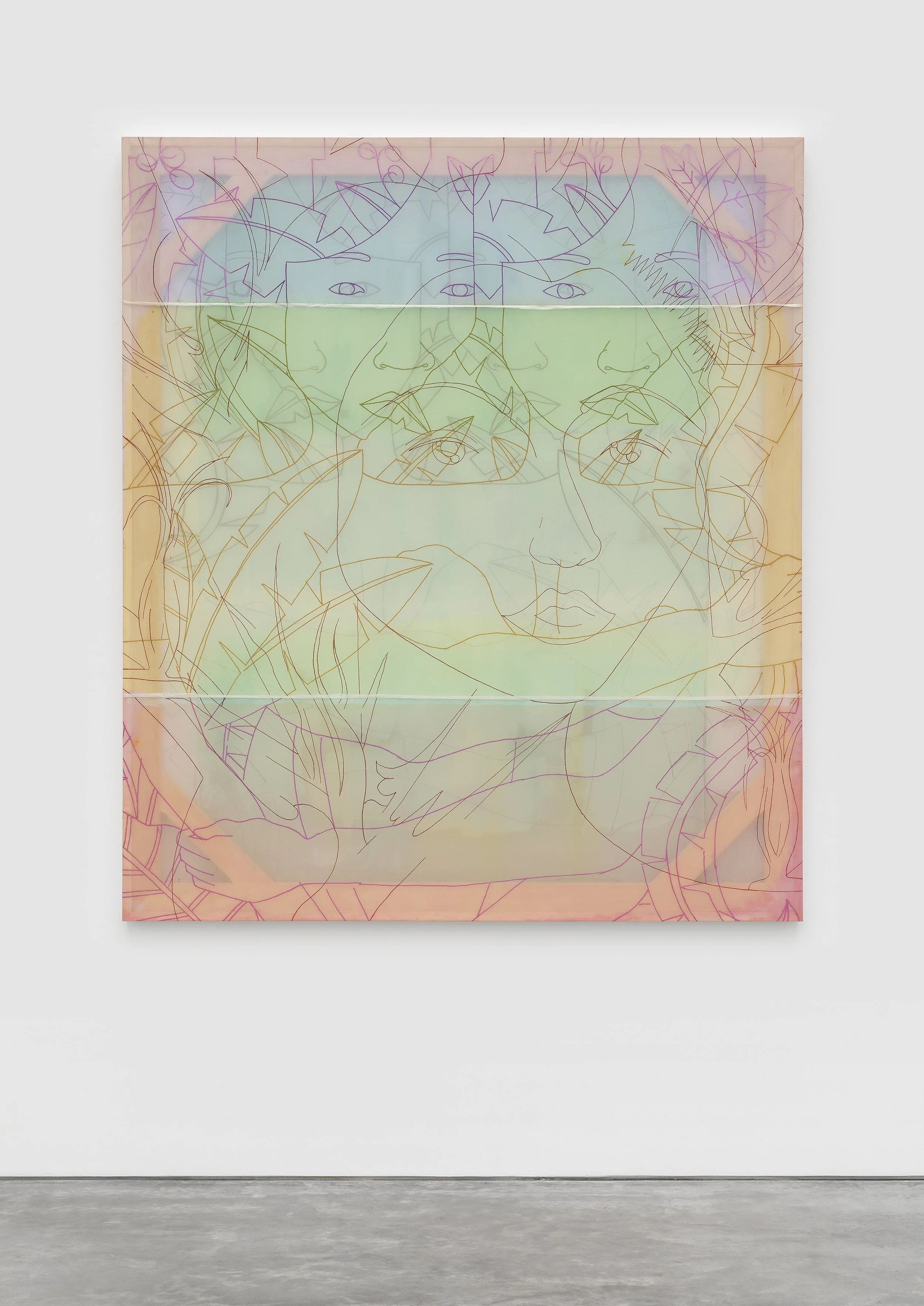
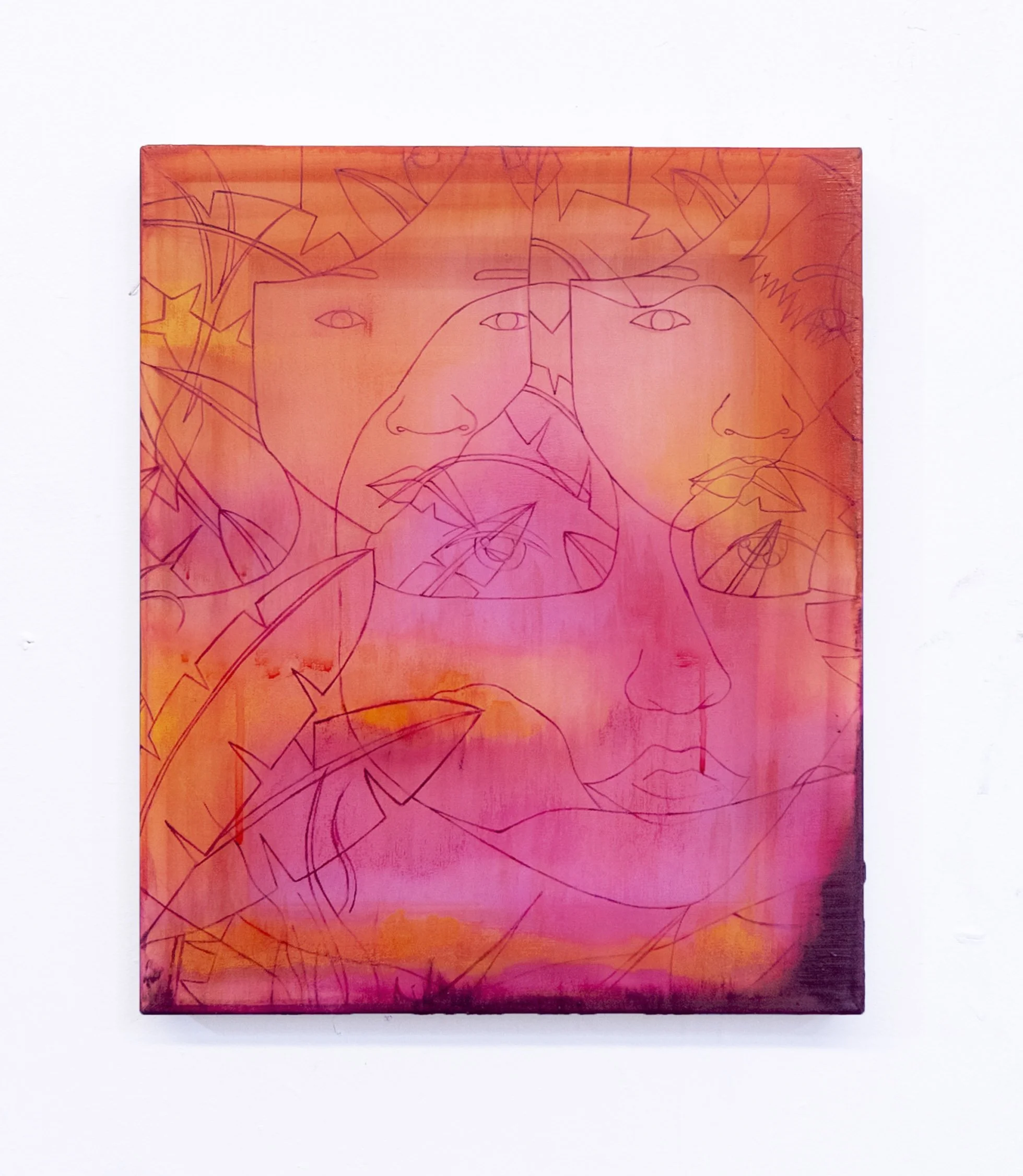
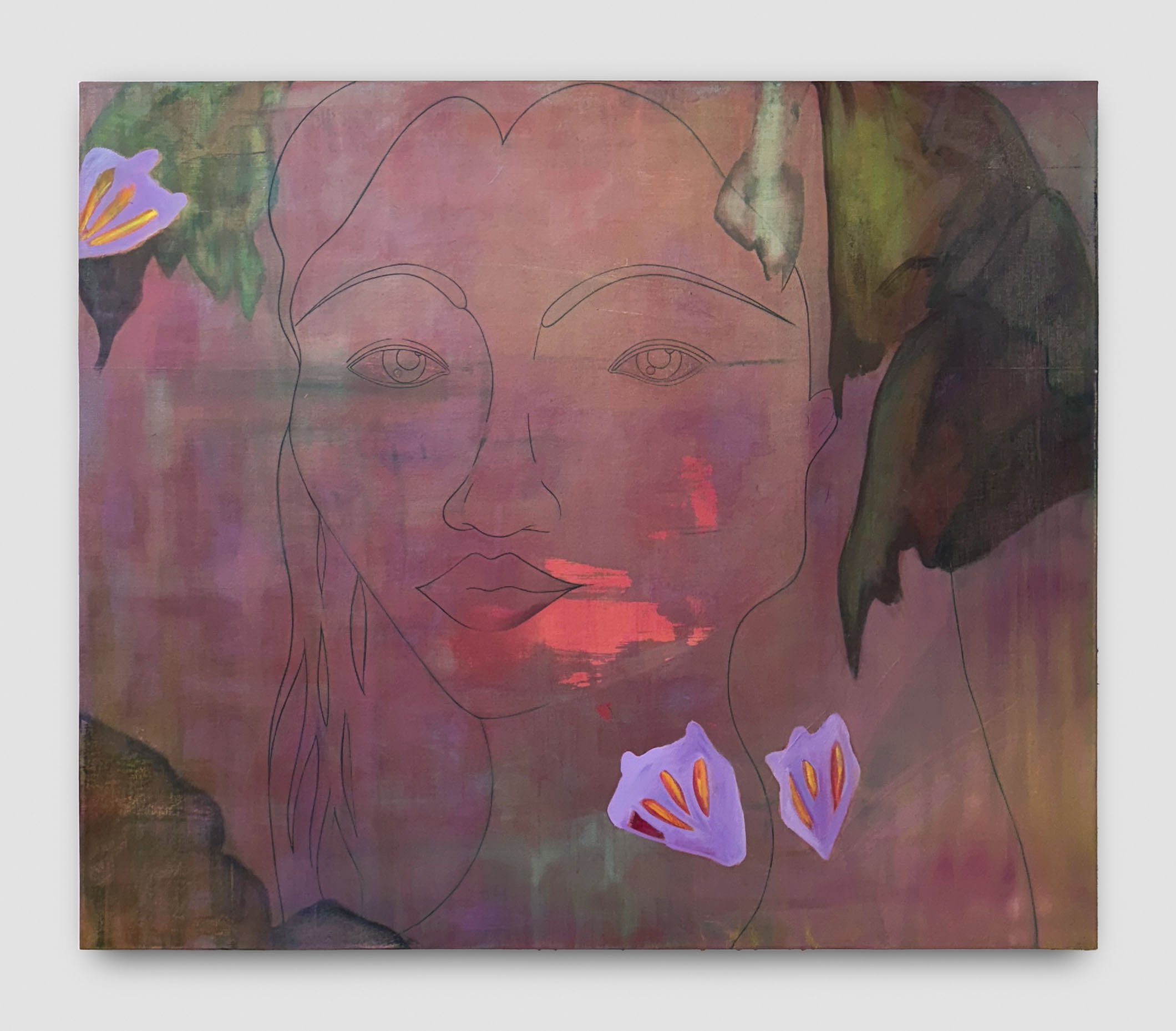
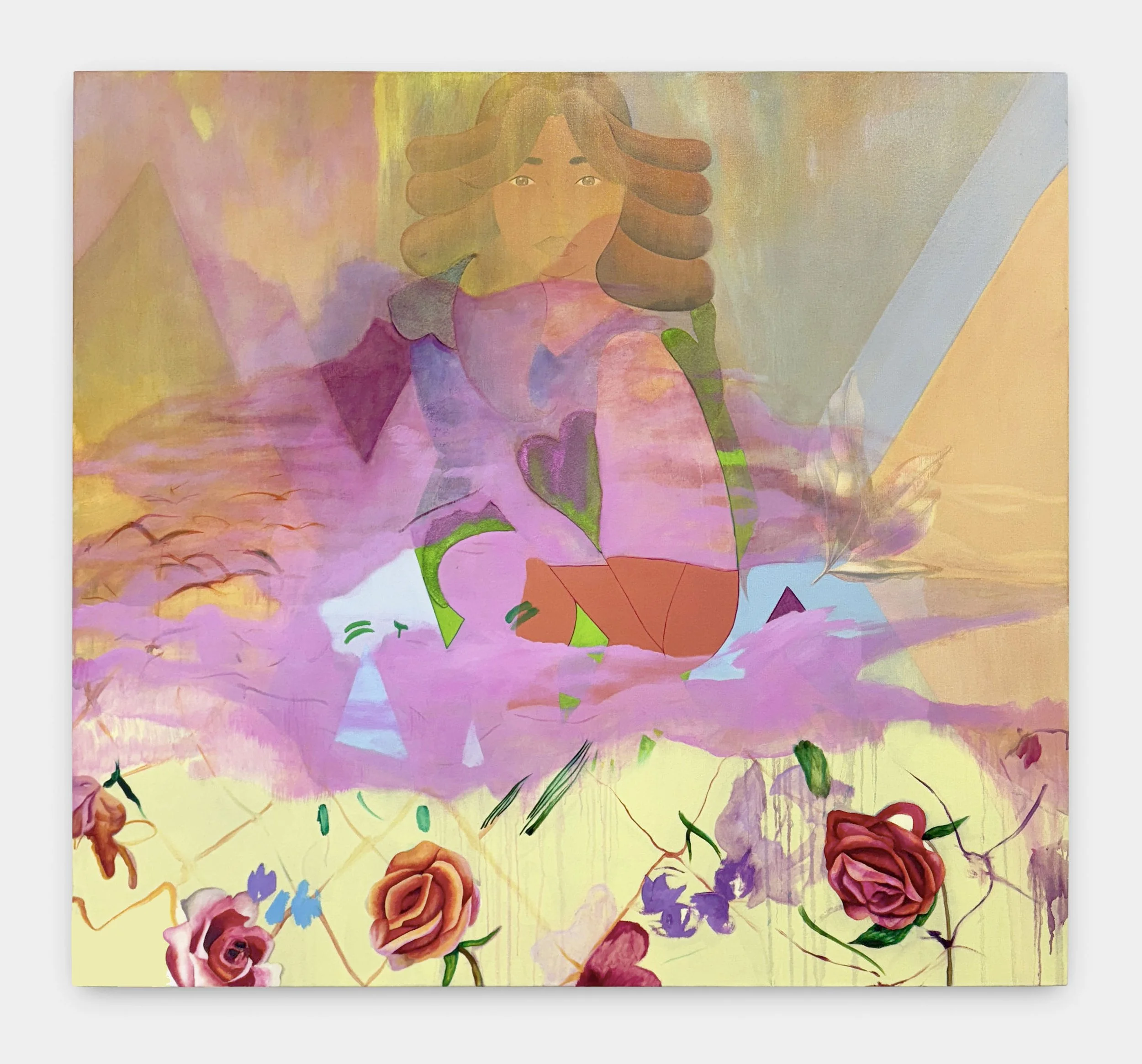
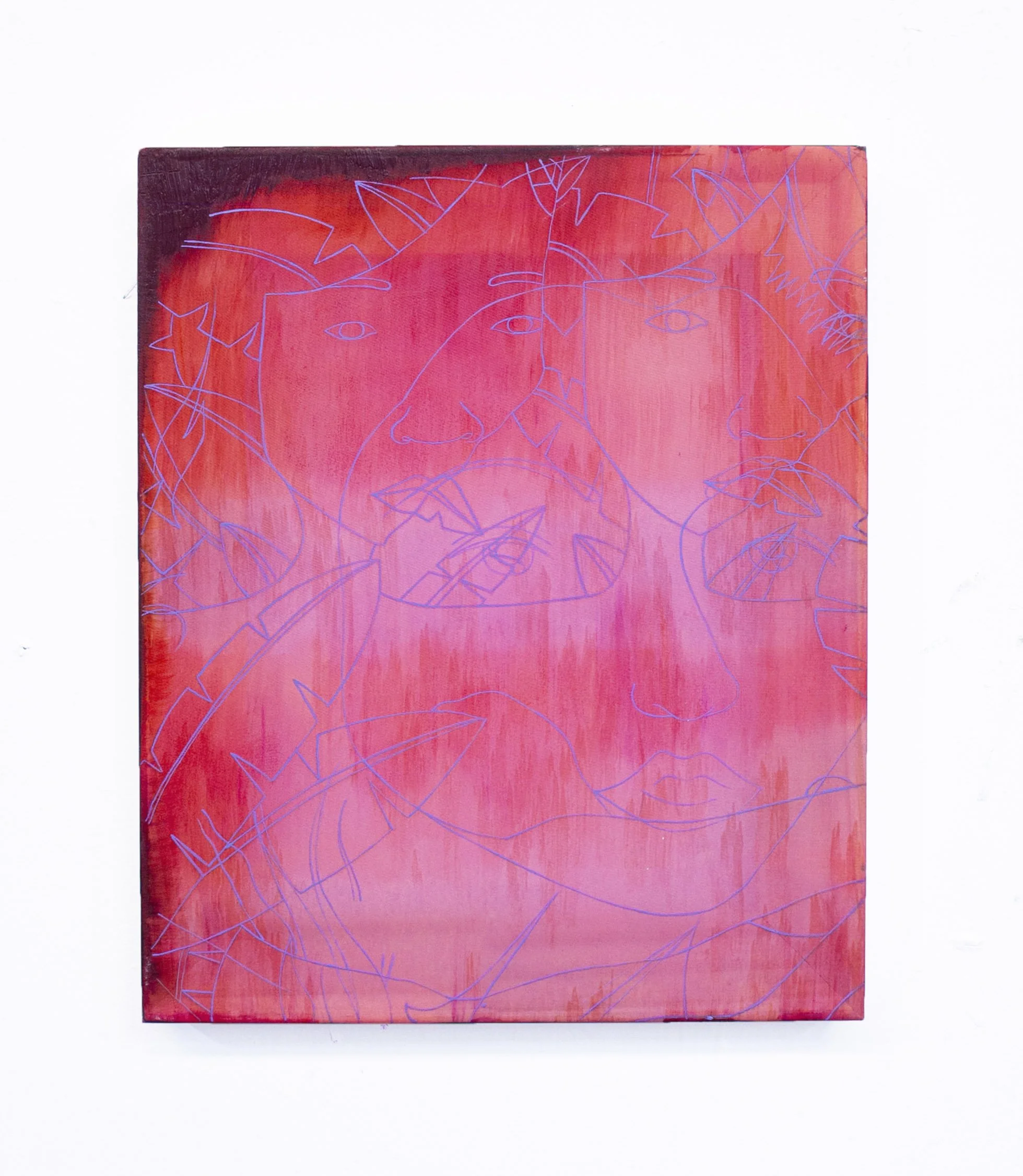
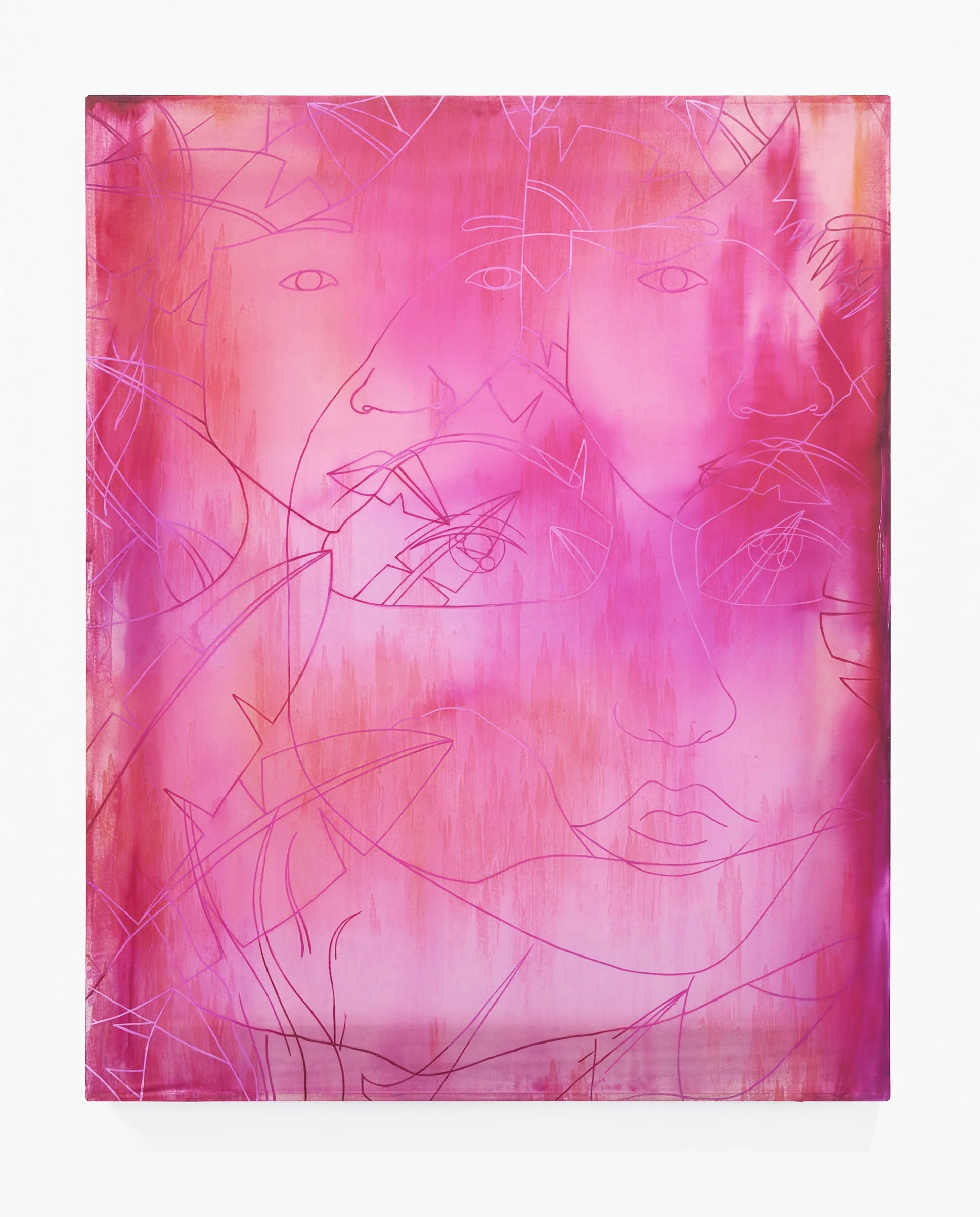
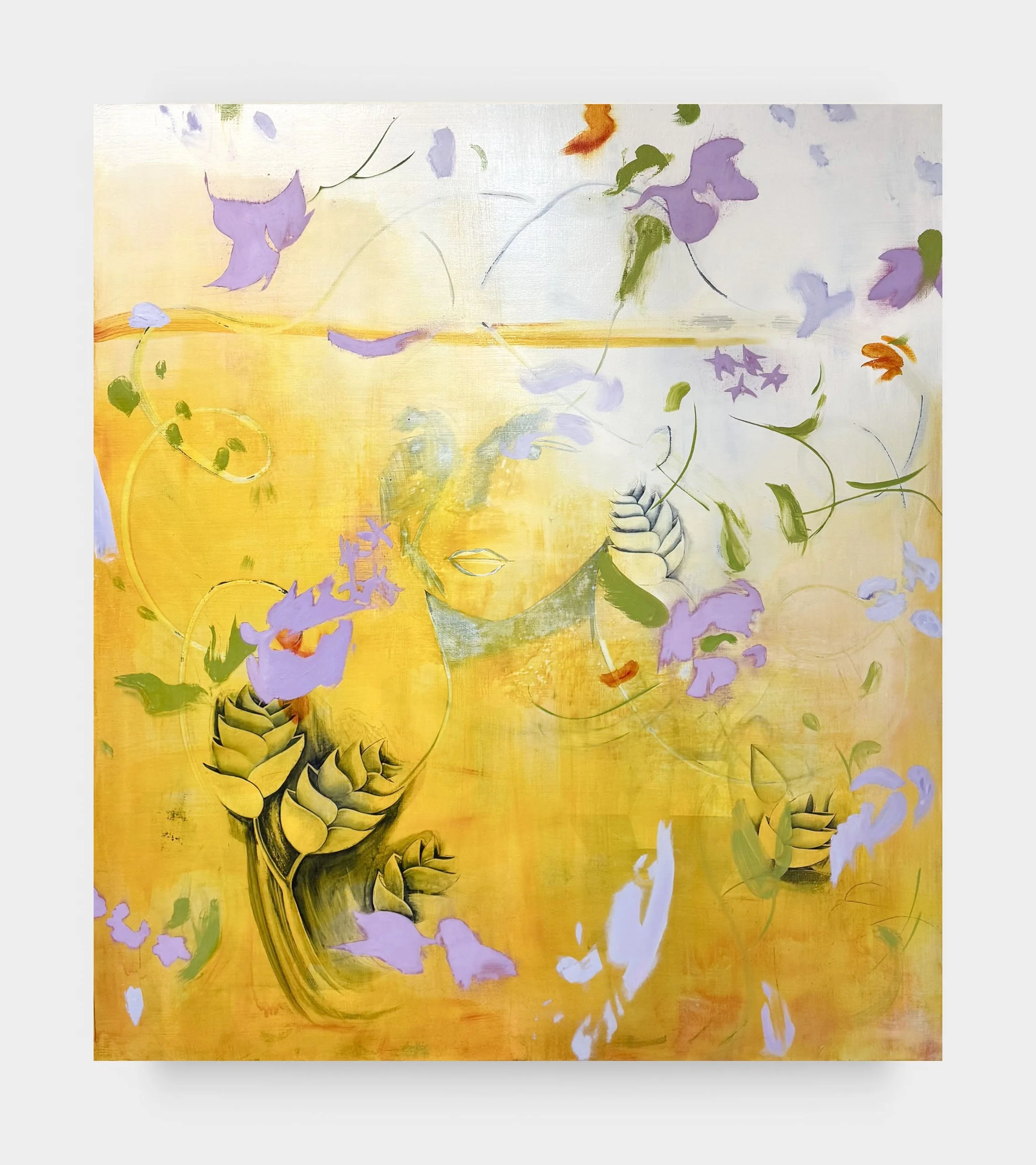
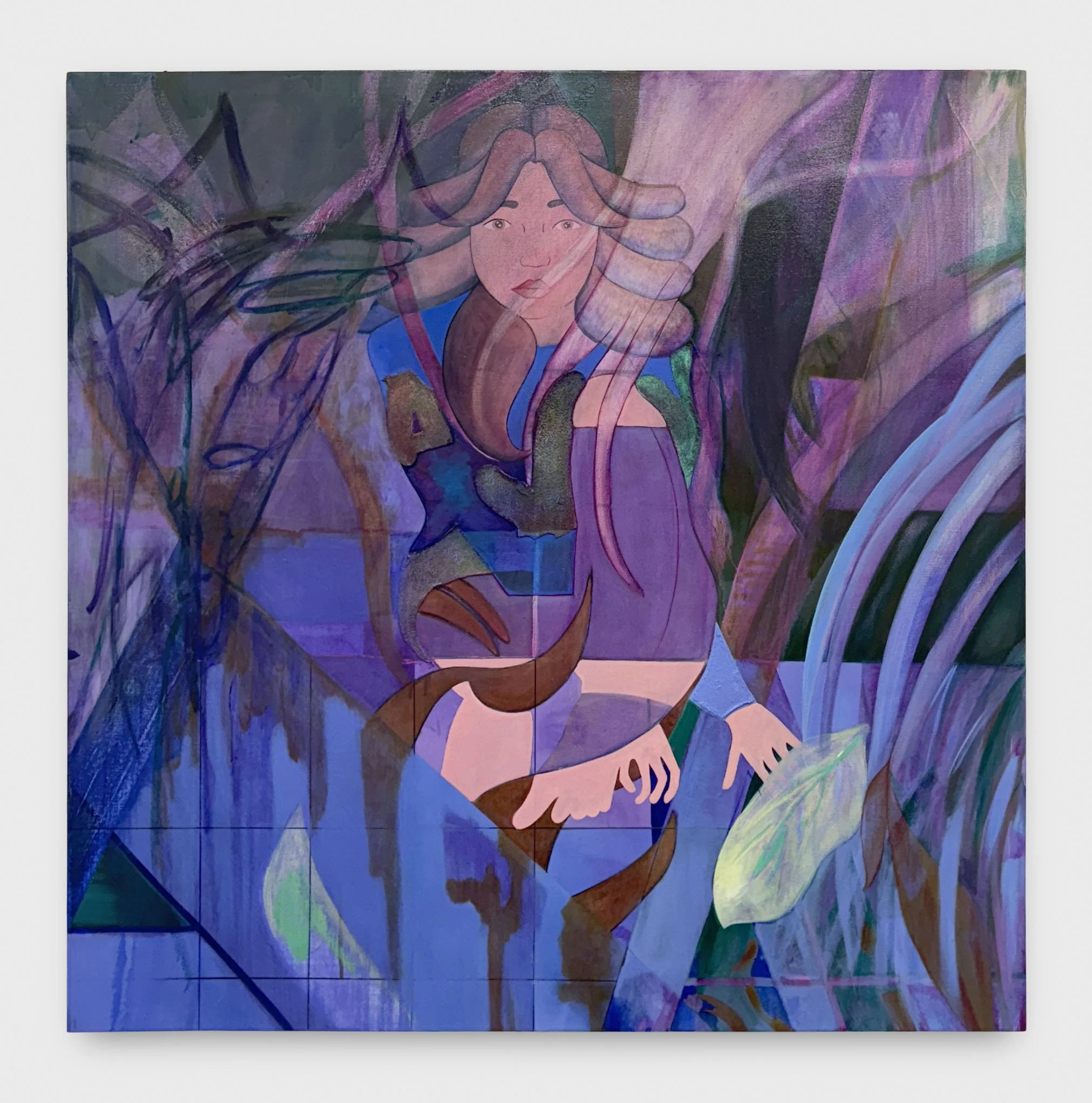
In my paintings layering is what gives color complexity, nuance, physicality. I build up colors and then glaze over them, letting light pass through multiple layers and come back to you warm and slightly altered. It becomes something else entirely. Something dense, lived, experienced, personal. At some point the surface stops being a picture and starts being something else. Something you could almost dig into.
Your surfaces often feel almost geological or organic — is there a connection to landscape or memory?
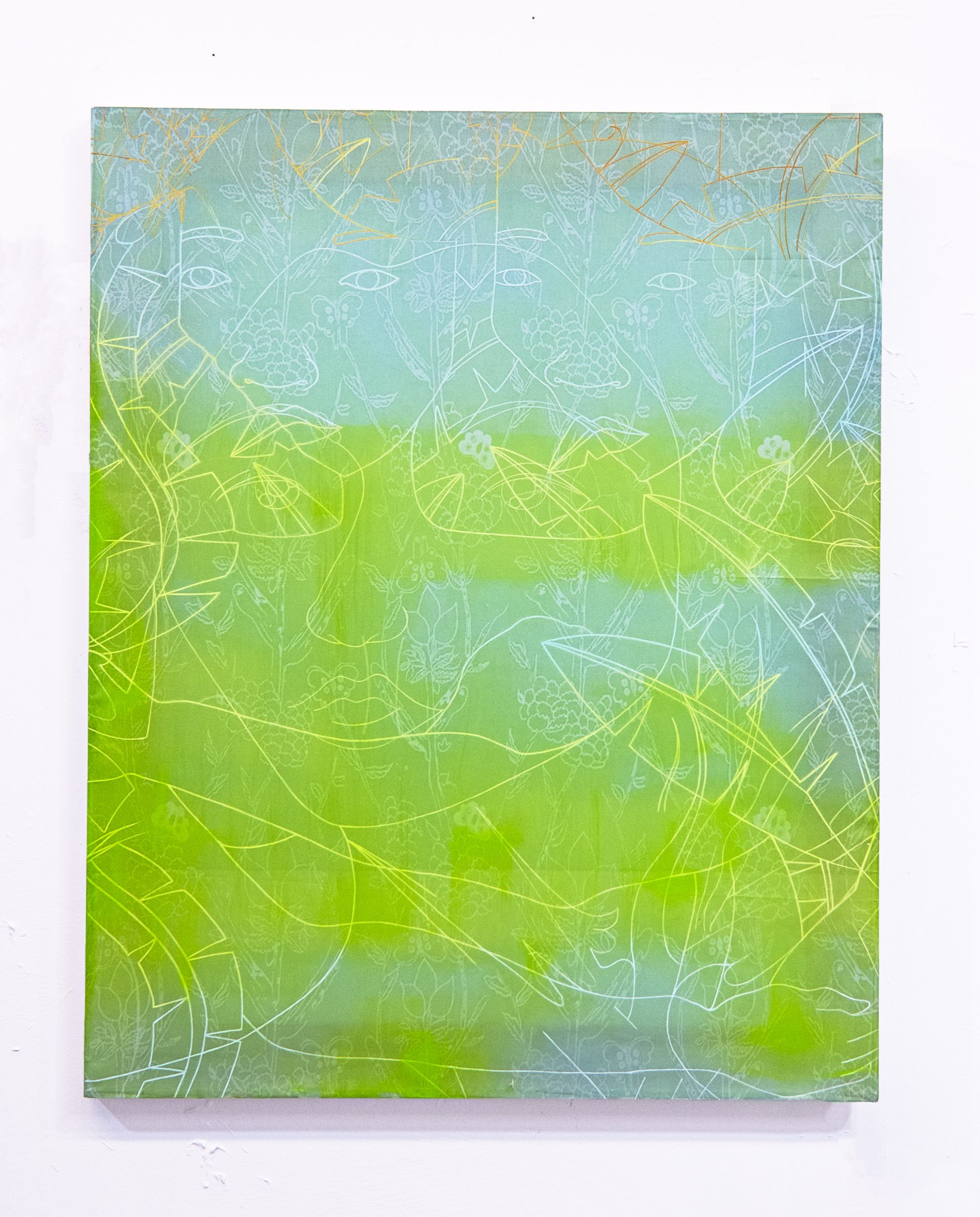
The layering creates a physicality akin to the geological. In every layer there are traces of images that literally get buried and then excavated through a long and laborious process of painting, wiping, sanding, retrieving. And I think about this a lot because it’s also exactly the vocabulary of psychoanalysis.
What gets buried in the unconscious, what repeats, what we project, what we slowly recover. My work is very much about those images lodged in the body, beyond any conscious act of keeping them there.
Your paintings evoke emotion without being figurative — what are you trying to transmit
to the viewer?
I was eighteen when I arrived at the Slade and there was a rage in me. In order to free myself from what I felt was my inherited lane, the tradition of geometric abstraction, ideas of balance and elegance and composition, I started making deliberately ugly work. I was very interested in the grotesque. It feels very teenage in retrospect. But I understand that energy now.
Sometimes in order to find your own voice you need to deny everything that came before. There was a negation. And it was necessary. But at some point that stopped being interesting to me. Because at the end of the day what mattered was my experience in the studio. I was spending long hours with those paintings. And if all I was trying to do was piss people off, that wasn’t fun.
Then something else started happening. I began showing the work and talking to viewers, people who were moved by it. I hadn’t quite believed I could actually touch people through painting. Once that started happening it became so much more powerful than any act of rebellion.
I’m not trying to fabricate any particular emotion. I just know the work needs to be honest. And the emotional weight, when it lands, usually comes not from the image itself but from somewhere else entirely. From the color, the hues and transitions, the handling of paint, the excavating, the sanding. The physicality the surface carries.
Honest about the nostalgia, the fantasy of a landscape I’m not painting from because I’m not in Brazil. There’s a sadness to that, a quality of longing and imagination. Or the quality of not
feeling at home in a body that’s been cut open twice and has housed two other humans who are not there anymore. There’s an emptiness to that too. Those are real emotions. That’s what I work from.
Do you see your work as a personal language or something more universal?
Absolutely personal. I actually just had a big argument with a friend who shares my studio. She’s American and she believes gesture is inherently emotional. For me that sounds like 1950s American propaganda.
Visual language is not universal. It is constructed. What we see is inseparable from what we have learned how to see. Perception itself is trained. The emotional and intellectual response to an image depends on familiarity with the codes, conventions, and histories that give it meaning.
I don’t think if you showed a Joan Mitchell painting to Velázquez he would weep in front of it. And yet I can weep in front of both Mitchell and Velázquez because I’ve learned culturally how to appreciate them. A painting by Mitchell operates within a set of assumptions about gesture, abstraction, and subjectivity that only became legible after the development of modernism. Without that historical framework the work would simply register as chaos or decoration, as it does for many people.
As a migrant, there’s a foreignness to my work I can’t escape. In England I was foreign. In America I’m foreign. When I go back to Brazil now I’ve been away so long that I’m foreign there too. I’m a foreigner everywhere and I've had to just accept that.
What I’ve realized is that the mistranslations and miscommunications that happen in language also happen in my visual vocabulary. And I think that’s quite beautiful. My work will be partially misread by almost everyone who sees it, for different reasons, in different directions. I try to make work that is completely specific to me and trust that that specificity is enough. Not despite the foreignness but because of it.
How do you position your work within the history of abstraction?
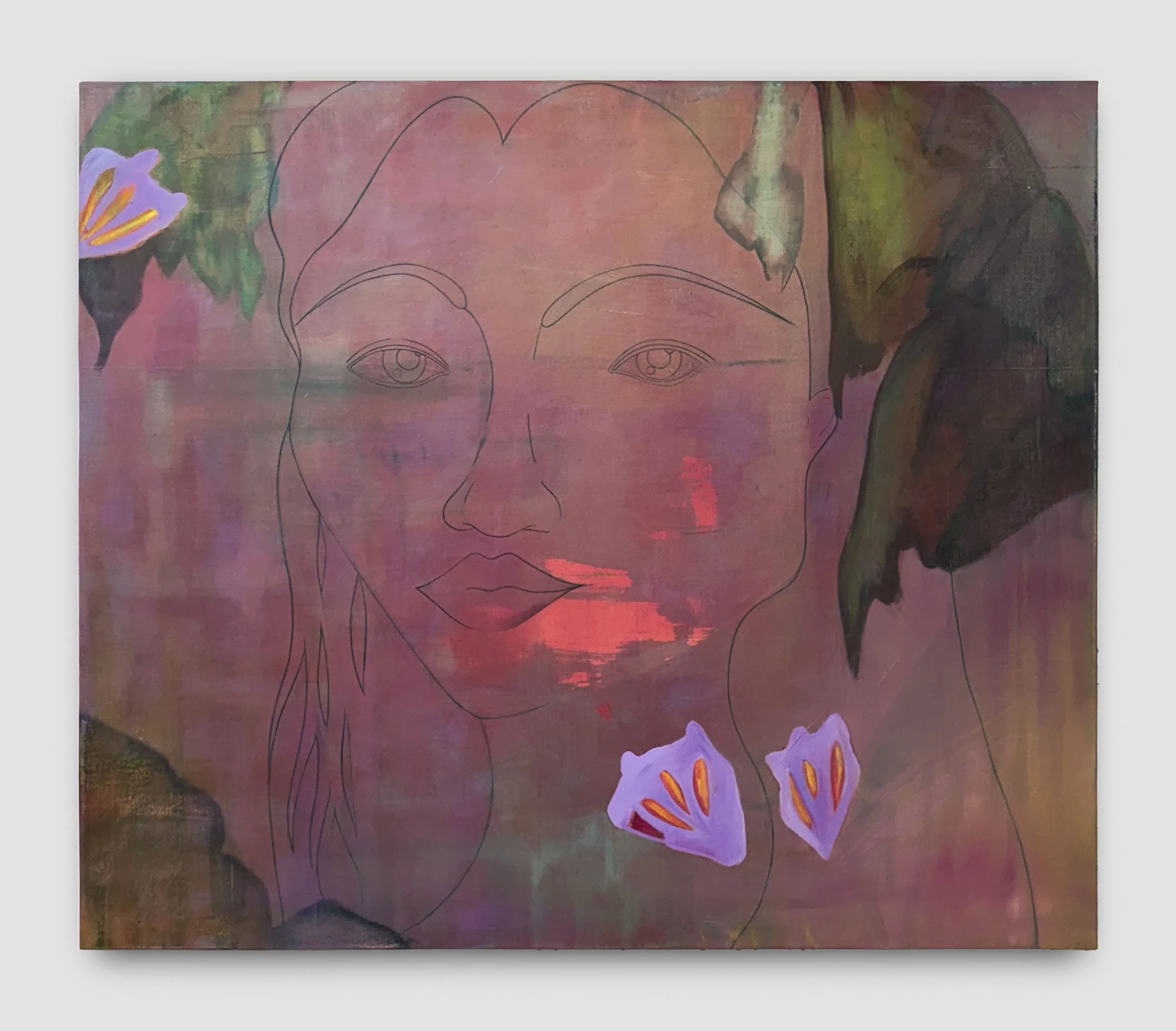
I keep coming back to Neoconcretism, and specifically to the phenomenological stance that runs through it, following Merleau-Ponty, the idea that the body is what activates a work of art. I want the viewer to have a physical relationship with my paintings. With the shapes, the drips, the fields of color. To feel them before reading them, the way you feel a change in temperature or a shift in light before you understand what caused it.
This doesn’t mean the intellectual dimension disappears. I care deeply about visual vocabulary, about history, about what gesture has meant and what it means now. What I’m interested in is the moment before that history kicks in, when paint on a surface does something to a body that language hasn’t caught up to yet.
So if I had to place myself somewhere I would say I’m still working within the tradition of Neoconcretism, just without the geometry. Fields of color where the viewer can project themselves. Something the body registers before the mind has a chance to explain it.
Are there new directions or materials you’re currently exploring?
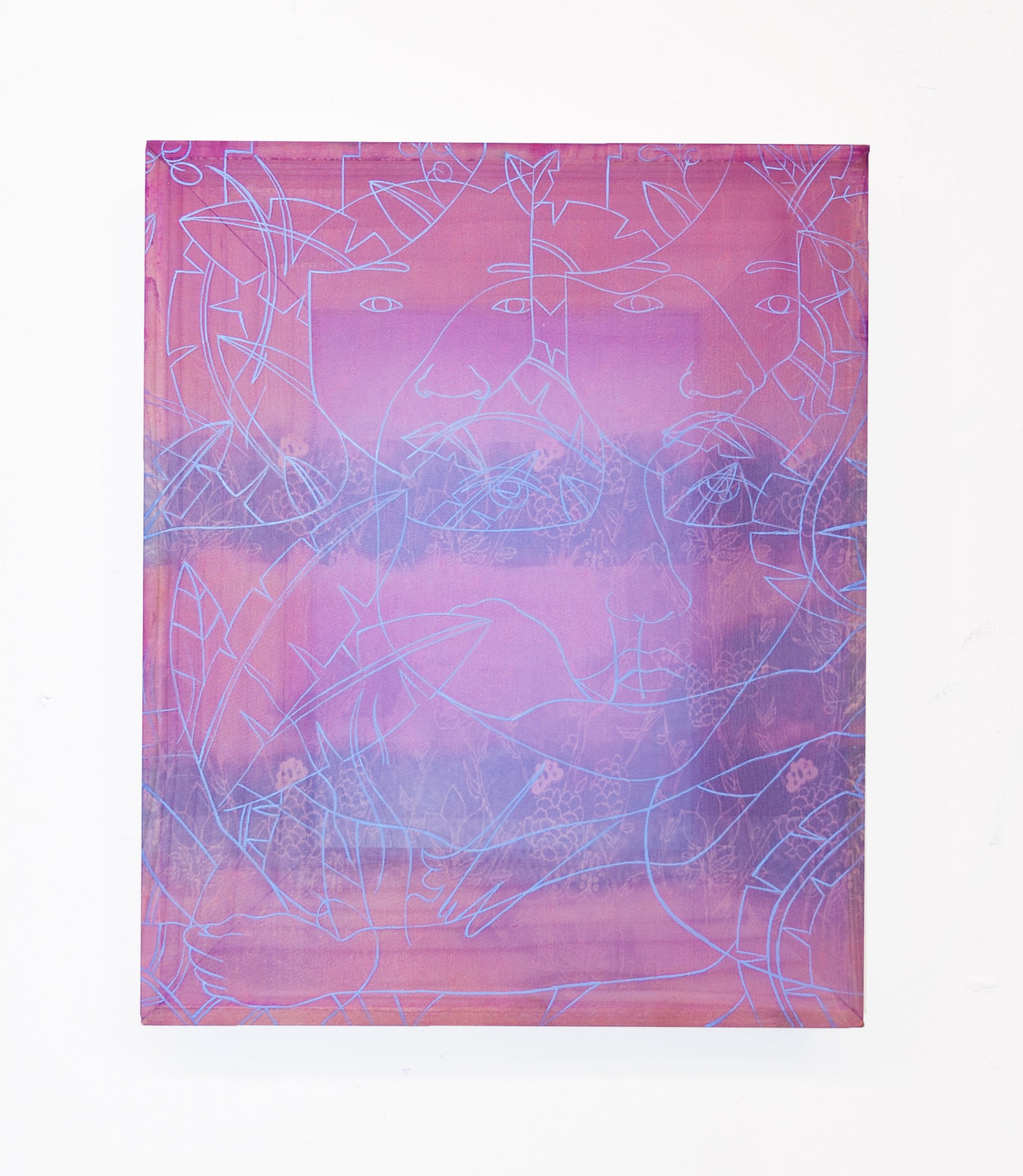
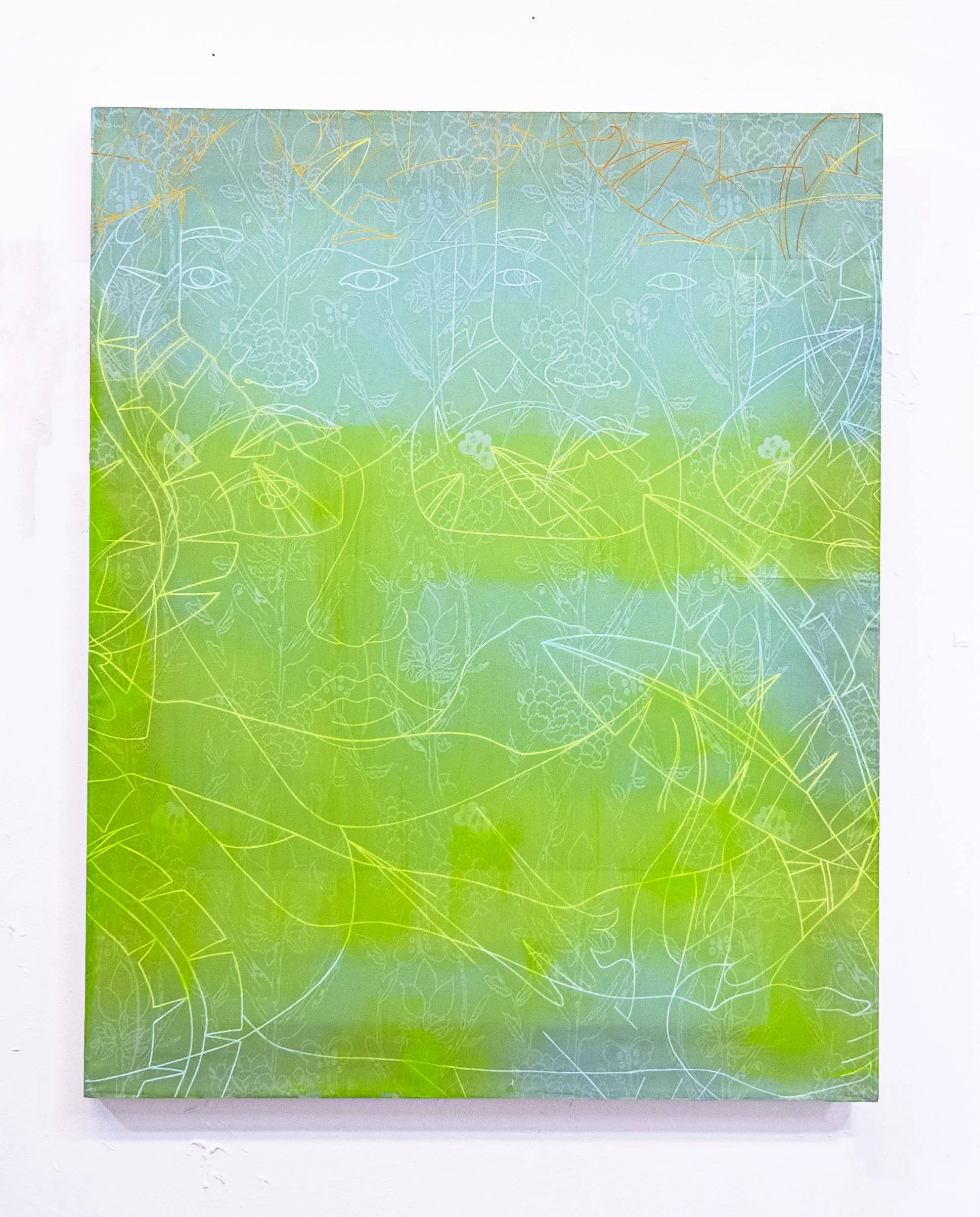
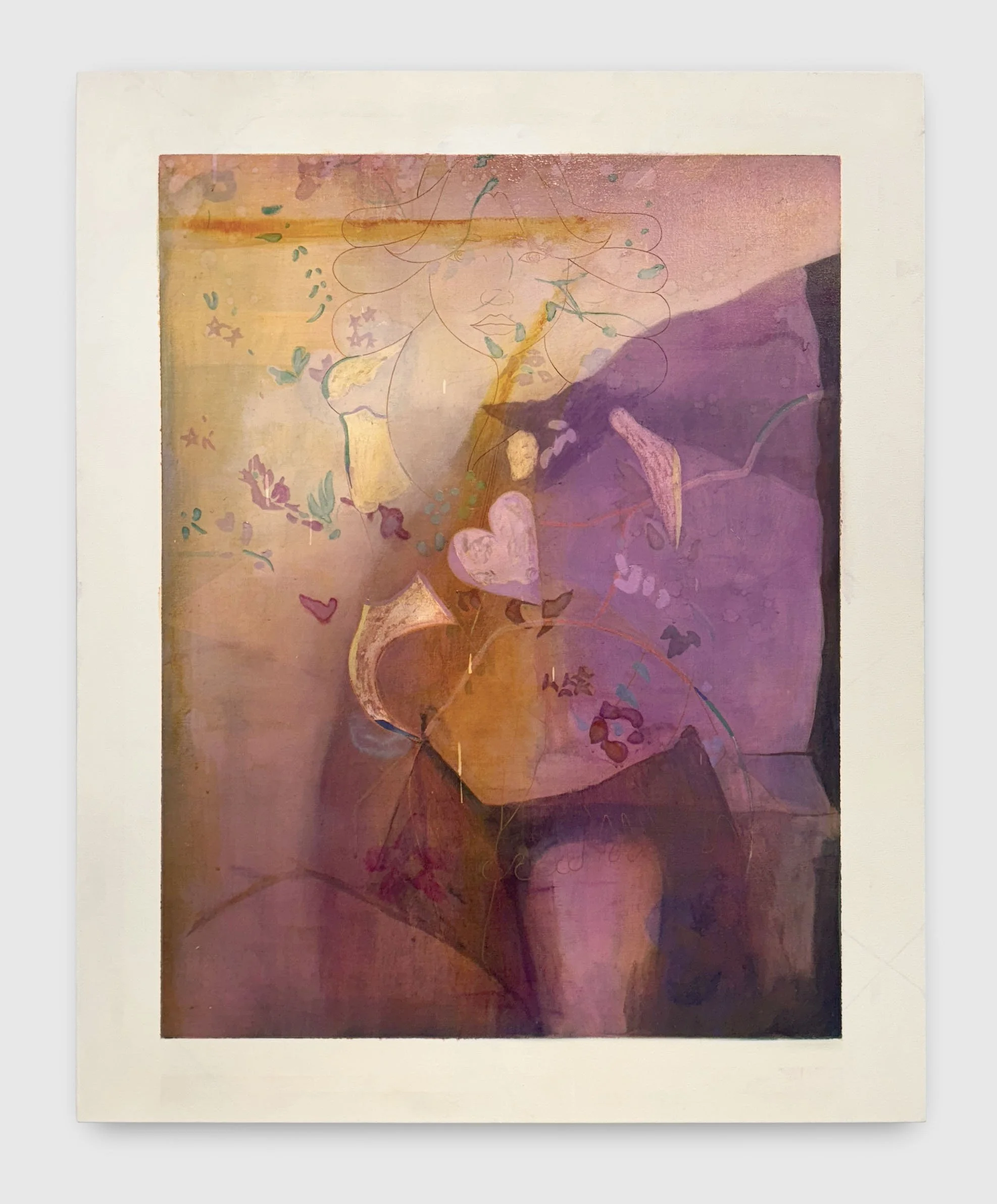
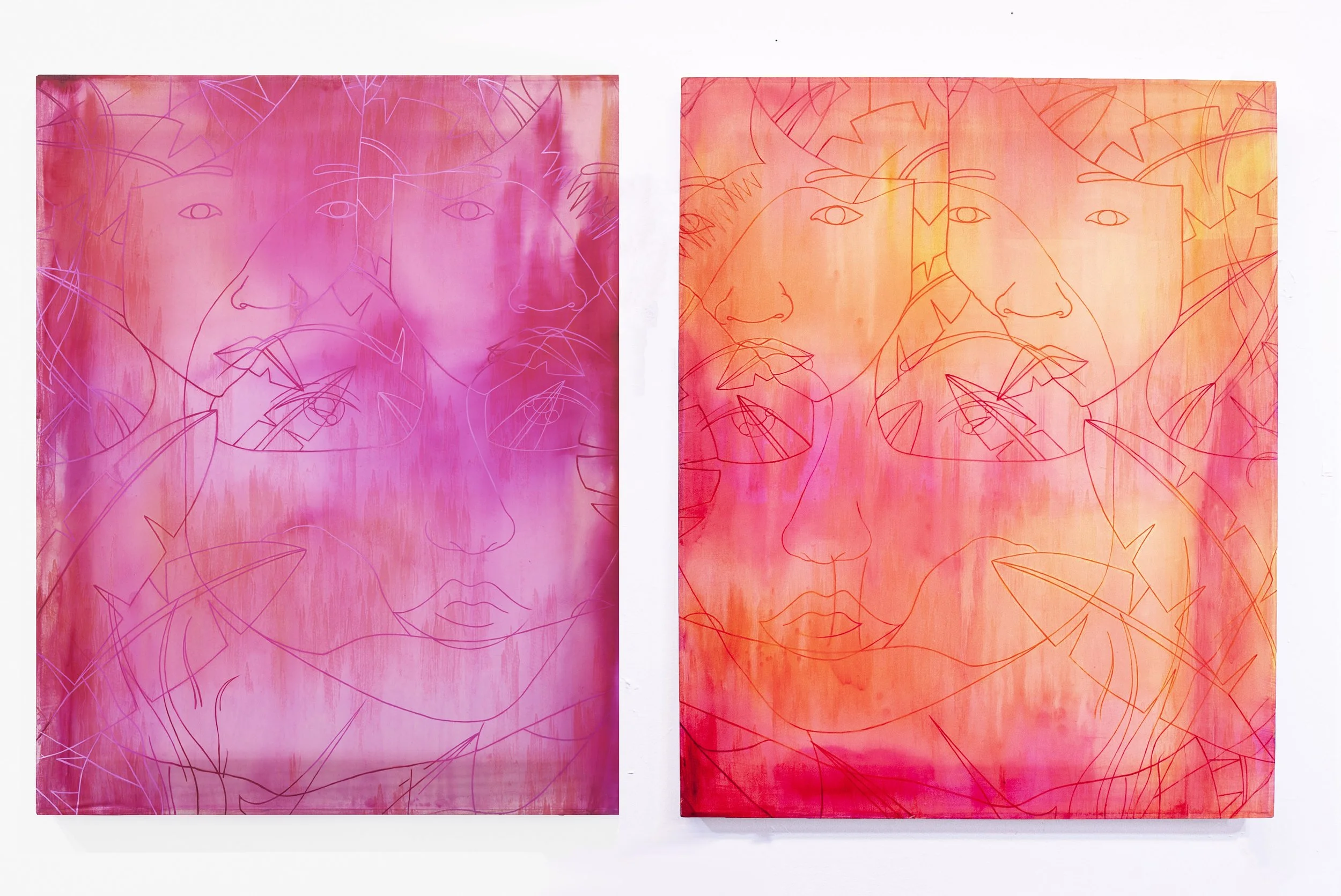
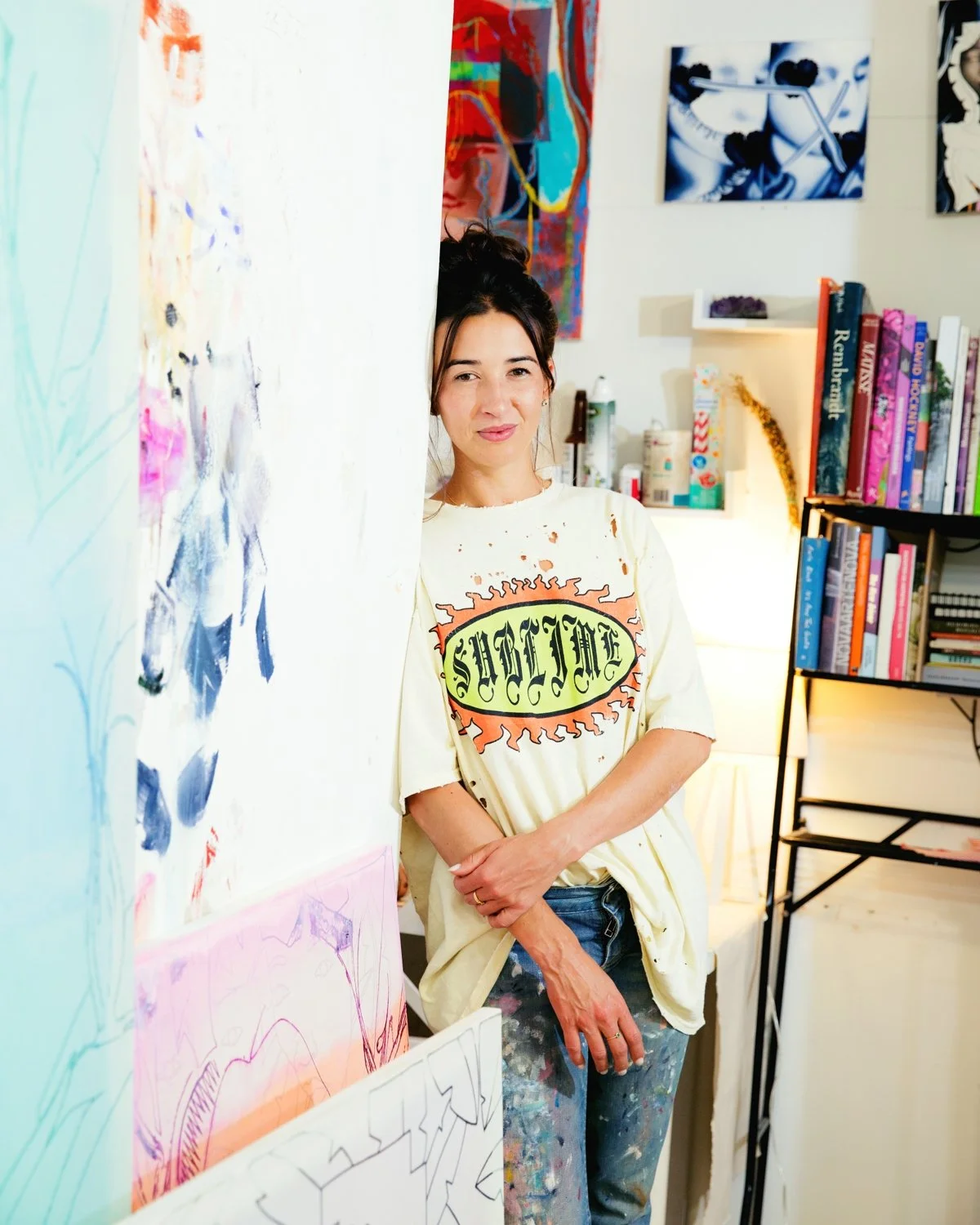
The silk paintings I showed at Ross and Kramer in 2023 and at Duarte Sequeira gallery in Seoul changed something for me. Working with a material that is literally transparent, where layers don’t just suggest depth but physically create it, where light passes through rather than bouncing off, it made something undeniable that I had always been reaching for without quite knowing it.
That experience found its way back into the oil paintings. What I’m building now through very thin washes, layer after layer, each carrying its own imagery, is a surface that has real physical depth. One image exists literally behind another. It’s a layering of memory, hints of thoughts pressing through.
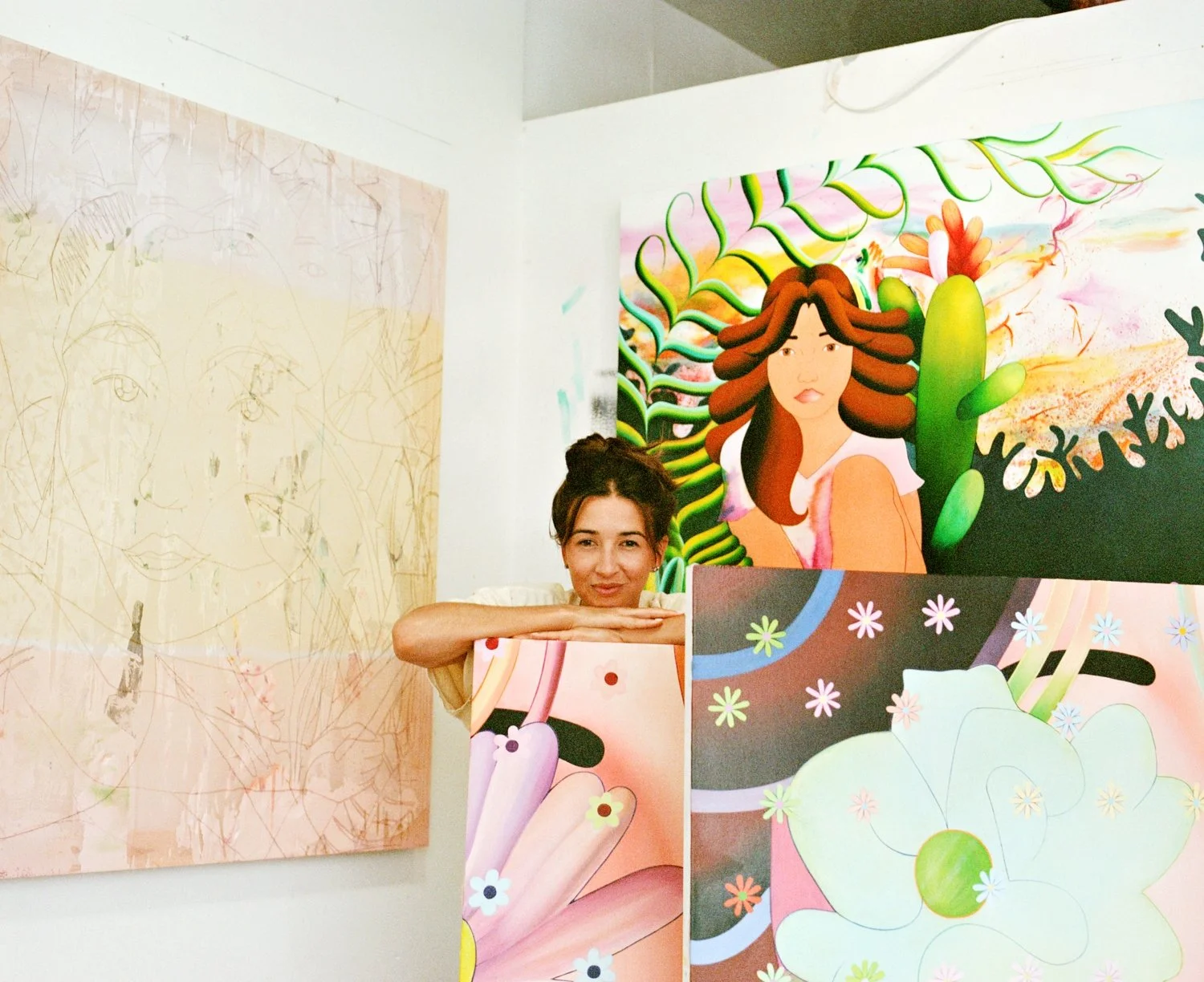
It’s also been important to be working very big again after the pregnancies. Making paintings bigger than me, heavier than me, that require ladders. There’s something about reclaiming that physical scale after two years of my body belonging to someone else that feels necessary.
Is there something you’ve always wanted to try but haven’t yet in your practice?
During the pandemic I was working with All Rights Reserved on a sculpture and then we had to stop, which was a shame. But that desire hasn’t gone away. Bringing physical characters out of my line drawings into three dimensions is something that excites me.
What would your dream collaboration look like — with a brand, an architect, or another artist?
Recently I’ve been working across different formats, a scarf, a book, a commission. Each time the work leaves the studio in a different form I learn something I couldn’t have learned any other way. I want more of that.
What I haven’t done yet is work directly with an architect on something site specific. Which is strange because I have so many architect friends and those conversations about scale and space are already happening. It just needs to become a project.
What do you want people to feel 10 seconds after seeing your work?
You know that feeling after a long day in the sun, when a little breeze comes and suddenly your skin gets goosebumps? That. The last ray of sun on your skin at the end of a really long, sunny day.