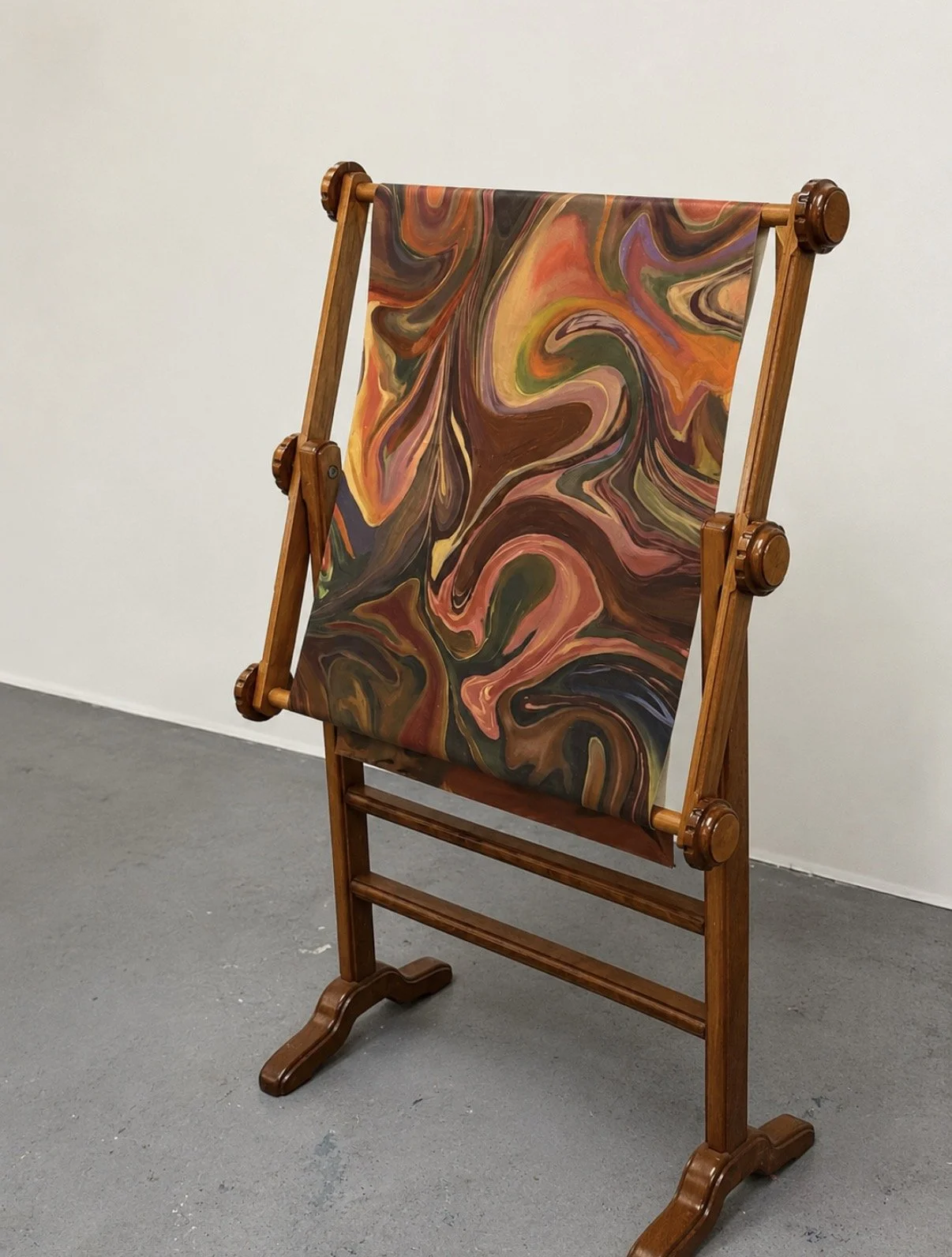
Samson Bakare: Painting as a Time Machine
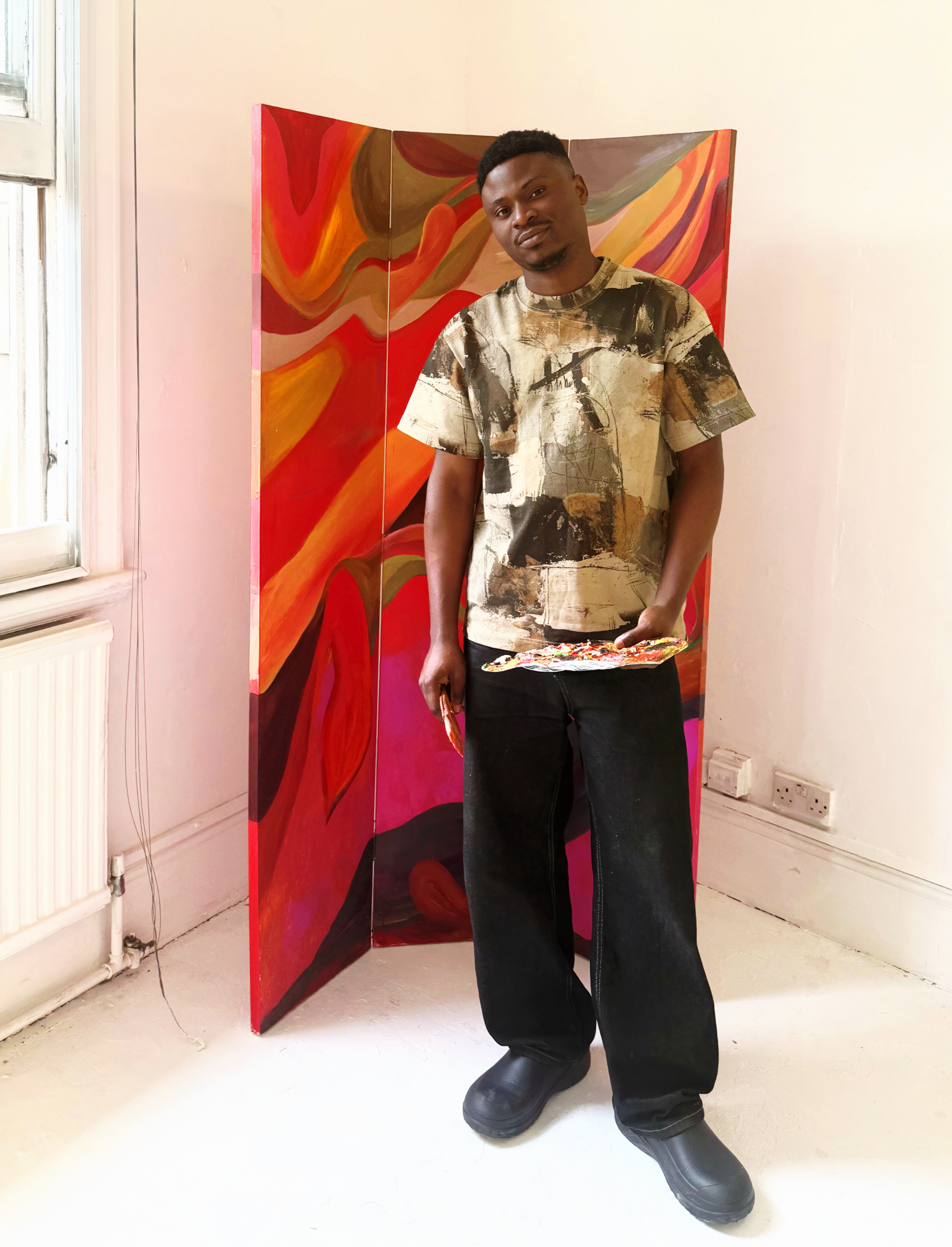
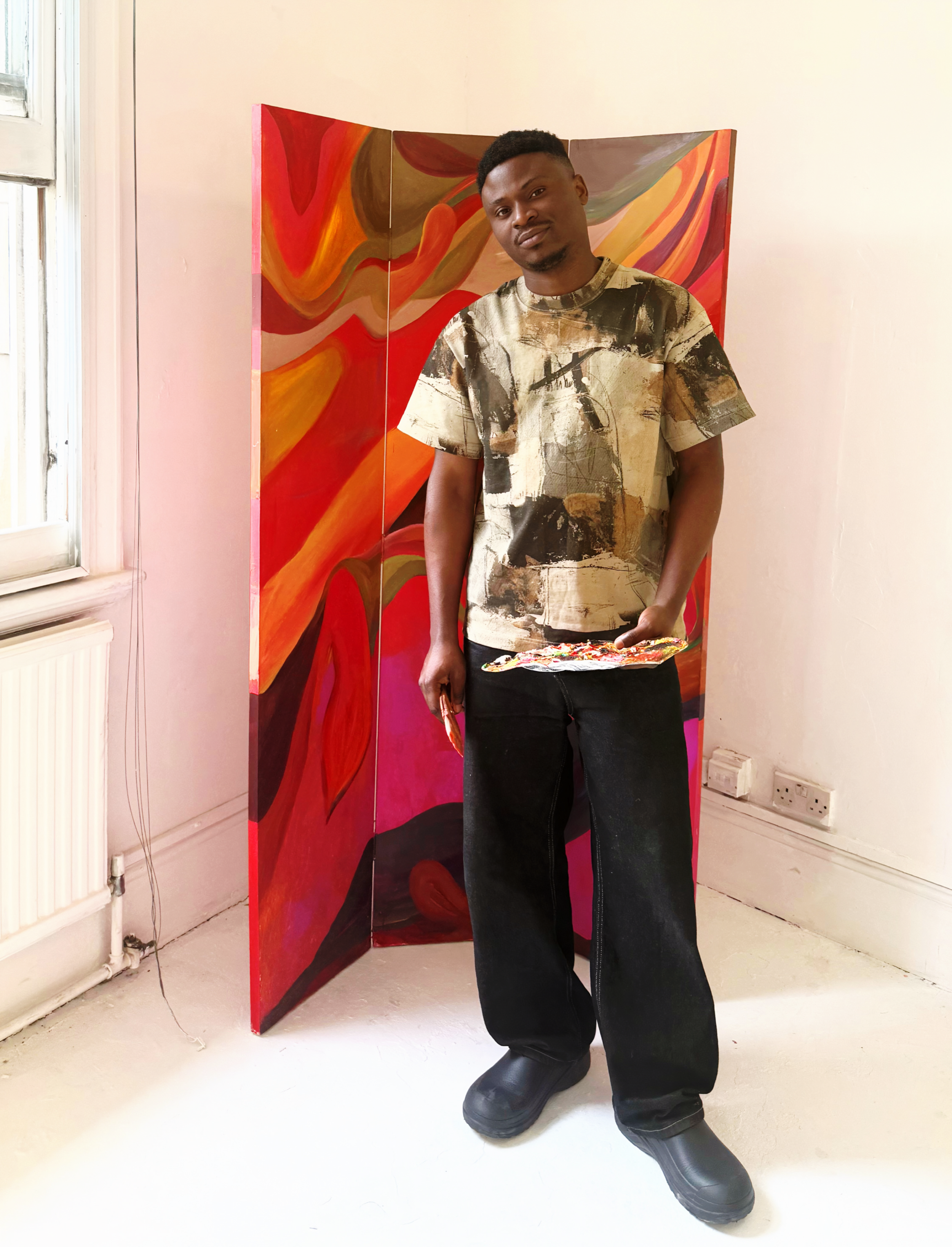
For Samson Bakare, painting is not simply a way of making images — it is a way of moving through time. Born and raised in Lagos and now based in the UK, the artist has developed a practice where memory, history, spirituality and imagination collide, drawing from influences as varied as Nok sculpture, Ethiopian Coptic art, literature and Abstract Expressionism.
From drawing superheroes as a child and secretly exploring his architect father’s studio to working night shifts in a factory while training at Lagos’ National Art Theatre, Bakare’s path has been shaped by curiosity, discipline and resilience. Today, his practice moves freely between painting, sculpture, design and installation, resisting both fixed mediums and the expectations often placed upon African artists.
In this conversation with Attaly, Samson Bakare discusses challenging the Western gaze, the influence of literature and philosophy on his work, the relationship between Lagos and London, and his ambition to create works that operate as both “archive and prophecy” — preserving traces of the past while imagining what might come next.
You grew up in Lagos and started out drawing your own comics in high school - do you
remember the first thing you ever drew that made you think you could be an artist?
The first thing I remember drawing was Superman. I fell in love with superheroes, particularly characters from Marvel and DC Comics, and began trying to recreate them in my own way.
Looking back, I think it came from a childlike instinct to scribble, sketch, and imagine new worlds. Those early drawings made me realise that art was something I wanted to keep pursuing.
Your father was an architect. How did watching him work shape the way you see space, structure, and composition today?
Watching my father make line drawings and three-dimensional architectural models showed me what was possible with design, objects, and space. I remember sneaking into his studio to play with his pencils, markers, and watercolours. Those experiences shaped my early interest in art and still influence my fascination with form and space today. In many ways, home was the first art school of my life.
You trained at the National Art Theatre while working night shifts in a factory as a teenager. How did that period shape your discipline and your relationship to your work?
At the time, there were very few non-academic art institutions in Nigeria where young artists could receive practical training and mentorship. As a teenager, I worked night shifts in a factory to afford art supplies and living expenses while training at the National Art Theatre. That period taught me discipline, resilience, and how to balance different responsibilities—qualities that continue to shape how I approach my practice today.
You're self-taught. Do you experience that as a freedom, a constraint, or both?
What I admire is the freedom in their practices. They’ve shown me that an artist doesn’t have to be confined to one material or discipline.
Gates taught me to think about objects, architecture and social space; Kapoor about scale and material experience; and Kaphar about how painting can question history.
Their work has encouraged me to think more expansively about what my own practice can become.
You call your paintings "time machines." What do you want a viewer to travel toward when they stand in front of one of your pieces?
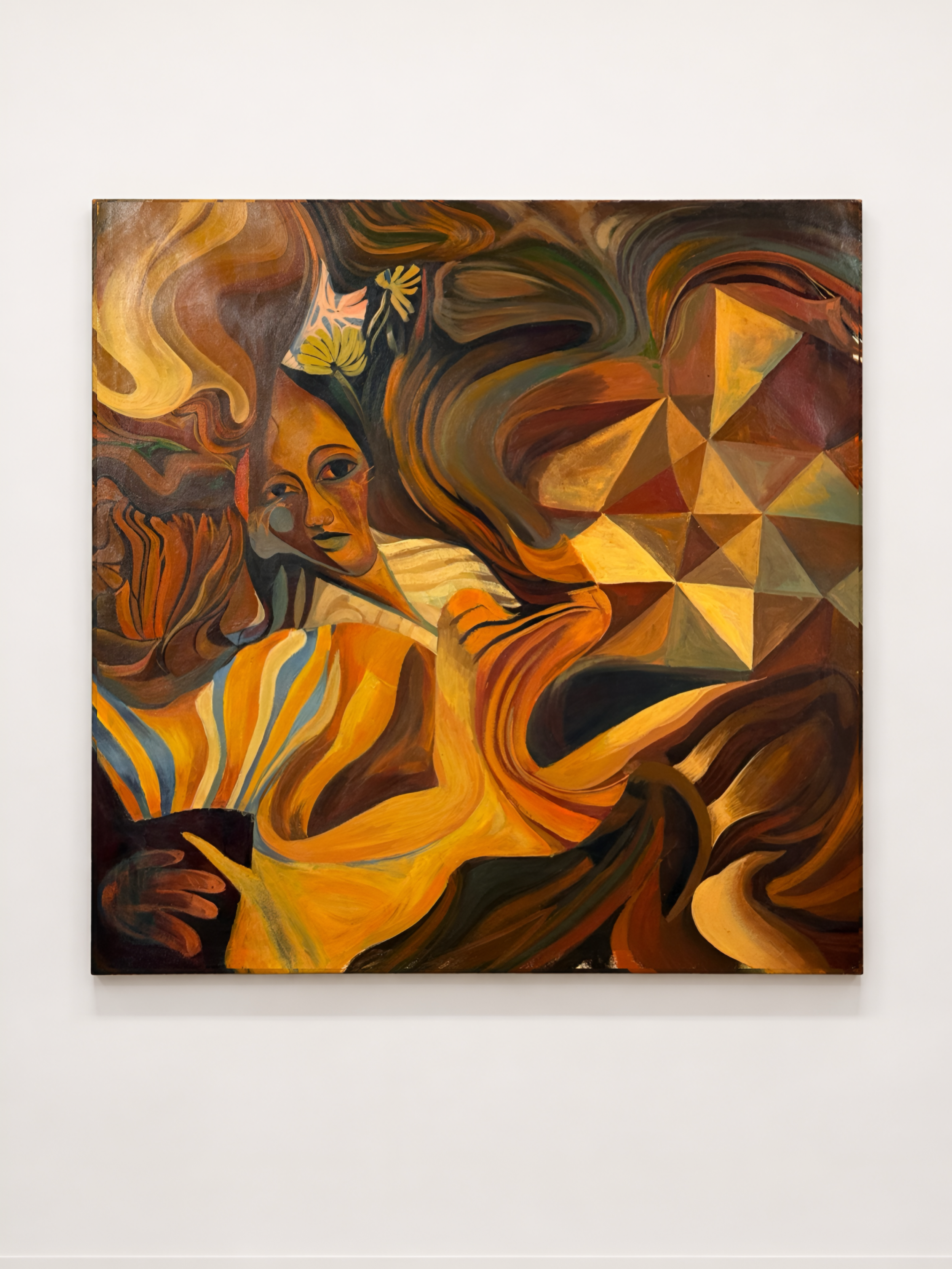
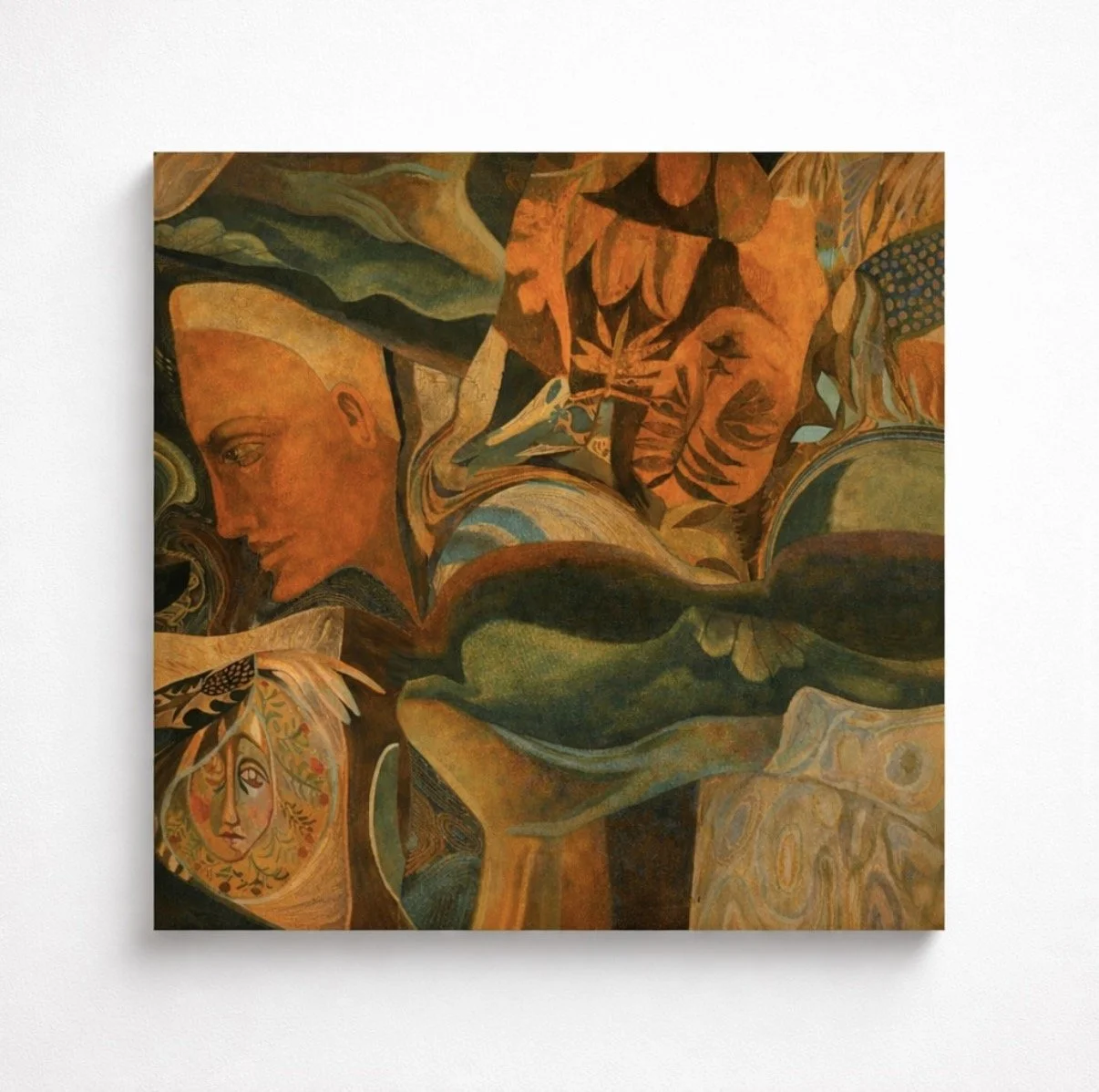
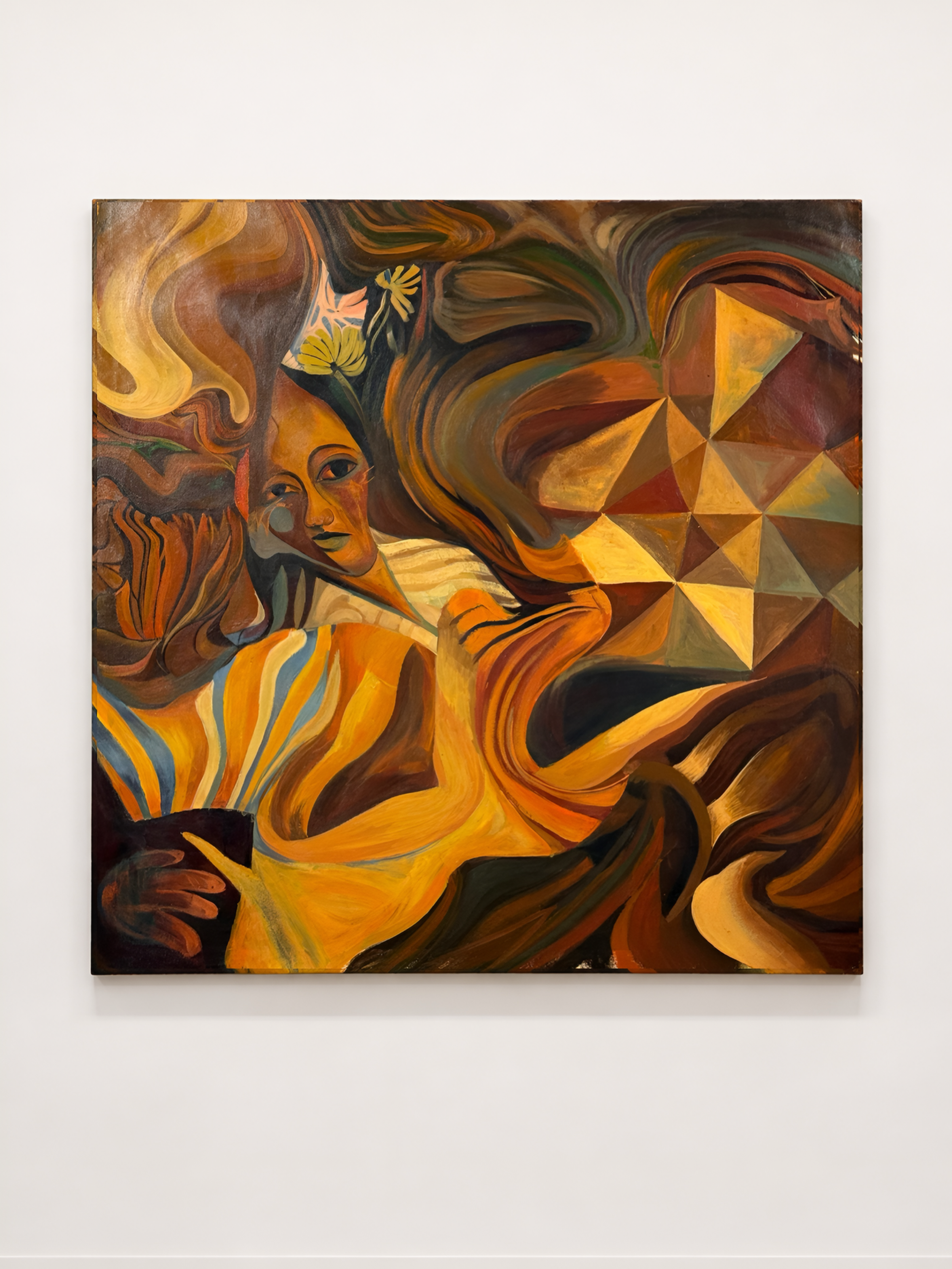
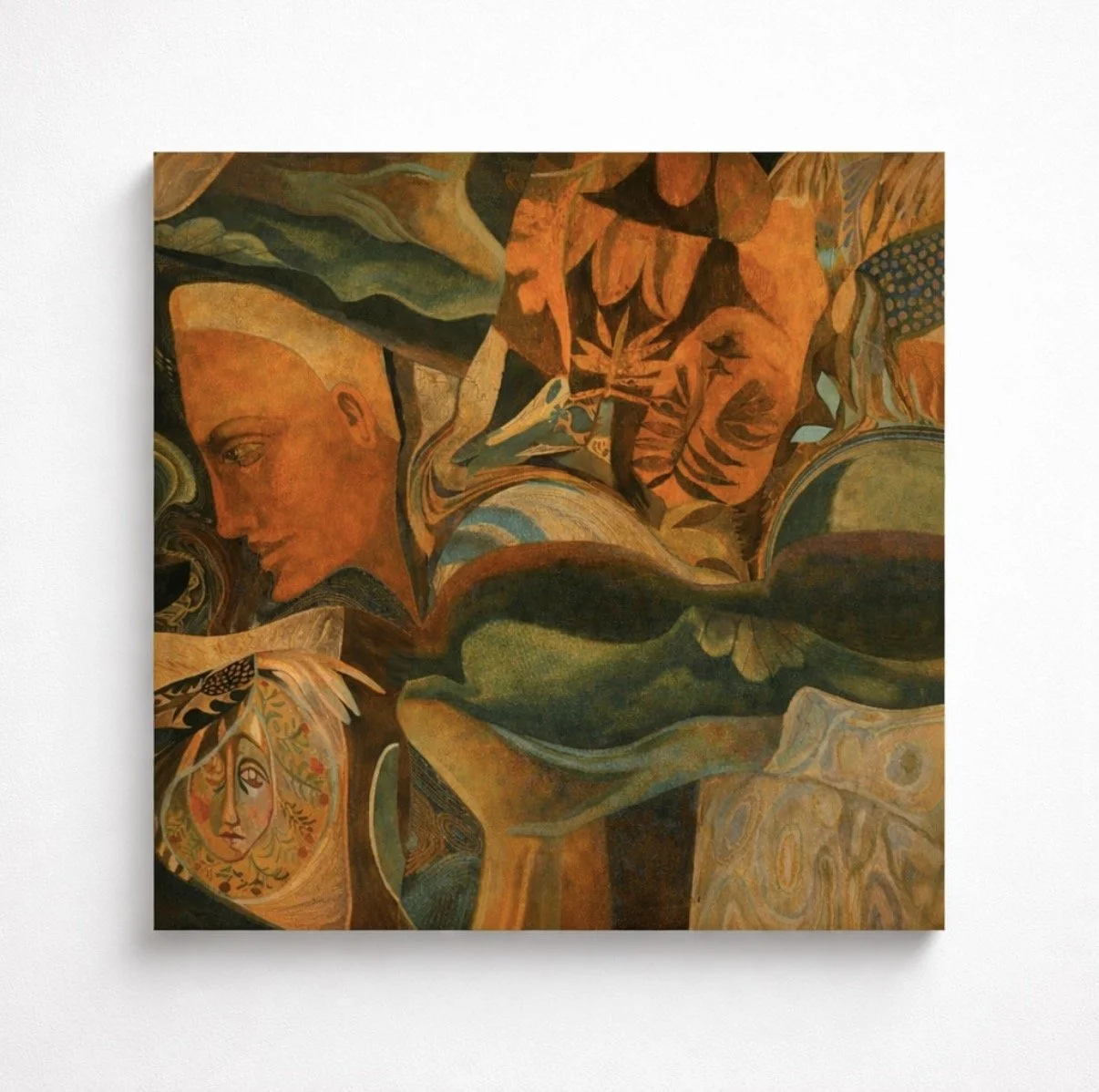
When I call my paintings “time machines,” I mean that I want them to move people beyond the present moment. I’m interested in how memory, history and imagination can exist together on one surface. Sometimes the figures or symbols feel as though they belong to the past, while also speaking to the present and imagining a future.
I want the viewer to travel between those spaces and perhaps find something that connects to their own memory or experience. In that sense, I see my art as both archive and prophecy—preserving something of where we have been while imagining where we might be going.
Your influences range from Nok sculpture and Ethiopian Coptic art to abstract expressionism. How do you keep such different worlds in balance on a single canvas?
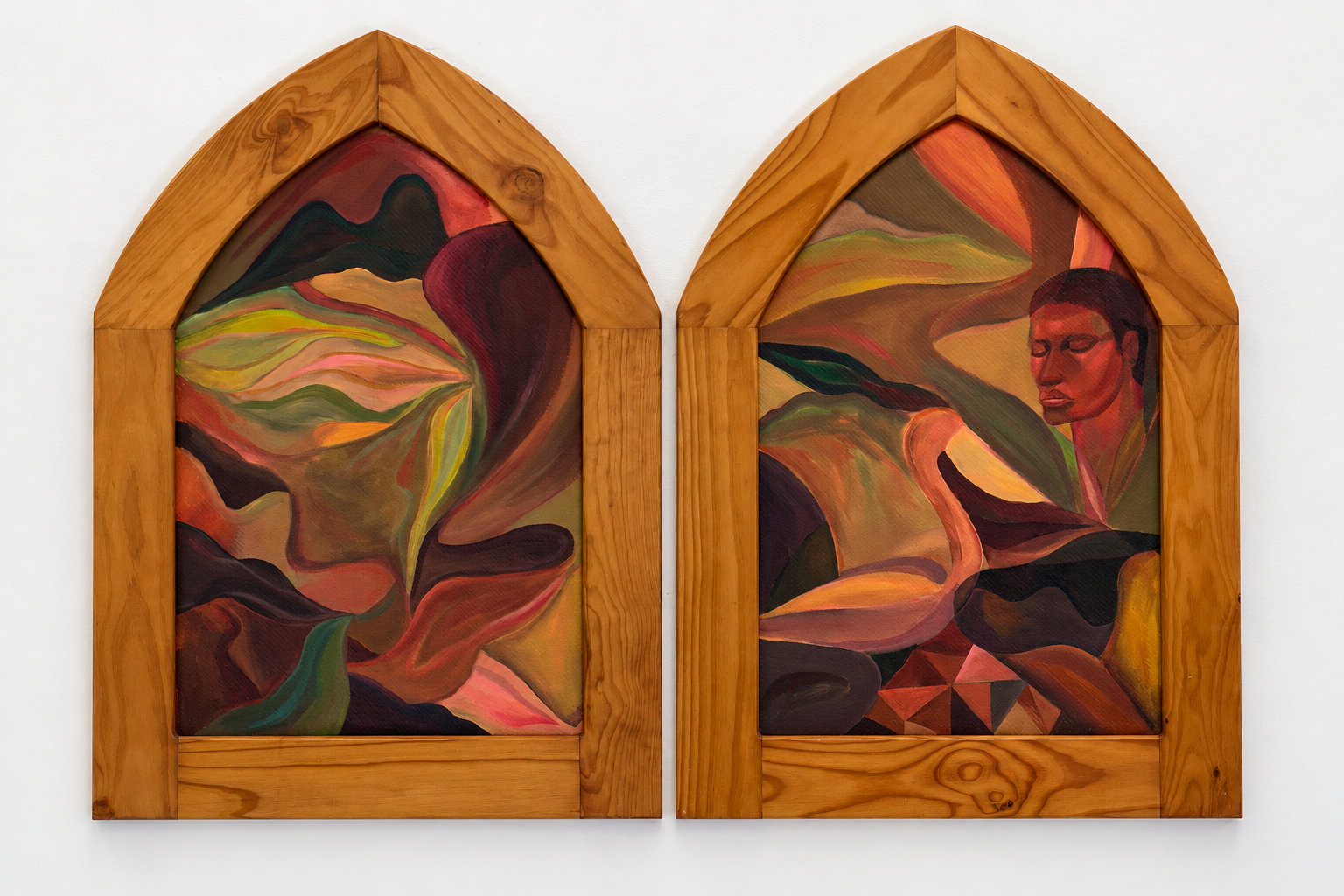
I don’t necessarily think about balancing them while I’m painting. These influences have become part of my visual vocabulary over time. Nok sculpture gives me a sense of form and ancestry, Ethiopian Coptic art brings symbolism and spirituality, while Abstract Expressionism gives me freedom through gesture, colour and spontaneity.
I allow these different histories to meet naturally on the canvas without forcing them to belong to one tradition. For me, the tension between them is actually where the work becomes interesting.
Your work often shifts between suggestive figuration and abstraction. What does distortion allow you to explore?
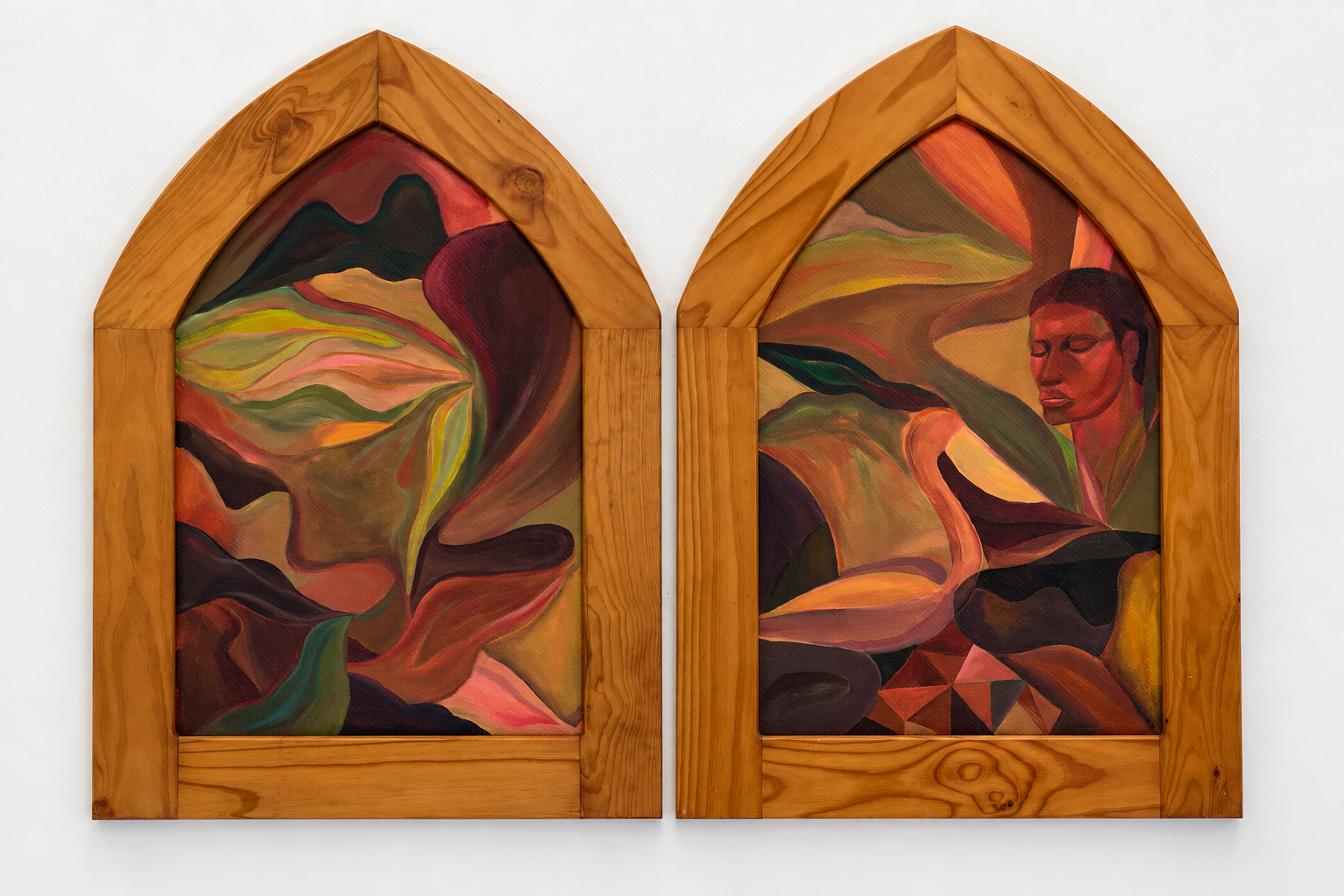
Distortion is an important part of how I construct and dissolve the figure. I use swirling gestures, repeated patterns and layers to break the body apart and merge it back into the painting.
These become an agency of dissolution—the figure is never completely fixed, but constantly shifting between form, movement and abstraction.
Why literature ? What does that recurring literary theme mean to your work ?
I’ve always been drawn to words and to writers and thinkers who look at human existence from unconventional perspectives. I love reading people like Toni Morrison, Dante, Nietzsche and Sigmund Freud because each of them, in very different ways, questions what it means to be human—our desires, fears, morality, identity, spirituality and even what might exist beyond what we can see or understand.
Sometimes a sentence, a title or an idea stays with me and immediately begins to form images or objects in my mind. I’m not interested in illustrating these texts directly; I’m interested in what they awaken in me. Literature becomes a point of departure for thinking about life, society, philosophy and metaphysics. It gives me somewhere to begin, but the artwork often takes the idea somewhere completely different.
Much of your work reclaims African narratives from a colonial lens. When you sit down to paint, are you consciously "answering back," or does that come out on its own?
Earlier in my practice, I was much more conscious of “answering back” to the colonial gaze and reclaiming how African and Black bodies were represented. But as my work has evolved, I don’t feel the same need to begin from that position anymore. My Africanness is already embedded in who I am and naturally finds its way into the work.
Now I’m more interested in broader questions around human existence, memory, spirituality, philosophy and metaphysics. So rather than making work in response to a Western or colonial gaze, I’m trying to create from my own intellectual and cultural position.
I think there is freedom in no longer feeling that the work has to explain or defend itself.
You've talked about challenging the Western gaze. Has the way audiences receive your work changed depending on where you're showing it - Lagos versus London, for instance?
Yes, I think it has changed. In Lagos, I never really had to think too much about how my identity was being read because I was creating within a culture that I understood and that understood me. Moving to London made me much more aware of the expectations placed on African artists and the tendency to read the work primarily through race, identity, or colonial history.
Over time, I’ve become less interested in responding to those expectations. I want the freedom to make work about the things I’m genuinely curious about—literature, philosophy, architecture, materiality, and human experience. Living in London has made me realise that challenging the Western gaze, for me, also means refusing to let that gaze determine what I should make.
Do you feel a responsibility to history when you paint, or is that a weight you try to set aside in the studio?
I believe that, as artists, we should either be responding to history or making history through our work. Otherwise, we risk creating in a vacuum and arriving at nothingness. A consciousness of history gives us the lens through which we can locate ourselves within the sands of time.
You move between painting, fiberglass sculpture, and design. How does an idea tell you which medium it wants to become?
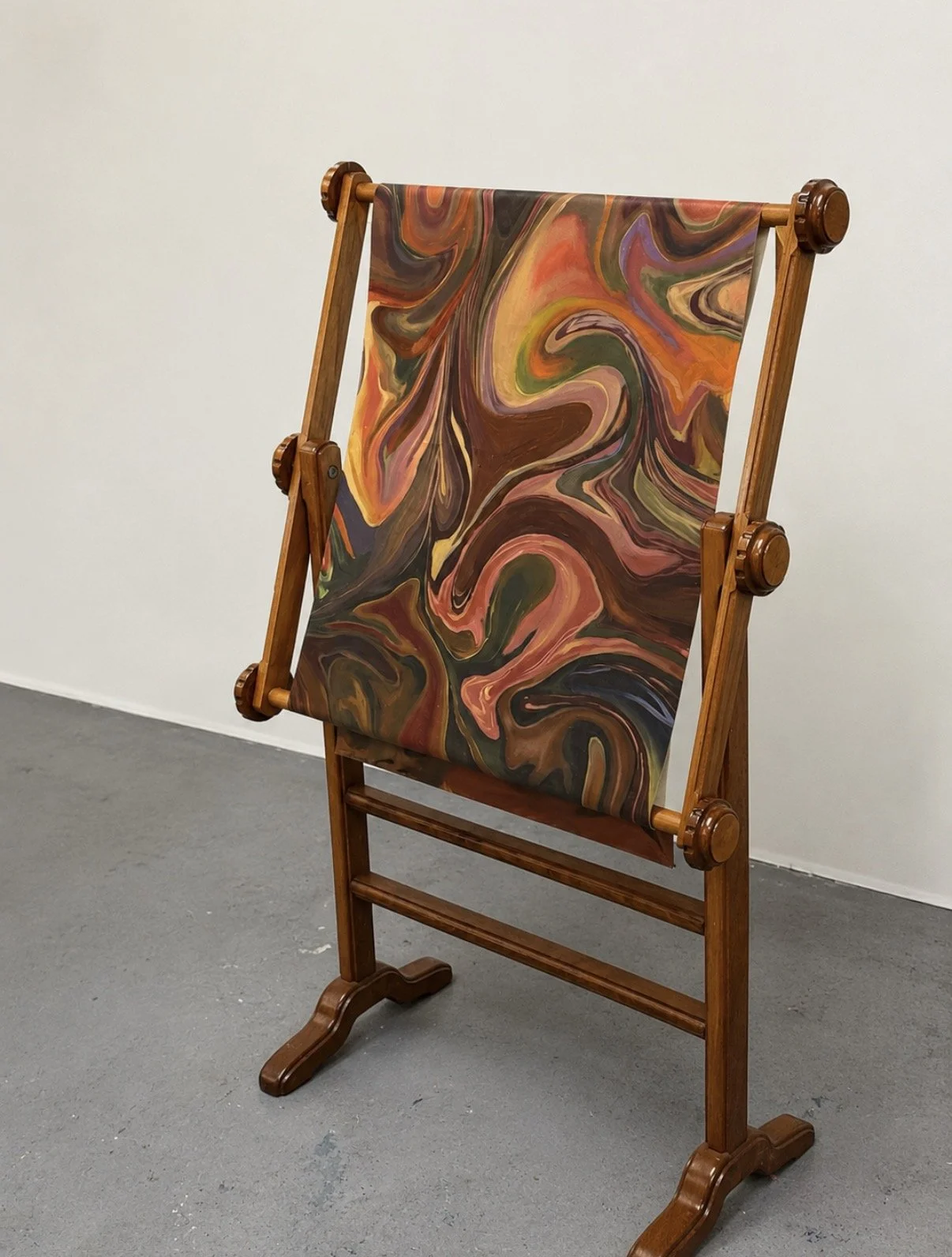
I trust my intuition. I believe you can speak to your ideas, and if you listen carefully, they can speak back to you. As an idea develops, its nature often reveals the form it needs to take—whether it is best expressed as a painting, a three-dimensional object, an installation, or an audiovisual experience. I allow the concept to guide the choice of medium rather than forcing it into a predetermined format.
Walk me through the beginning of a new piece - where does it start: a color, a face, a feeling?
A feeling is often all I need to capture a moment, an atmosphere, or the beginning of a narrative. From there, forms and colours emerge in response to that emotion. Every other aspect of artistic expression eventually becomes physical, but feeling is the foundation—the invisible force that determines how the work takes shape.
What does a normal day in your studio actually look like?
A normal day in my studio usually begins with meditation, followed by a cup of ginger or lemon tea. I then read a chapter of a book to stimulate my mind before preparing my colour palette. Since my practice extends beyond painting, the rest of the day may involve woodworking, constructing forms, or preparing other materials required for the project I am developing.
Is there a painting you've made that you found hard to let go of, and why?
Yes, Infinite Loop, a painting I made last year. I developed a strong attachment to it, largely because I experimented with a colour palette inspired by the Old Masters. The work feels archival and museum-worthy to me, so I decided to keep it private—reserved, at least for now, for my eyes alone.
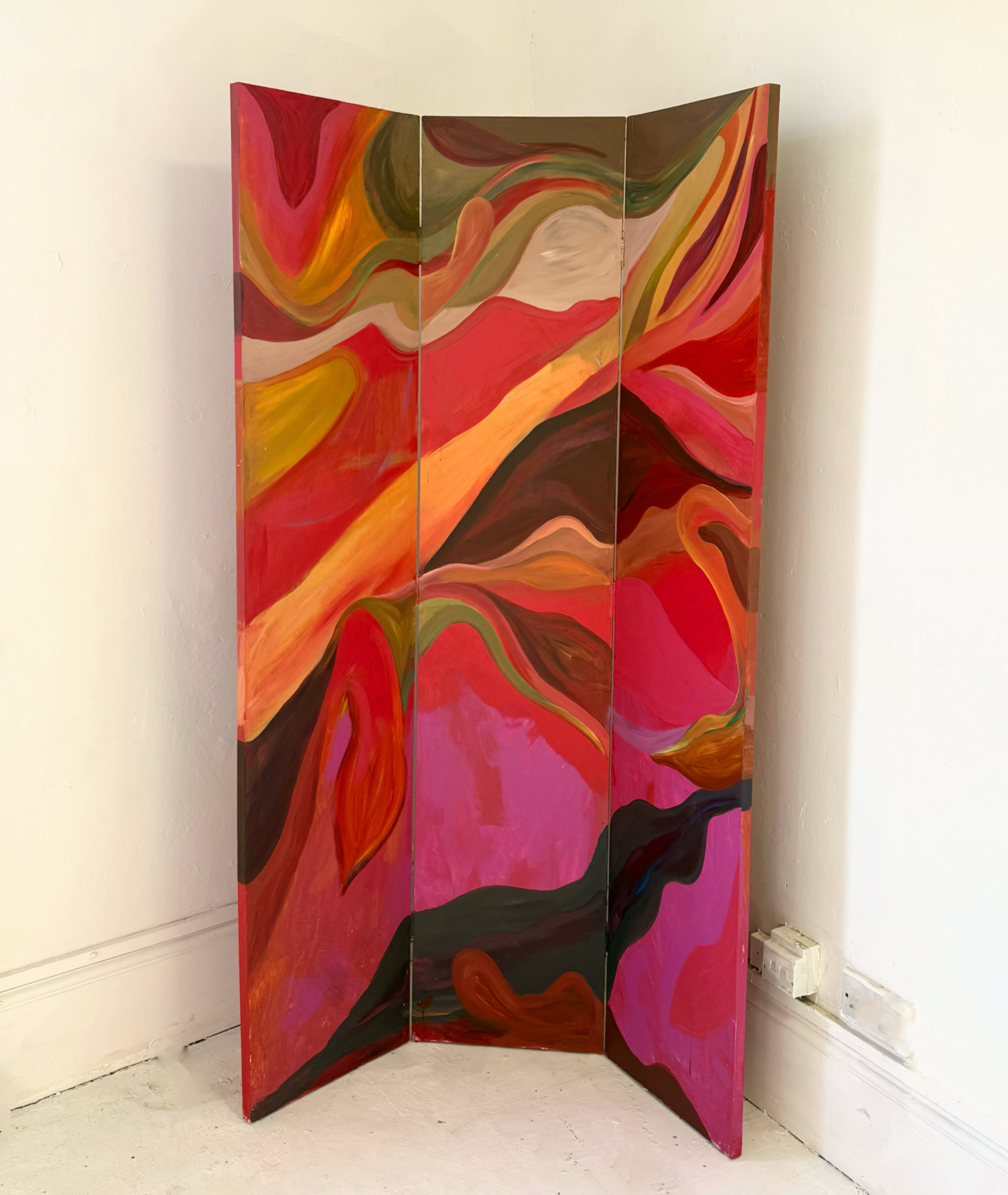
You were one of nine artists chosen to reinterpret Gucci's Bamboo 1947 bag with Alessandro Michele. What did working at the intersection of fine art and fashion teach you?
Working at the intersection of fine art and fashion taught me the value of hybridity and the need for cross-disciplinary thinking. Art shifts the mind, while fashion shapes culture; bringing the two together creates new possibilities for how ideas can be experienced and understood.
The project showed me that creative disciplines do not exist in isolation—they can intersect, challenge one another and produce new cultural meanings.
Now that you're based in the UK, how has the distance from Lagos changed what you make - or what you miss?
I have experienced many cultural transitions since moving to the UK. Lagos is a vibrant, constantly moving city, shaped by rich traditions, communal life and complex social politics.
London, however, has given me greater exposure to the international art scene and new intellectual resources. Its libraries and museums have particularly informed the recent development of my practice. The distance has made me more conscious of what I miss about Lagos—especially its energy and sense of community—while allowing me to examine those experiences from a different cultural perspective.
What do you hope a young artist in Lagos today, working a day job and training at night like you did, takes from your story?
I would call it The Beauty of Resilience. I want young artists to understand that taking on a side job to survive while pursuing their dreams does not diminish their artistic ambition. The journey may demand patience, discipline and difficult sacrifices, but no sacrifice is too great for the life and career you genuinely want in art. Keep working, keep learning and remain committed to your vision.
Where do you want your work to go in the next five years - is there a theme or scale you haven't tackled yet?
Over the next five years, I want my work to enter major museums and institutions and to expand through ambitious public-art commissions. I hope to work on a larger, more architectural scale, bringing painting, sculpture, installation and other materials into conversation. Ultimately, I want to be widely recognised and canonised as one of the youngest and most versatile contemporary artists of my generation—an artist deeply invested in both meaning and materiality.
If people remember one thing about Samson Bakare a hundred years from now, what would you want it to be?
I want to be remembered as a thinker more than an artist—someone who brought bold ideas into art through a multiplicity of materials, forms and scales, expanding how art could be imagined and experienced.