Between Control and Chaos: Inside the Metaphysical World of Amit Kanfi
Raised between Tel Aviv, Amsterdam and Istanbul, Amit Kanfi has built a practice shaped by movement, adaptation and a refusal to fit neatly into one category. A self-taught artist with roots in punk culture and a parallel life in vintage design, he spent years treating art and design as two separate identities. Today, they have finally converged.
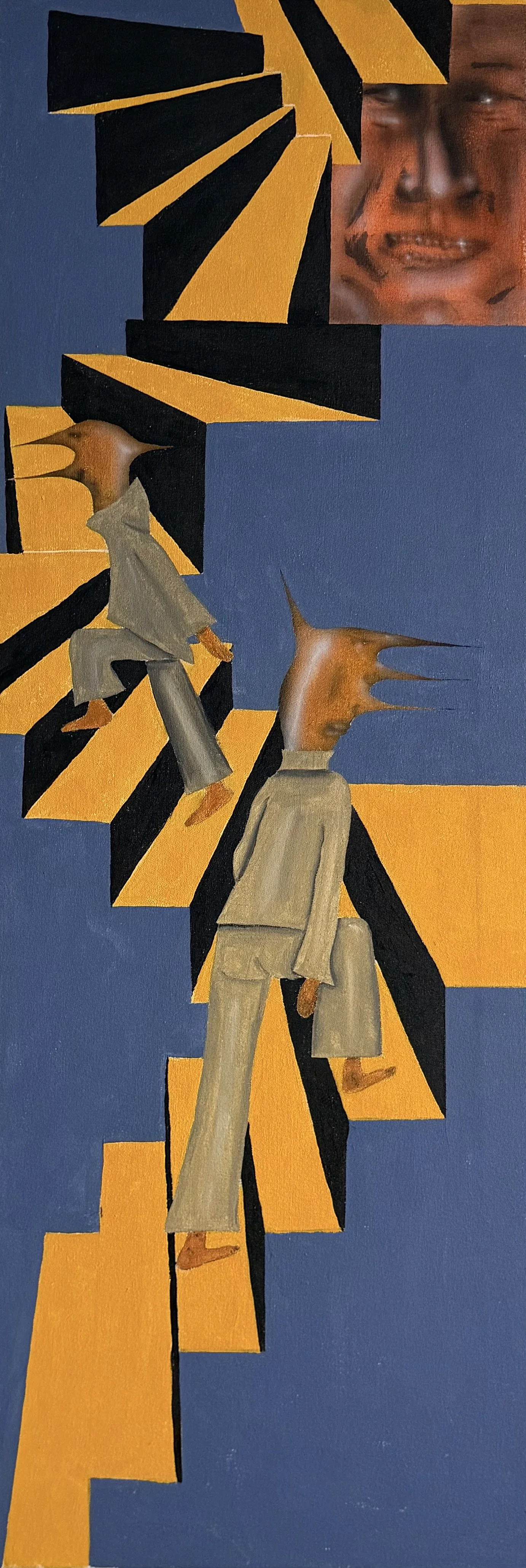
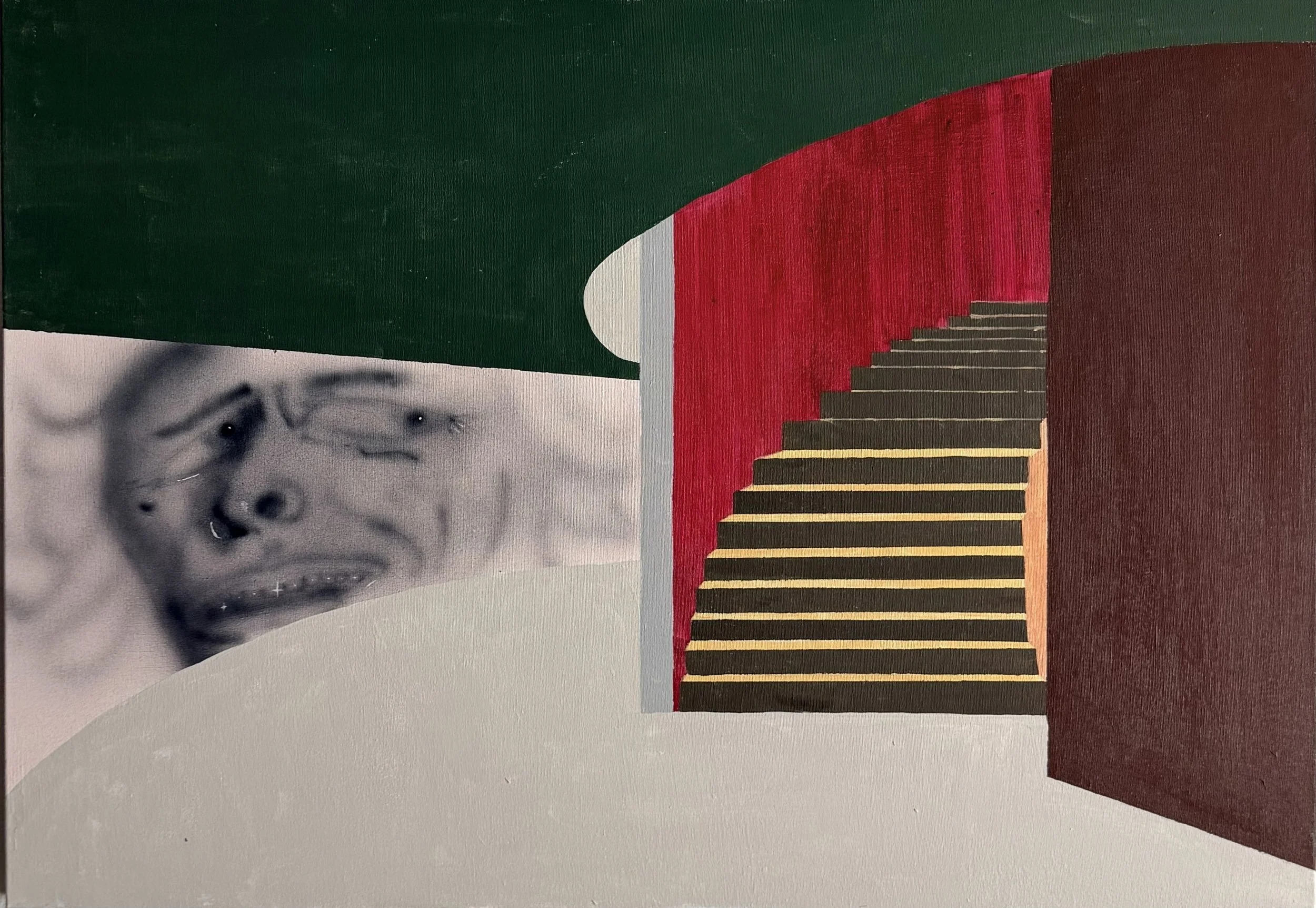
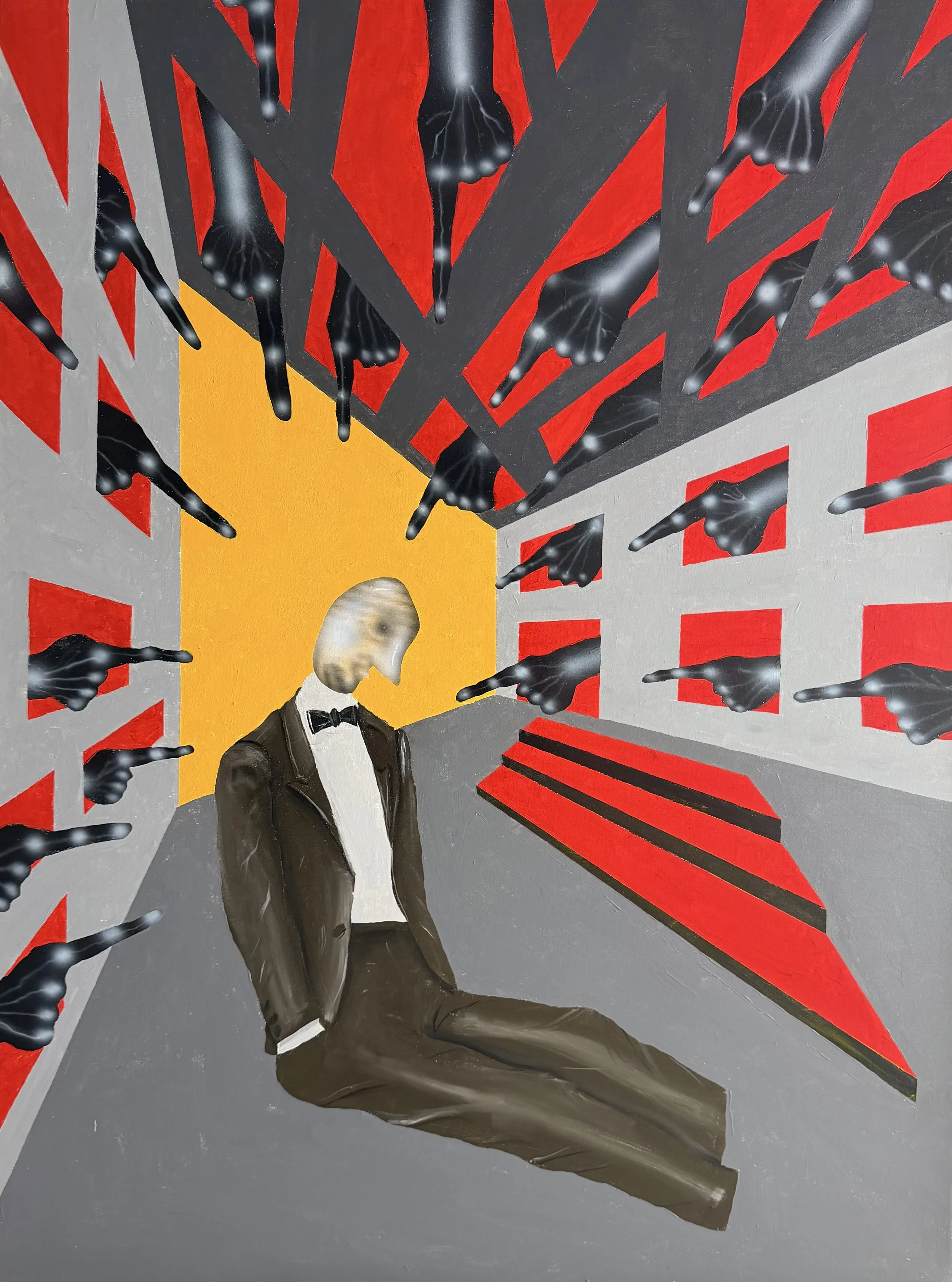
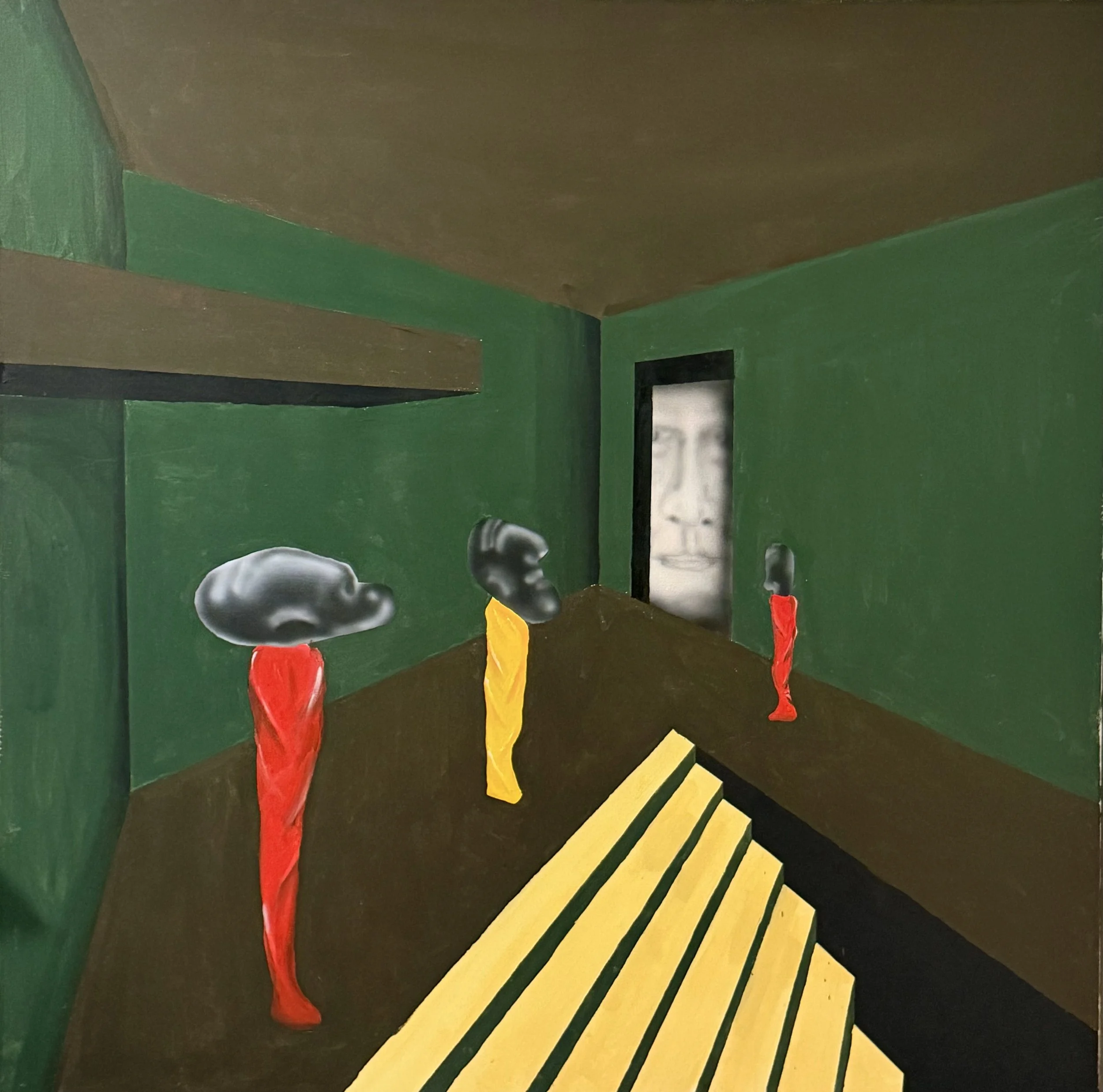
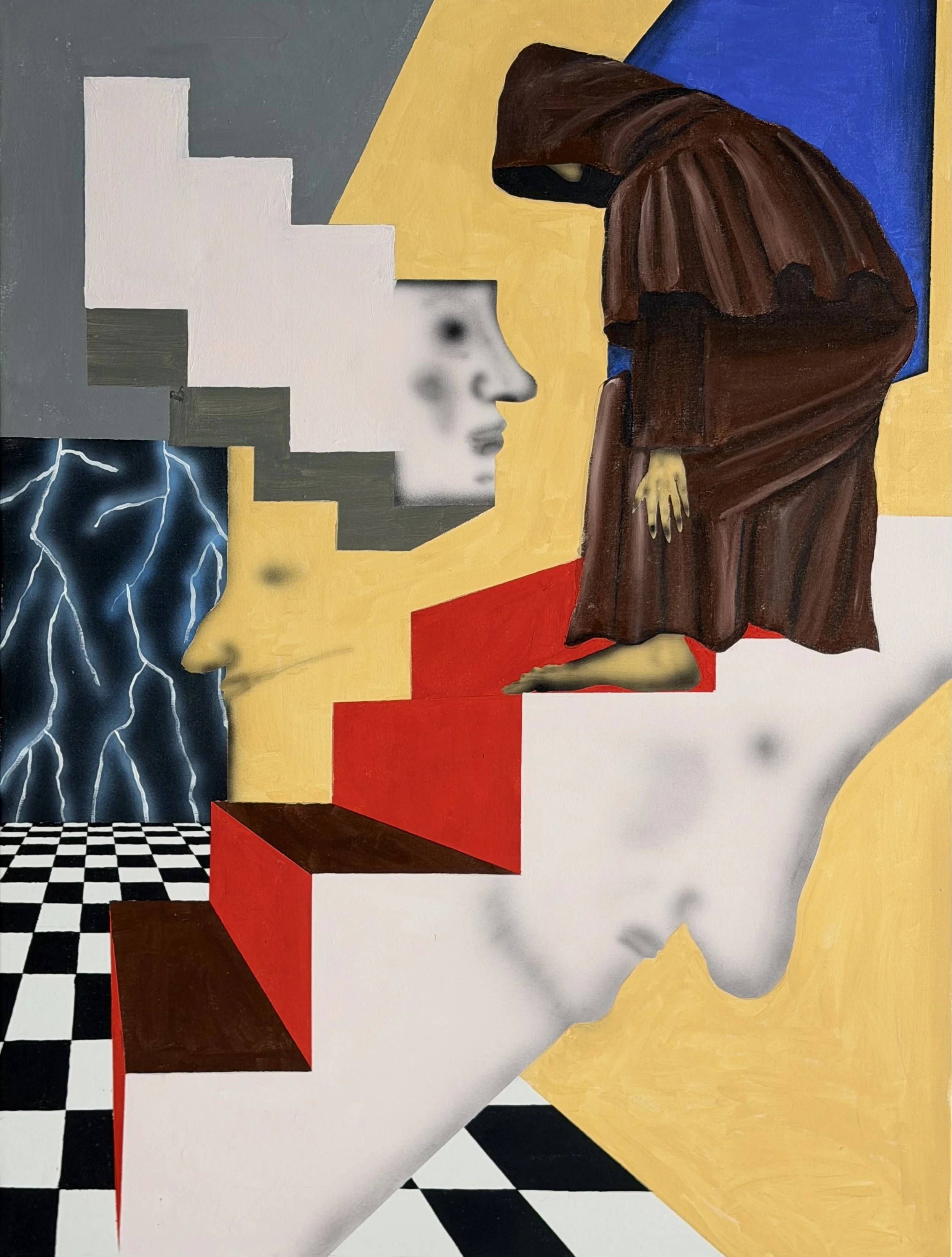
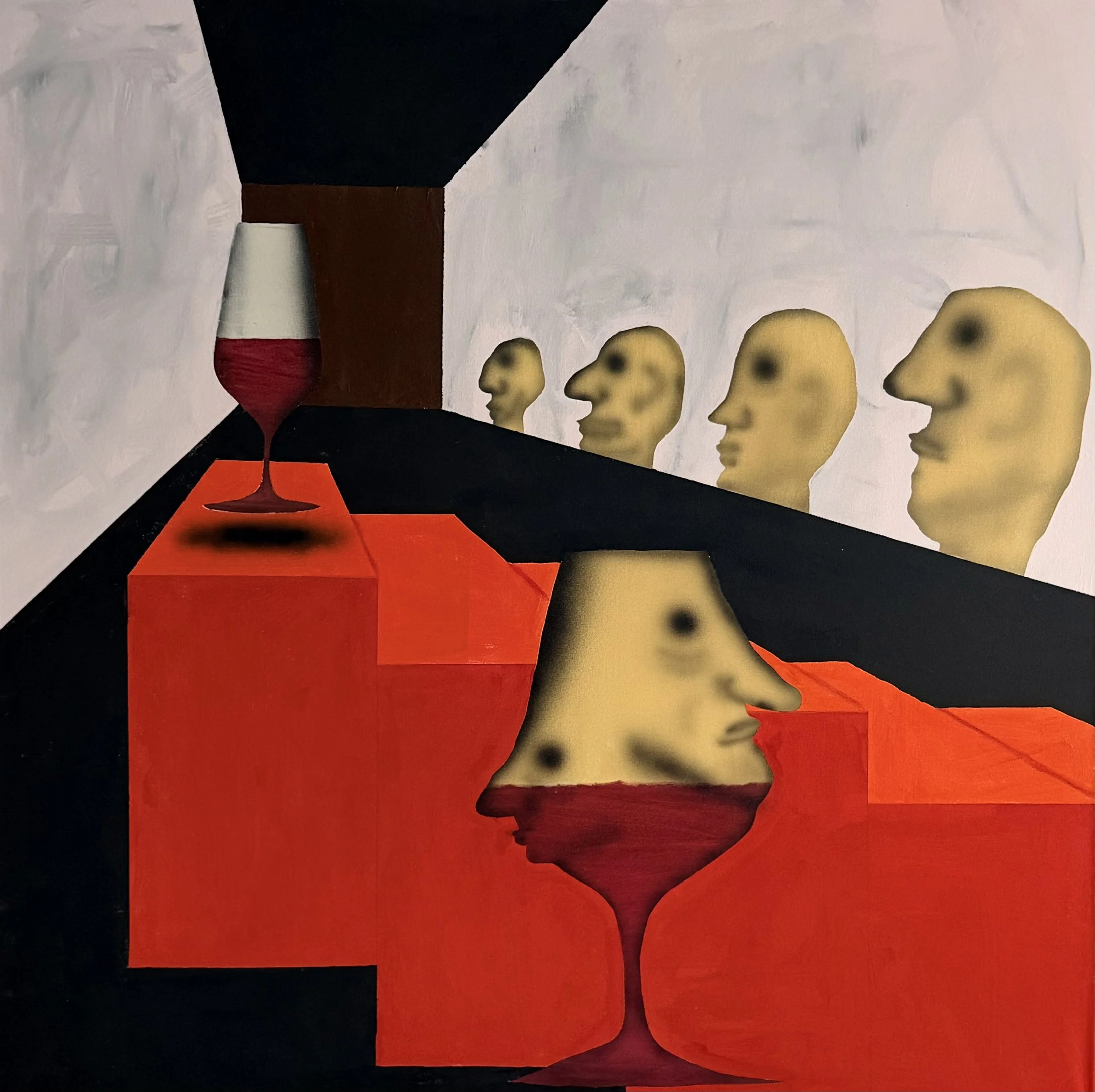
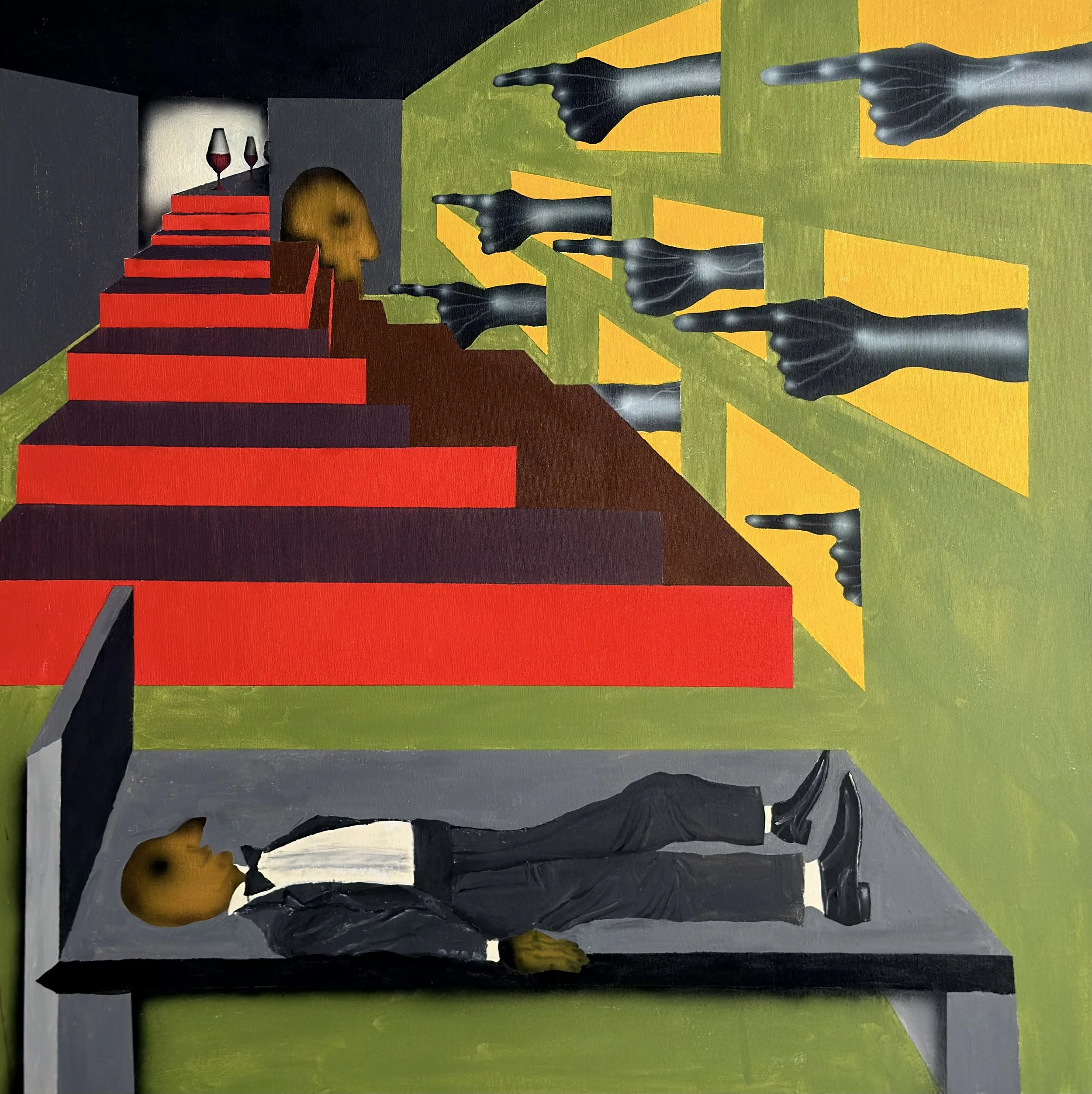
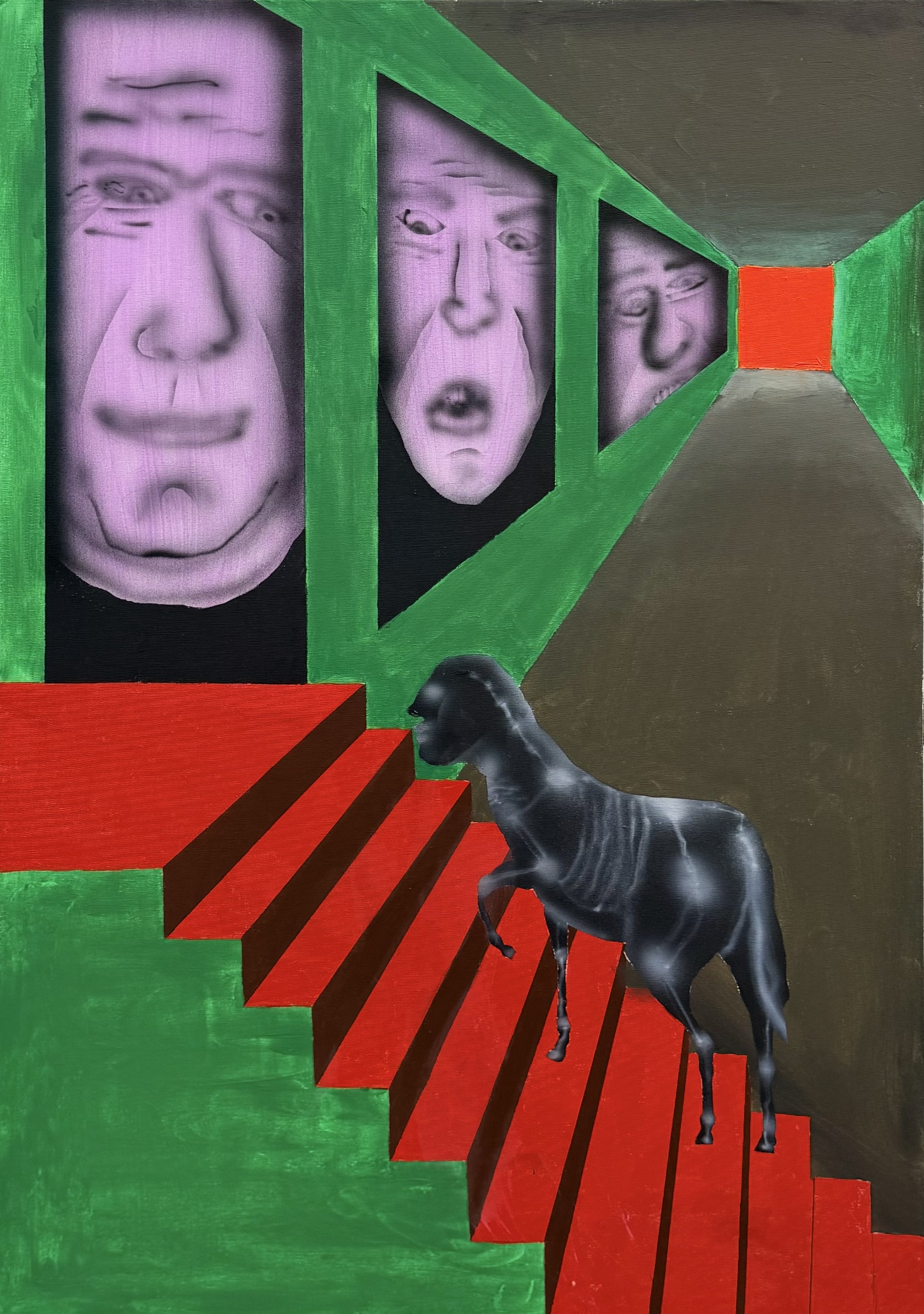
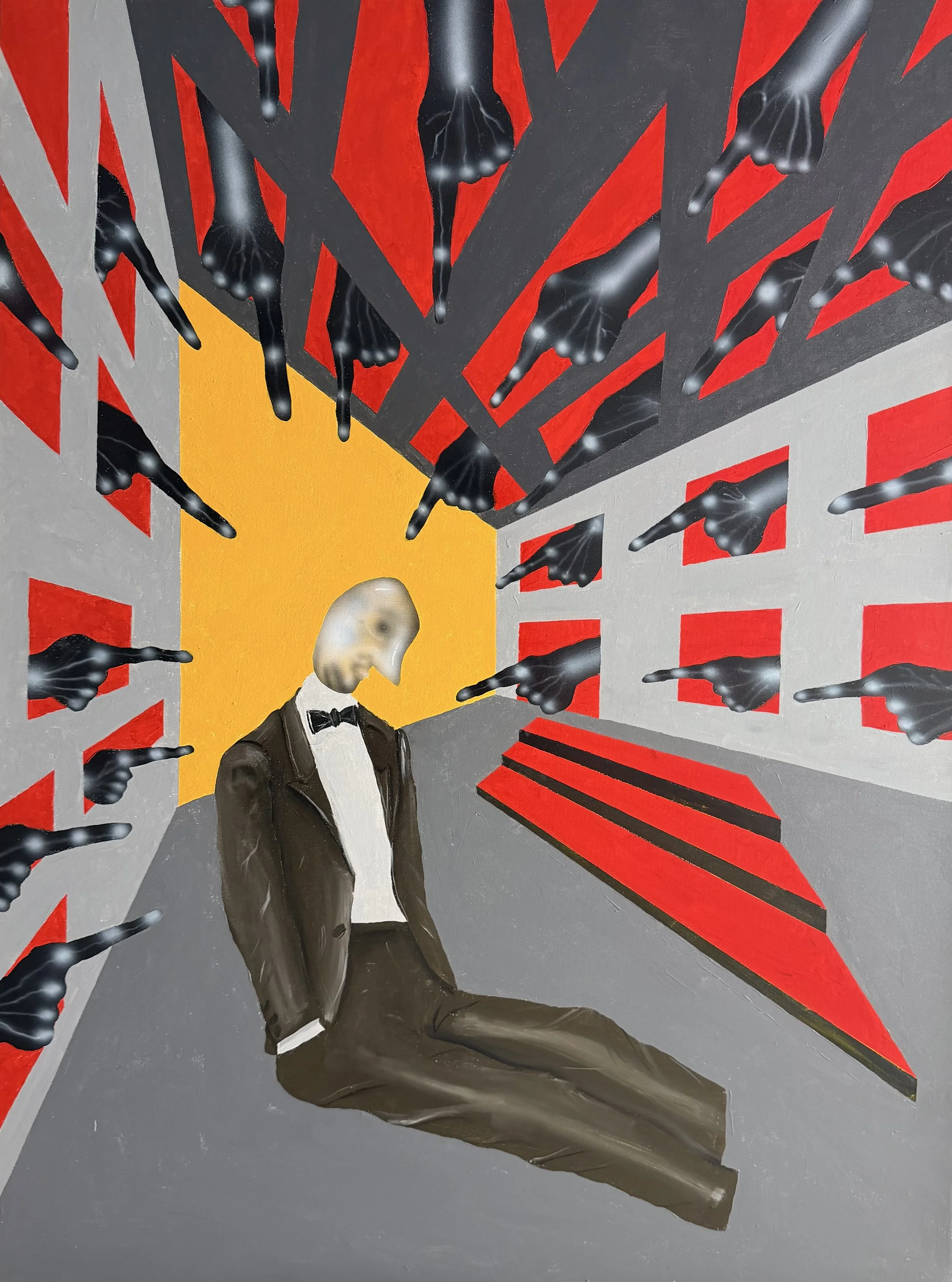
His recent paintings unfold as mysterious, metaphysical interiors inspired by modernist architecture — carefully constructed spaces where stairs, shadows, bodies and geometric forms appear less as subjects than as symbols. Beneath their controlled perspectives lies something far less stable: memory, instinct, discomfort, disappearance and inner chaos.
We spoke with Amit Kanfi about growing up across cultures, learning outside the academy, the DIY mentality that still drives his practice, his relationship with Vintagerie Jaffa, and why he wants viewers to leave his paintings with more questions than answers.
You grew up between Tel Aviv, Amsterdam, and Istanbul, what did each of those cities leave in the way you create?
I think that starting my life from scratch multiple times as a kid, in different places and cultures made me more dynamic and adaptable. Inflicting it on my creative process- it might have affected the way my creations shift according to what I’m going through in life. I try to keep evolving constantly and keep things interesting.
Punk culture shaped you as a teenager in Amsterdam. What remains of it in your work today?
I could say that the punk DIY mentality really stayed with me throughout the years. It starts with stretching my own canvases and goes all the way to teaching myself how to do anything art or design related. I still listen to different subgenres of punk rock and hardcore punk music while painting (alongside a lot of ambient and avant-garde music) and I believe it has a strong role in my works.
You're self-taught. Do you experience that as a freedom, a constraint, or both?
I once saw it only as a freedom. I used to say that the academy kills creativity and ruins the artist’s naivety. But growing up, I realized that that there are so many things I missed out on because I didn’t go to art school. They teach you how to look at certain aspects of art that I now believe are crucial for my work. It’s things that took me years to understand, after so much struggle and errors, and it could have taken me a much shorter time if I had a teacher who would show me the way.
All that being said, I’m still happy with my way of being a non conforming person who does things his way.
What does a day of creating look like for you?
A day of creating for me is never really a full day. Since I run a vintage design business, my day would always include completing tasks for my business for half a day, whether it’s restoration projects, documentation of the items, social media, etc. I wouldn’t consider this part of my day as “creating”, but more as managing my curated collection.
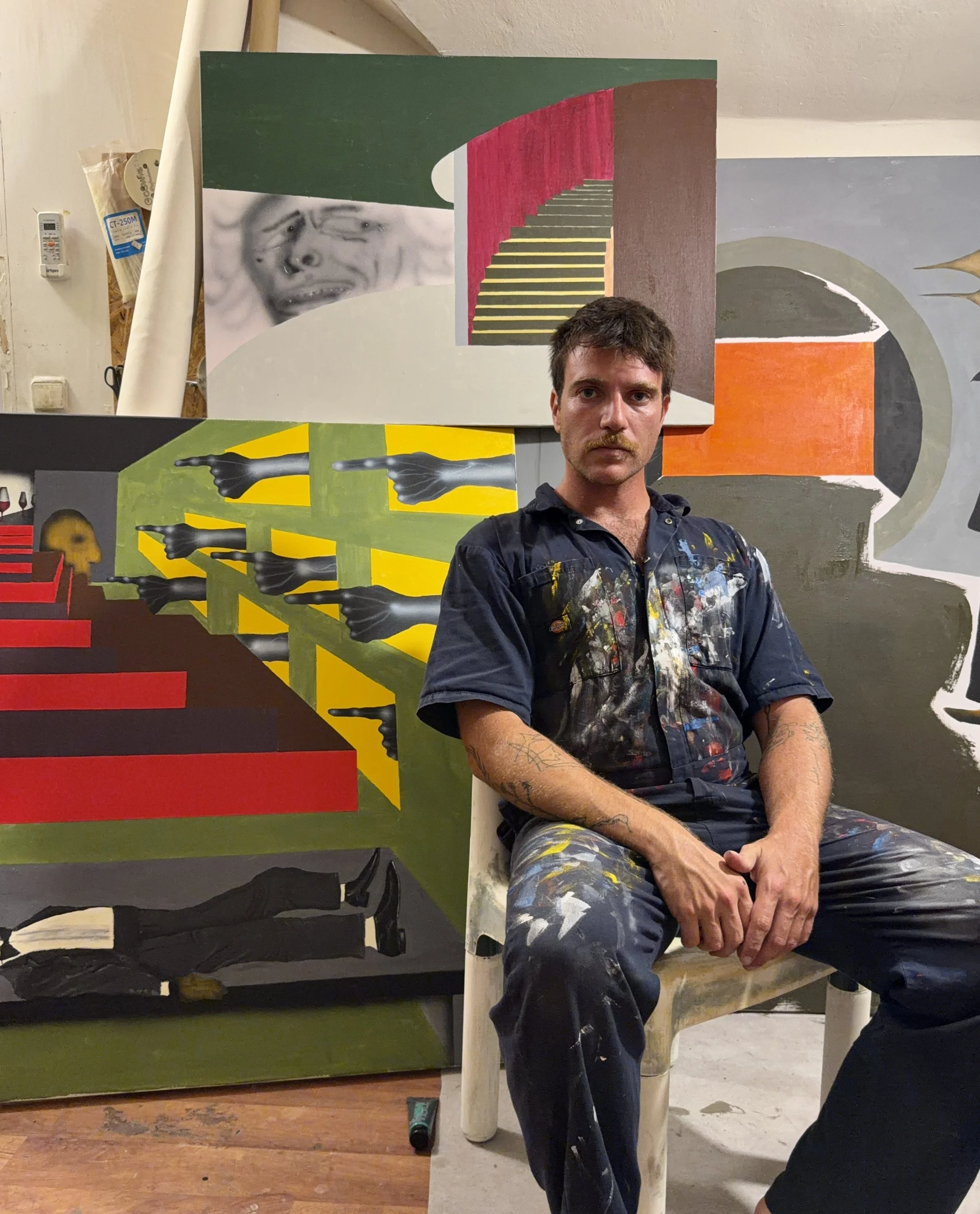
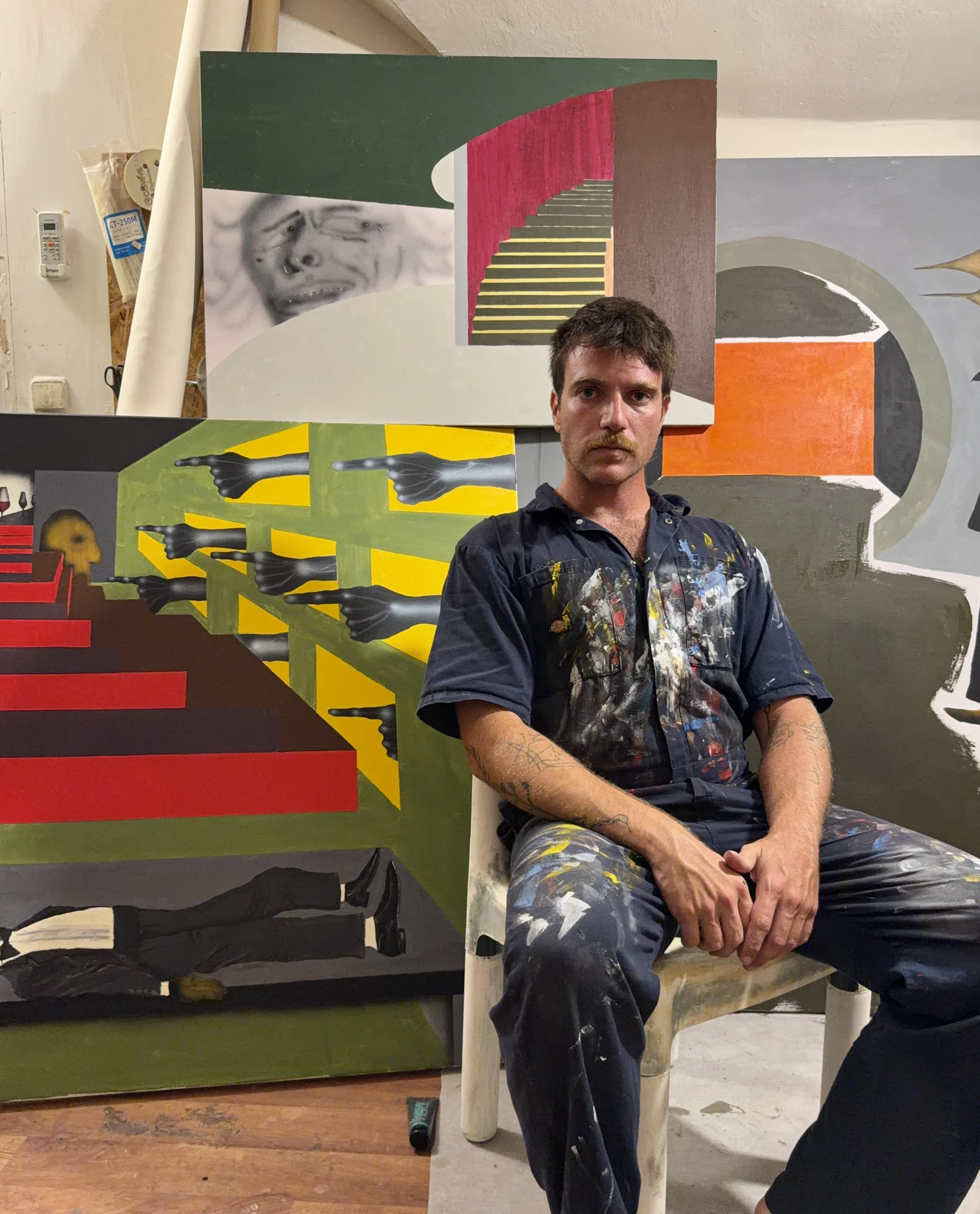
Then comes the creating part. My painting studio is on the second floor of my space so I change to my painting jumpsuit and from that moment my mind is fully switched to painting mode. I sink in to it and can find myself painting 12 hours straight (well, I guess some people would call that a full day).
Is it planned or purely intuitive?
Nowadays, my works combine parts of it which are purely intuitive and parts very well planned.
Since my work starts with an architectural drawing, it has to be pre meditated, however many times I do create the space on the spot and stretch lines intuitively.
At other times I draw parts of existing spaces planned by some of my favorite architects and turn them into metaphysical spaces using motives from the universe I created. So that must be planned and precise.
I also pick the pallet intuitively, but my paint strokes are planned and carefully applied.
How do you know when a work is finished?
I have the finished result resting in my head from the moment I finish sketching. My biggest challenge is to discover the correct perspective and composition, but once I solve it, I keep painting until I reach the image in my head.
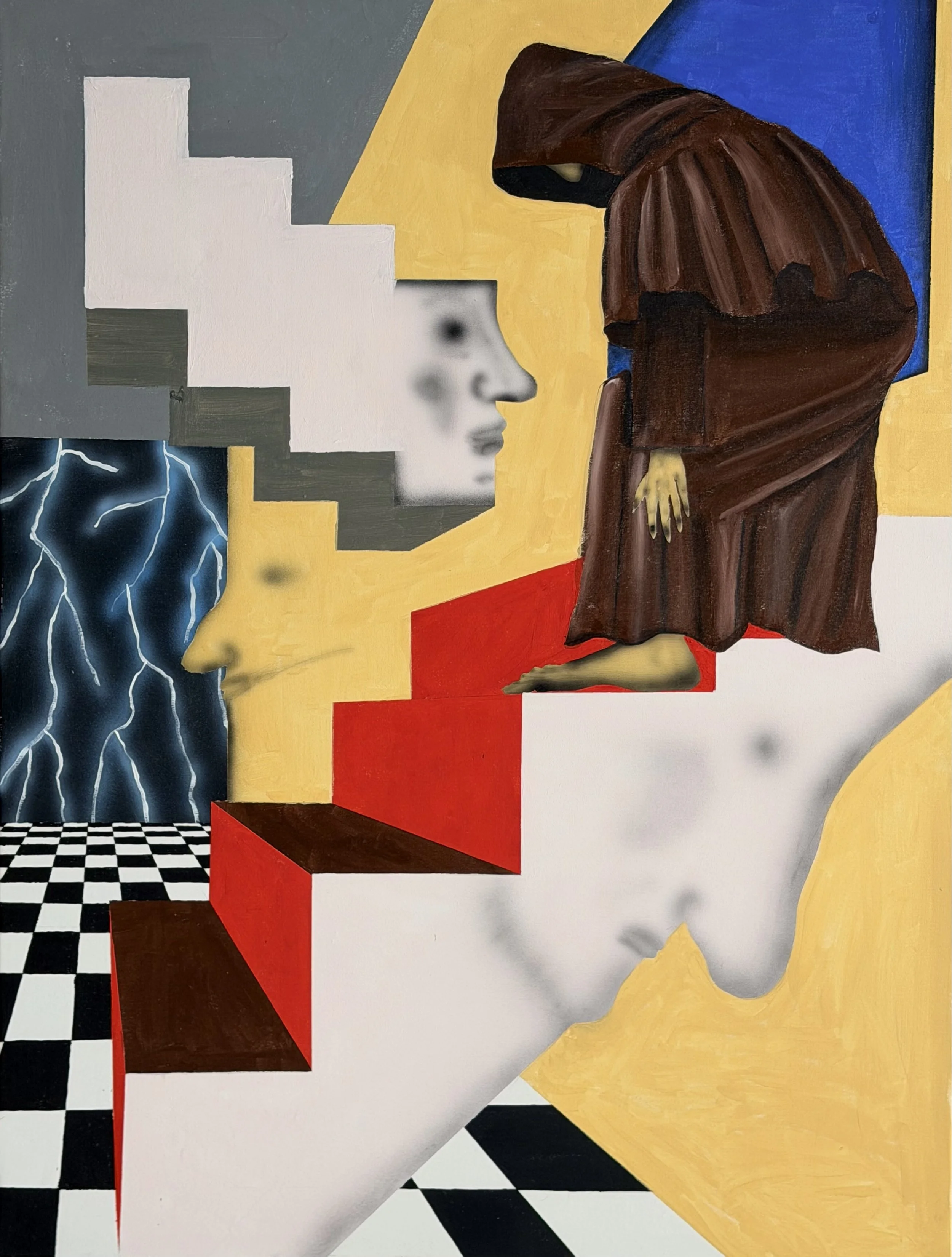
Your work is described as "childish and satirical." Why this naïve aesthetic to talk about hard subjects?
I think this description regards my earlier bodies of work which were indeed very satirical and cynical. This used to be my way of dealing with my inner pain and deep trauma. Kind of an escape.
The older I get, and the more I dig into my practice, my work takes a more “serious” turn and I’m not afraid to face these things like I used to.
My current work touches memory, human instinct, vagueness and discomfort, blended with strict architecture that resembles order, control, and can please my eye while feeling a strange sense of fear.
Do you think about the viewer when you create, or is it first a dialogue with yourself?
The dialogue is definitely with myself, but in some way I see myself as one of the viewers.
I ask myself what is it that makes a painting good in my eyes, and what I want the painting to make me feel, and that is exactly what I would like the viewer to feel.
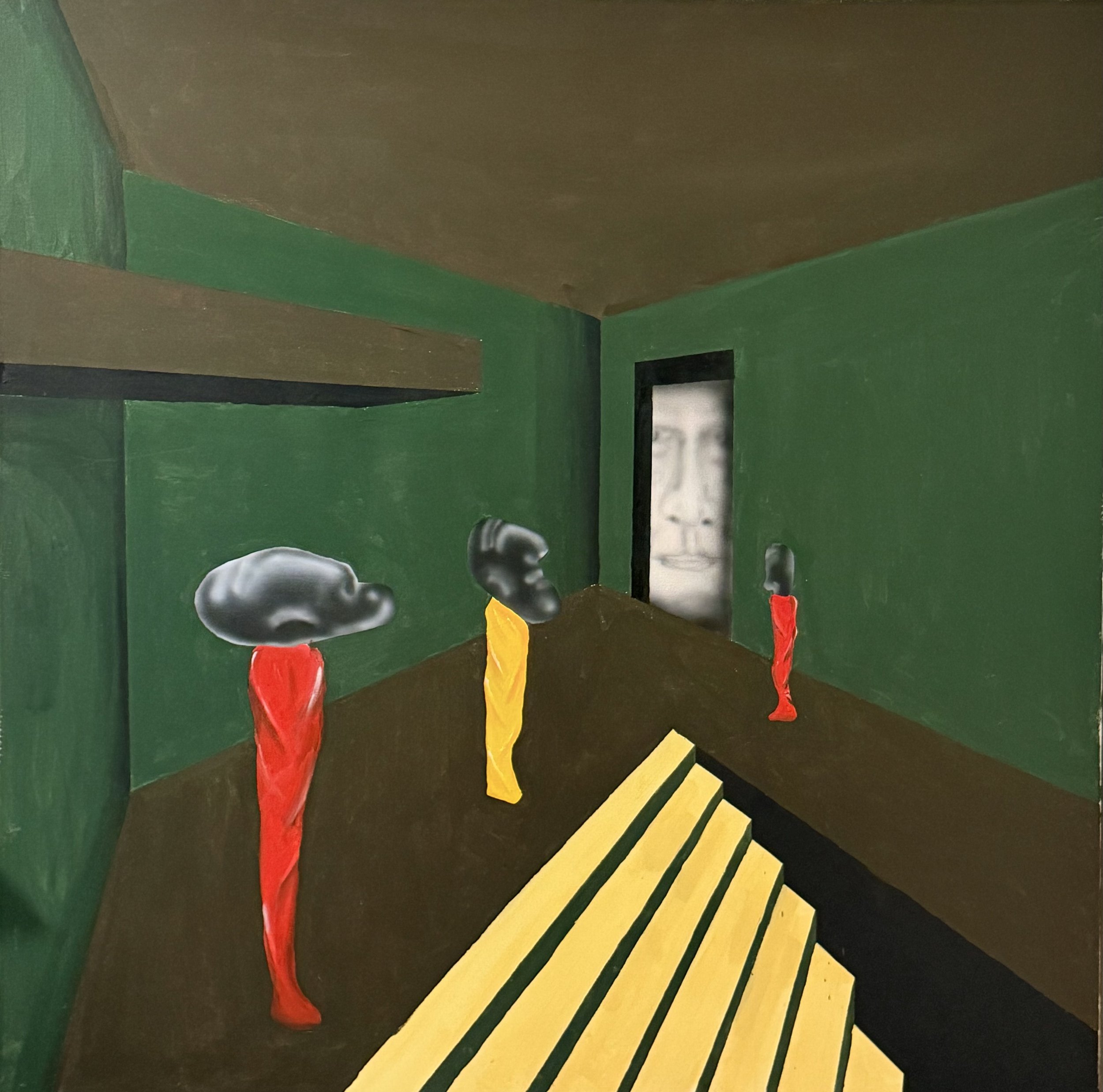
Art was first a space to "shout your authentic voice." Is it still cathartic today, or has it become something else?
Art was always and will always be a space to express my authentic voice. I feel that it is the fundamental reason that I create. It doesn’t need to be literal and i don’t expect the viewer to understand me. Moreover, if the viewer is left with questions and thoughts about it, it’s even better.
Sometimes what I want to say can only be done through painting, as it expresses things that are far beyond words.
What angers you, or moves you, about society right now?
What angers me the most, beyond all the radical leaders ruling the world right now, is the rising levels of idiocy, and how Ai and social media is pushing people to neglect their brains and think less.
The way our generation is doomscrolling, losing interest in depth, losing patience, everything needs to happen in seconds, the overwhelming amount of information we’re exposed to that exhausts our minds. People don’t try, they ask chat gpt to do it for them. To think for them. It feels like I’m seeing human minds decompose in front of me.
The Vintagerie Jaffa project, where does it sit alongside your work as an artist?
That’s a great question.
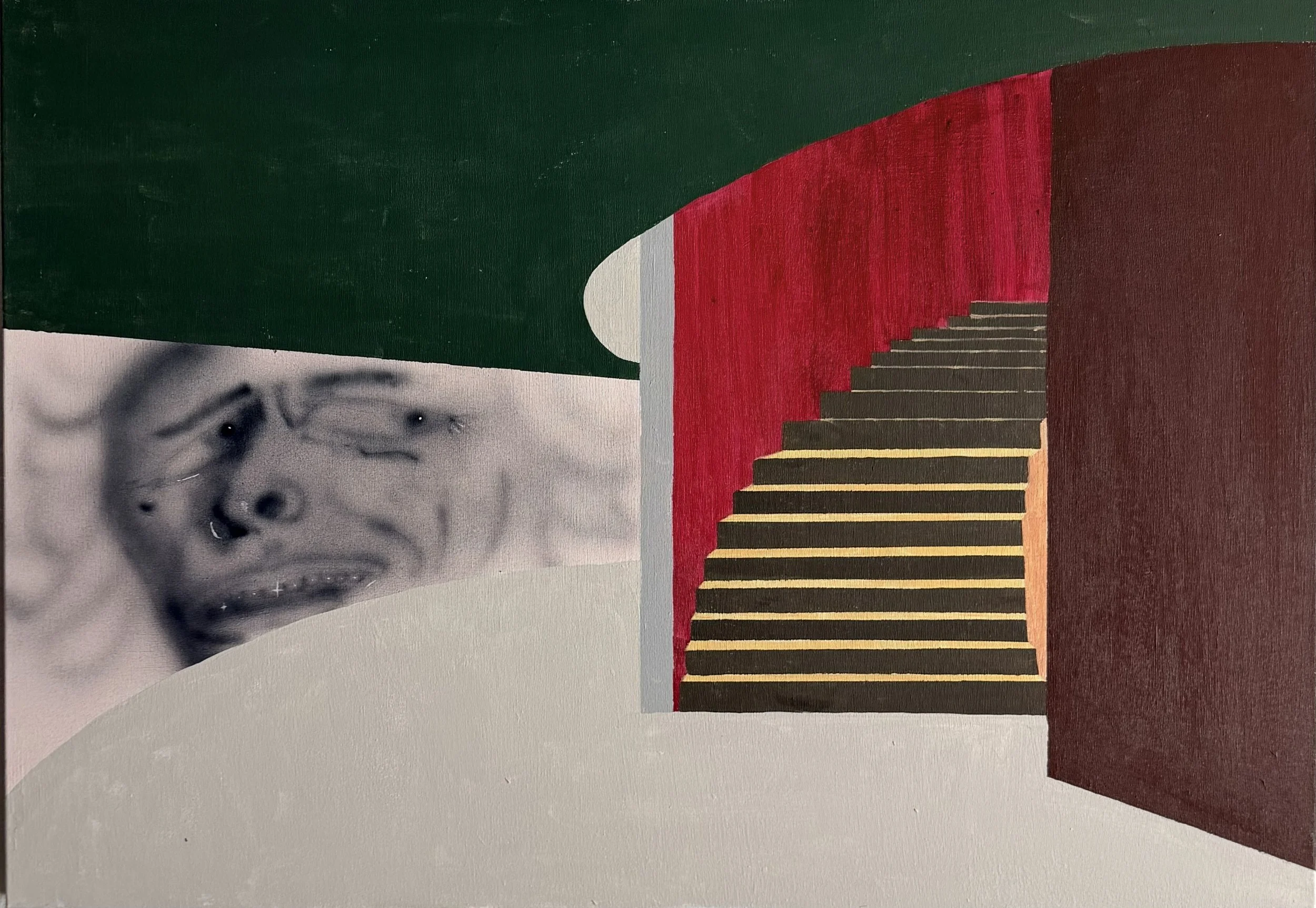
Until this year, not only did it not sit in any way with my work, I was actually hiding this part of myself. I was feeling like I have a split personality. One personality for art and the other for design. When I was talking about my art- I dismissed the design part of me and vice versa. This felt like a big pain in my chest and it made me not want to paint for over a year.
And finally I managed to solve this problem and combine the two by painting interior spaces inspired by modernist architecture which is directly connected to the style of design that resonates in Vintagerie Jaffa. and it’s really the first time that I feel whole, as I don’t need to hide a huge part of myself when I’m painting.
What does success look like to you?
I don’t measure success in money, sales, social media stats or fancy CVs.
To me, if I look at your paintings and genuinely feel that they’re good, I succeeded.
What are you working on right now, and what's something you've never dared to try yet?
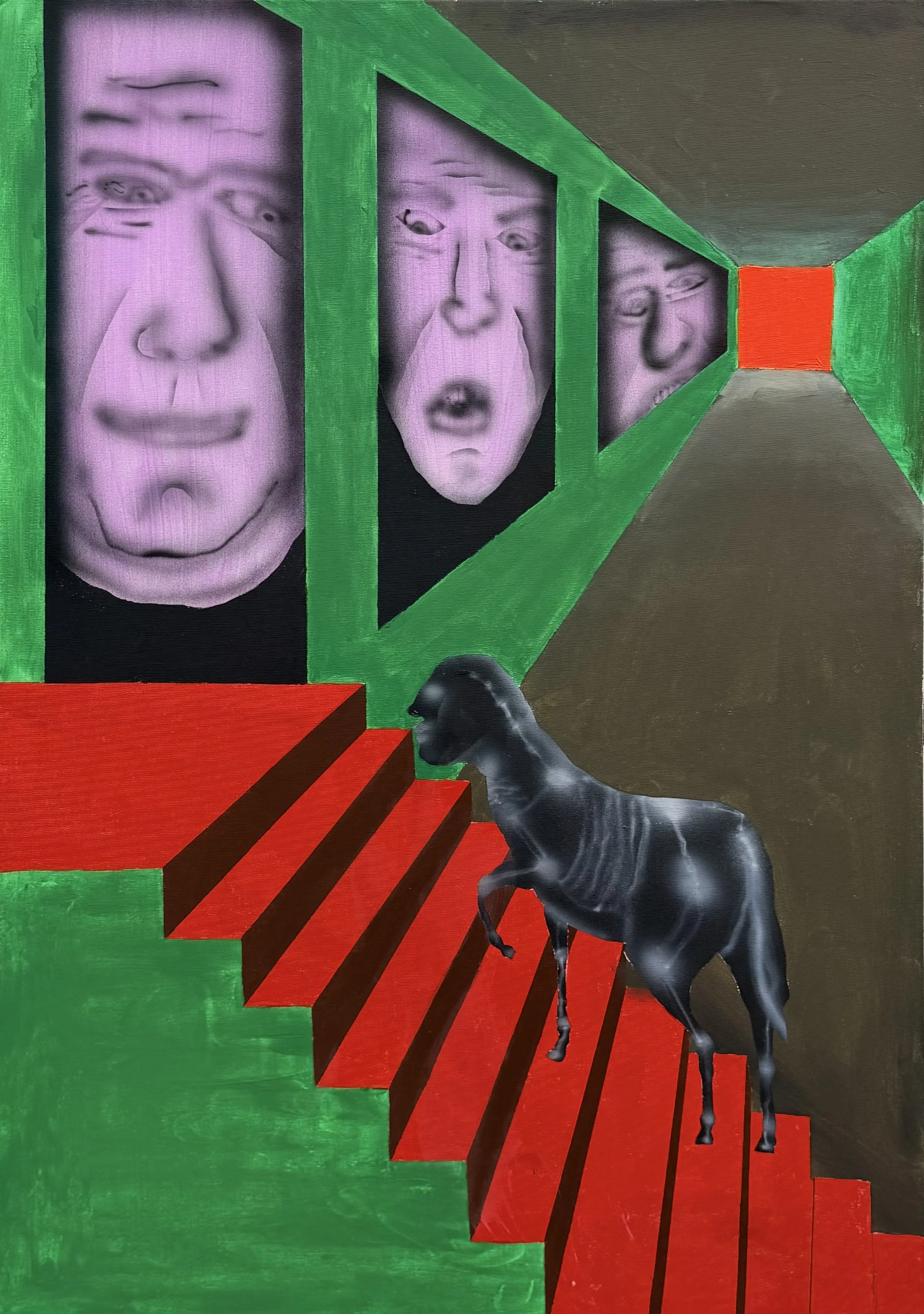
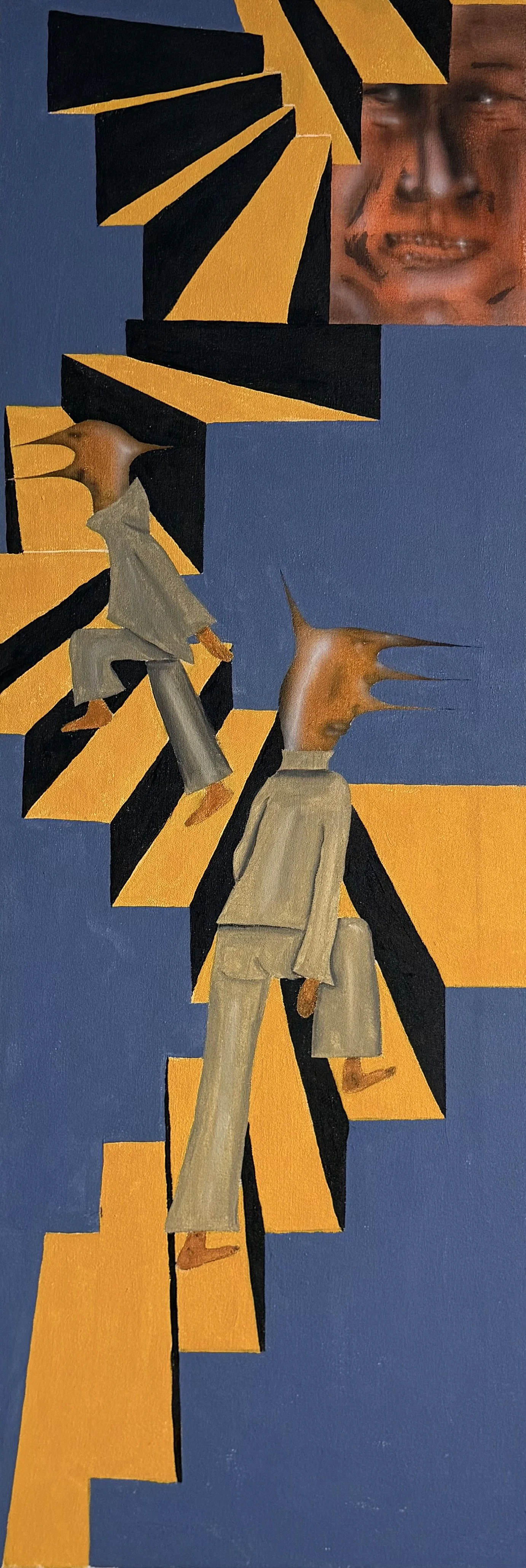
right now my medium is mostly acrylic paint on canvas, and I mix classic painting techniques with brushes with airbrush. I’m painting scenes from the world I’ve created. Mysterious metaphysical interior spaces in controlled perspectives, inspired by some of my favorite modernist architects.
In these spaces I present memories, stairs, pyramids, bodies, and shadows that function less as subjects and more as symbols. The works discuss tensions between control and inner chaos, between physical presence and disappearance and between discomfort and aesthetic pleasure.
I’ve never dared to create sculptures of these scenes and I’m hoping to start experimenting with that in future.