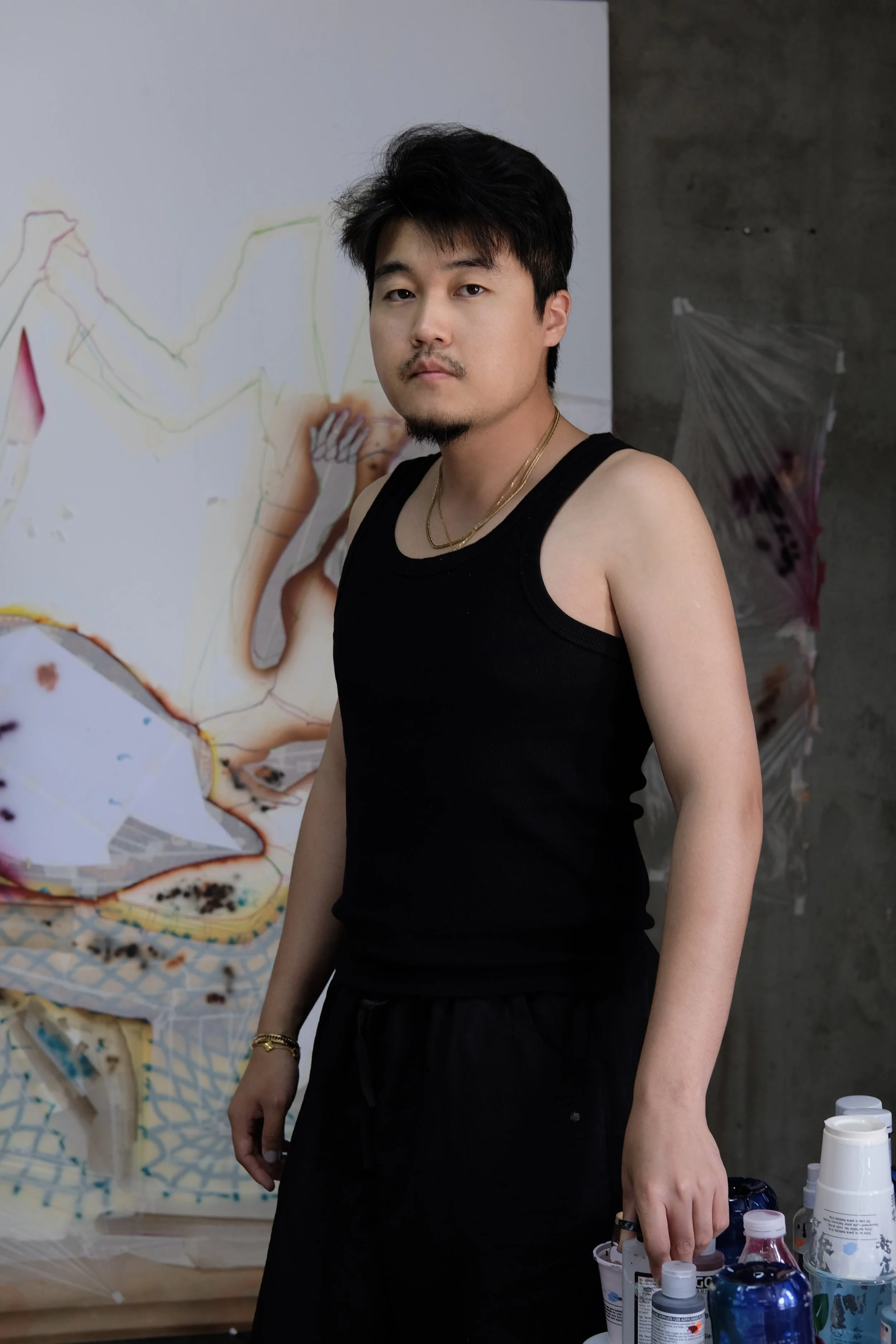
Kang Haoxian: Between Movement, Memory and the Human Condition
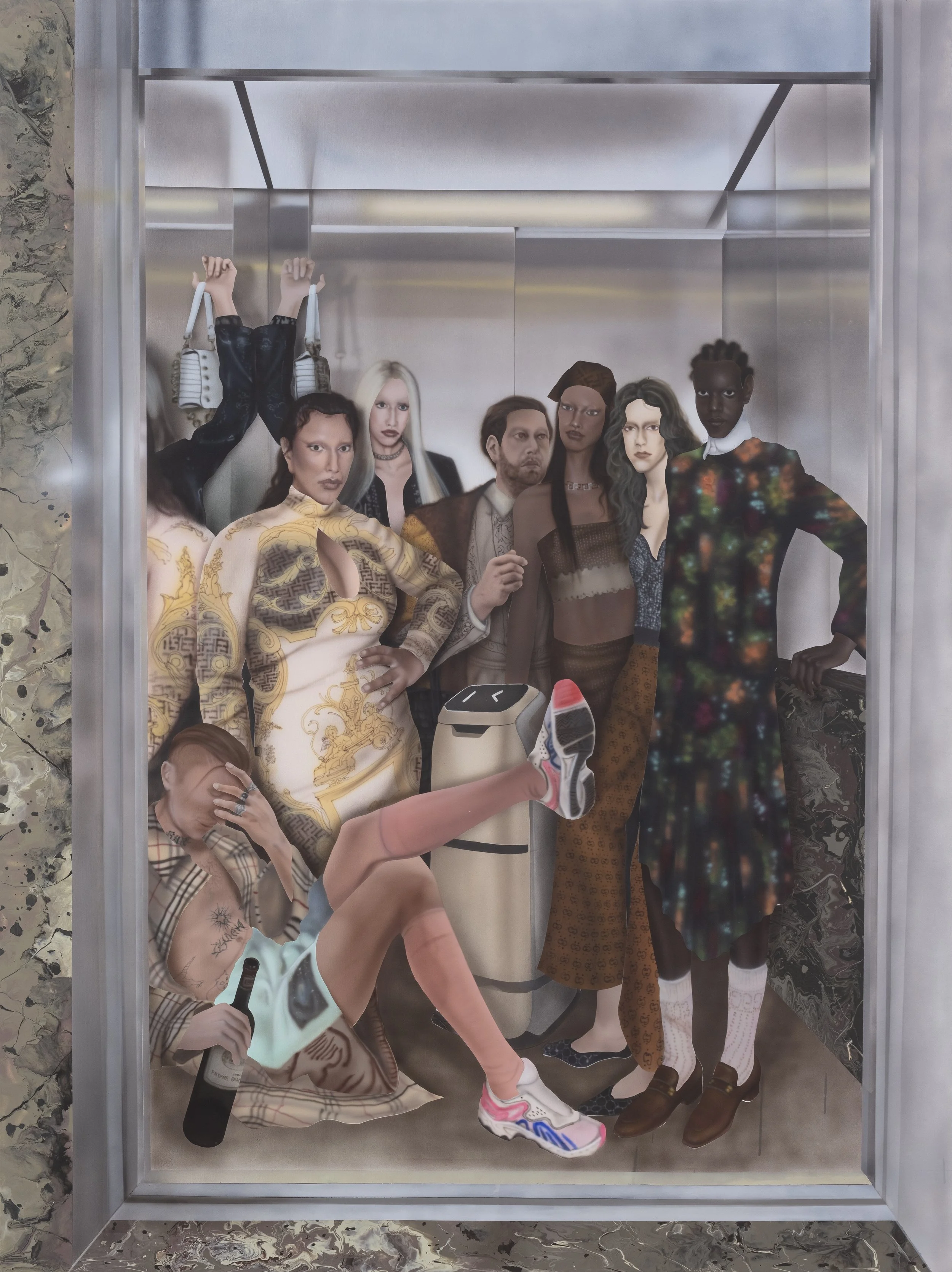
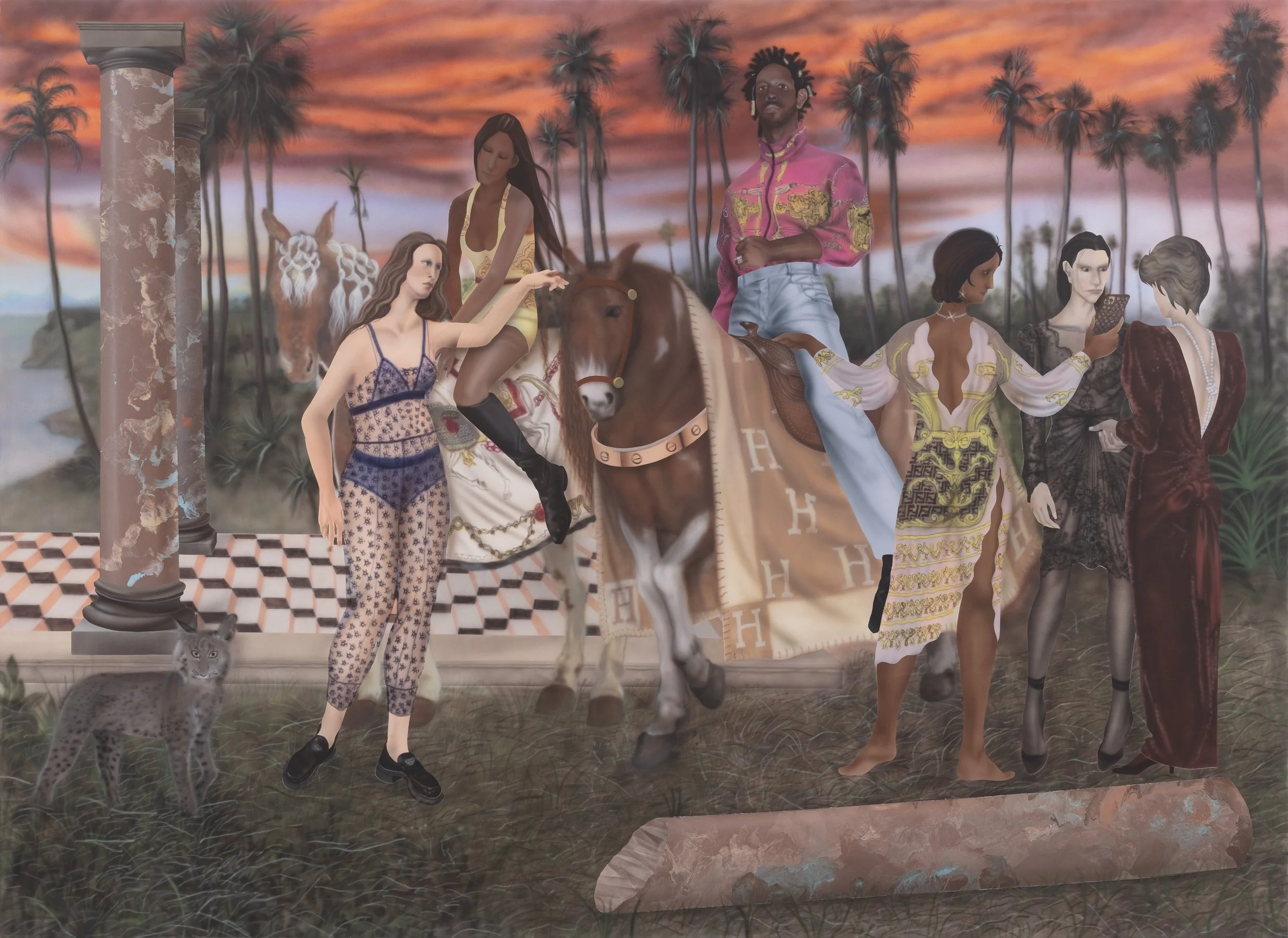
For Kang Haoxian, movement is never merely physical. It is a reflection of human desire, displacement, and the constant search for freedom. Blending magical realism with the visual language of popular culture, the artist transforms familiar objects and everyday scenes into deeply personal narratives.
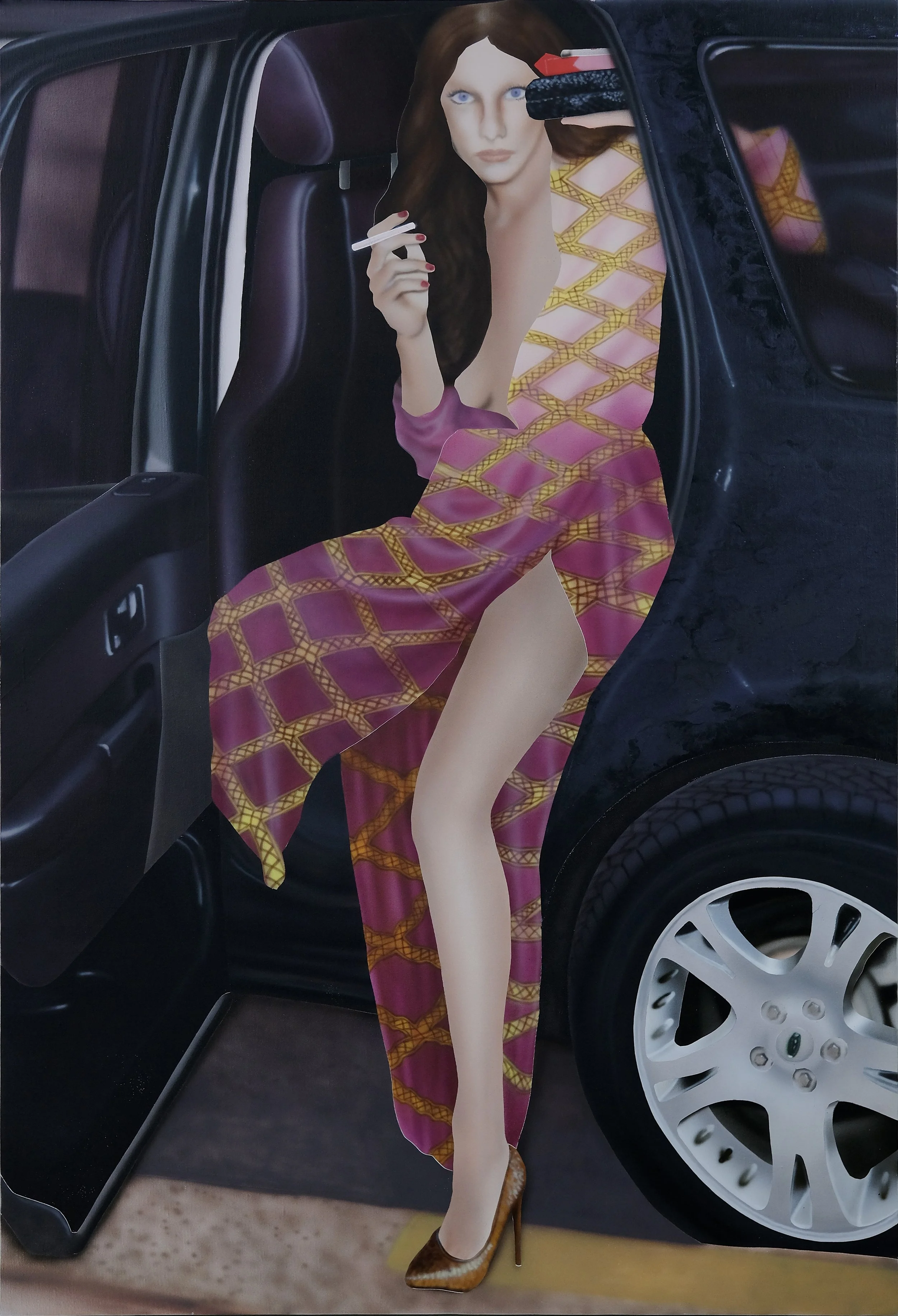
From the worn textures of car tires to the fleeting reflections captured through vehicle windows, his paintings explore the tension between the outside world and our most intimate emotions. Through his distinctive use of airbrush techniques, Kang gives form to the invisible forces that shape contemporary life, revealing moments of vulnerability, longing, and quiet introspection.
In this conversation with ATTALY, Kang Haoxian reflects on the evolution of his practice, the emotional significance of movement, and his transition from mythological imagery toward a more intimate exploration of everyday reality.
Can you tell us how you first came to painting, and what pulled you toward large-scale work?
Painting has been an innate passion for me. I have been doodling for as long as I can remember, and this hobby made my childhood rich and enjoyable.
Creating large‑scale works was a challenge and experiment after I decided to become a professional artist. I wanted to test in practice whether I had the capability to compose and manage a large‑format canvas.
Your practice blends magical realism with popular culture. Where does that combination come from for you?
My interest in magical realism stems from my childhood. My birthplace is very close to that of Mo Yan, the Nobel Prize‑winning author. That region is also one of the birthplaces of Taoism in China, filled with all kinds of bizarre local legends. I heard these stories from elders when I was young, and they laid the groundwork for my fascination with magical realism.
As for pop culture, I was exposed to many original pop‑art works during my stay in Los Angeles. It was the part of contemporary art that interested me most at that time. When I returned to Beijing, I naturally merged these two elements into my creative system, which became the core direction of my practice.
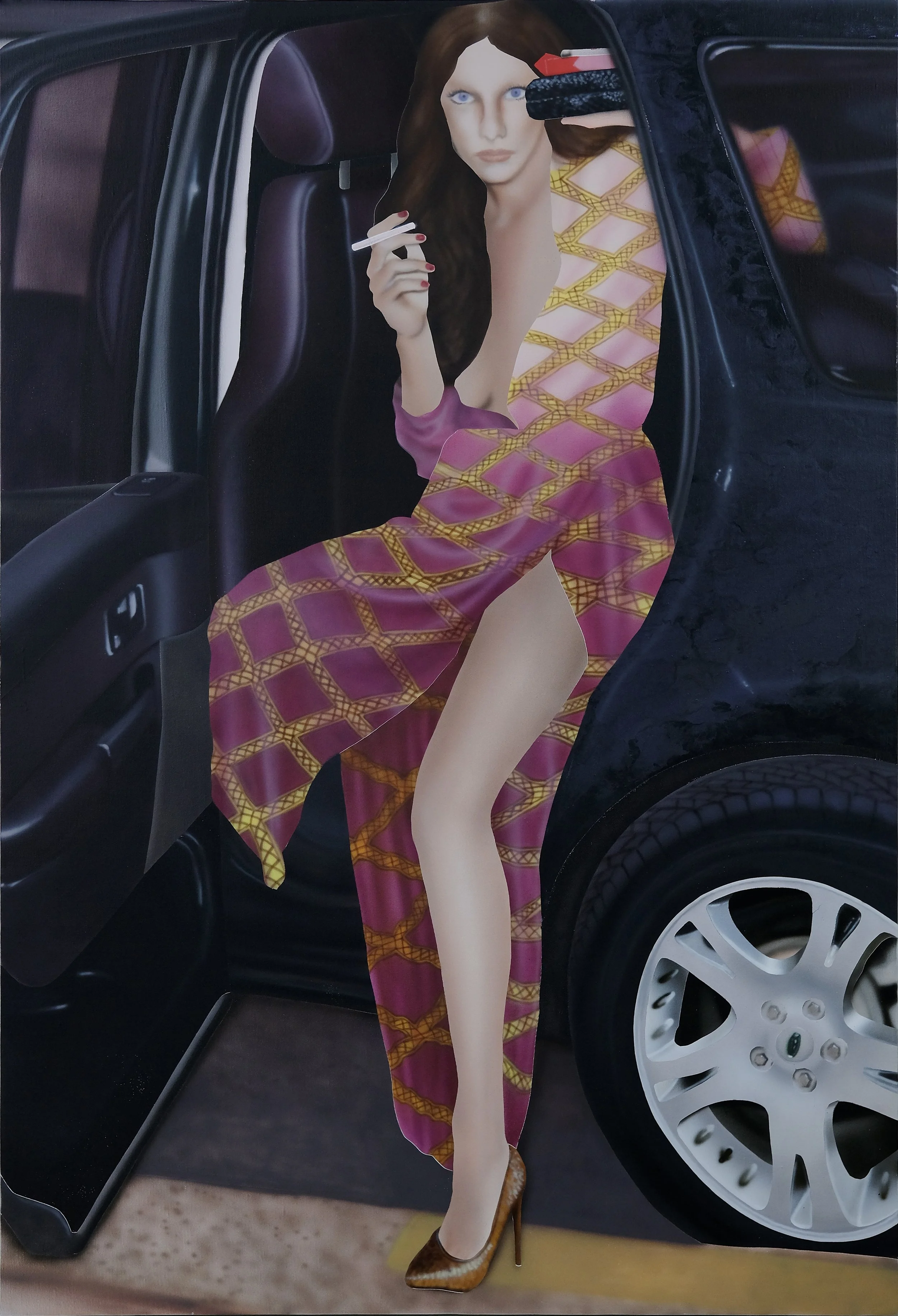
How would you describe the world you're building across your paintings to someone seeing them for the first time?
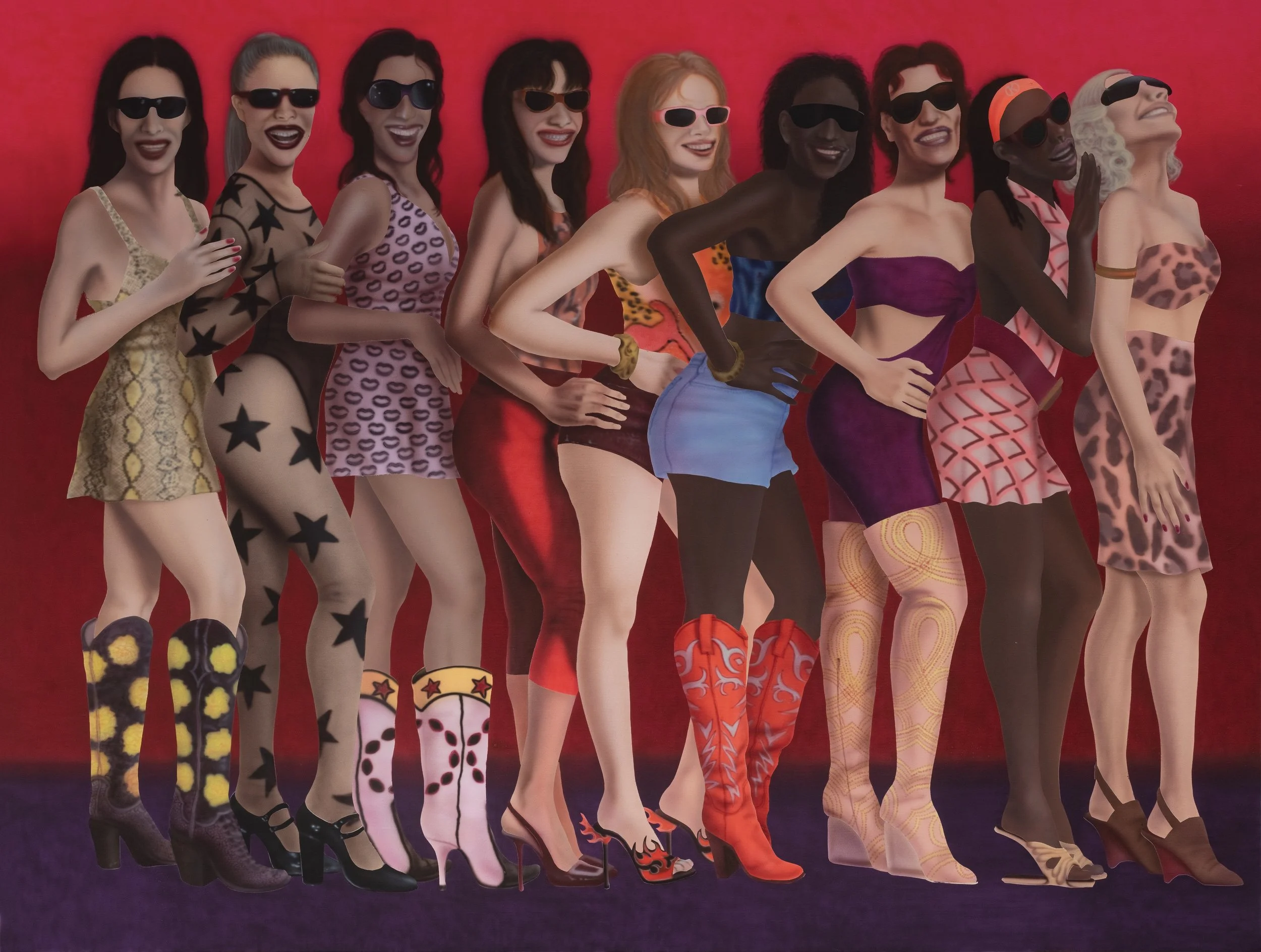
I cannot recall who the first person to view my paintings was. A body of my early works was created during the COVID‑19 pandemic. I often talk to audiences about whether we miss the days when we could freely gather and hold parties.
I also discuss my creative tools: for this series, I abandoned brushes entirely and worked exclusively with an airbrush.
What first drew you to car tires as a subject? It's an unexpected choice. You've said tires reflect human emotion and progress. Can you unpack that idea for us?
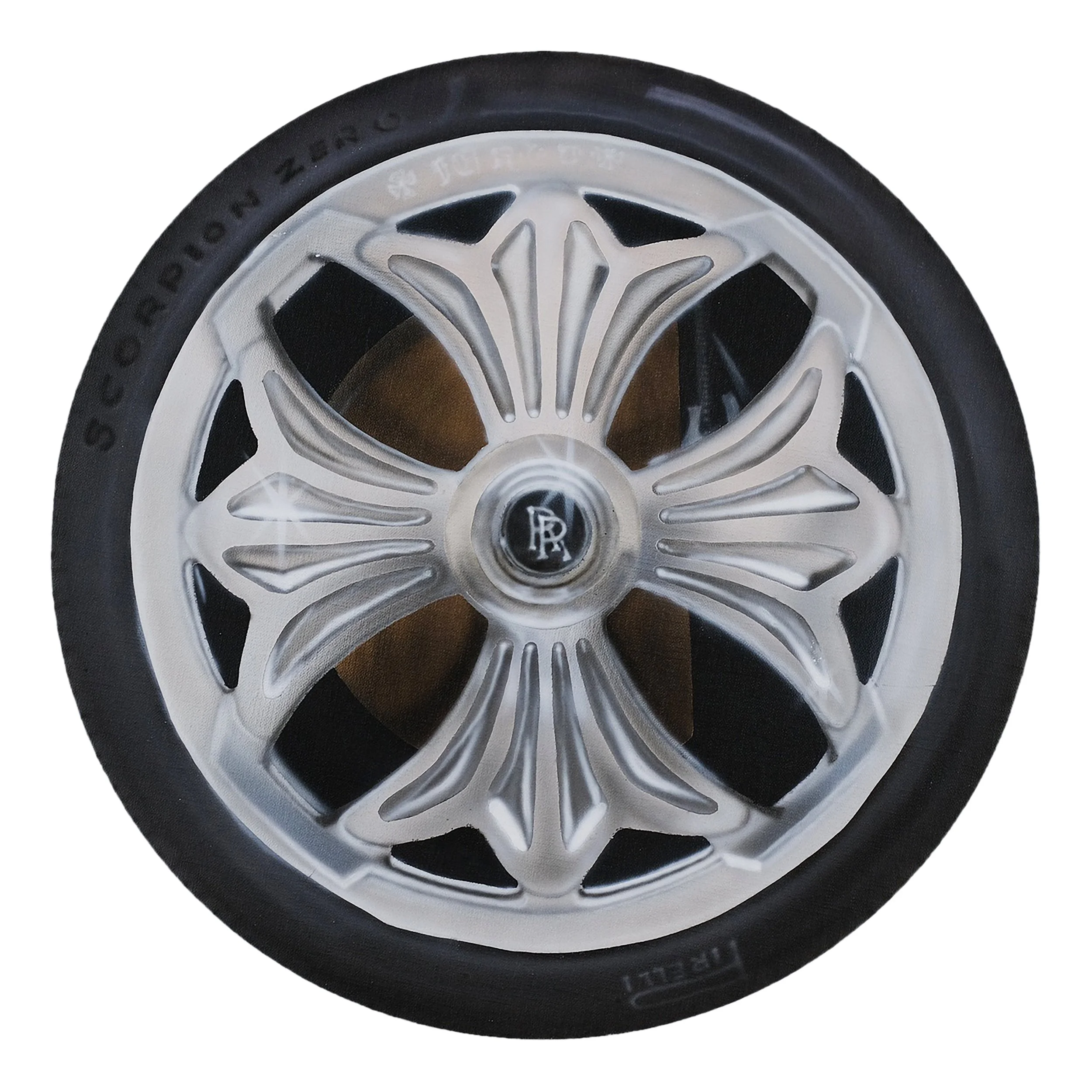
I first became fascinated by tyres during a trip to Hong Kong. I was struck by a car‑modification shop whose facade was covered with numerous exquisite, metallic‑looking tyres. The visual form of the store was incredibly powerful. Later, as I was preparing for an exhibition in Hong Kong, I felt this theme was highly fitting and locally resonant, so I decided to produce this series.
A tyre is fundamentally about departure and homecoming — the most primal human emotional state. From daily commuting and the longing to return home from afar, to the freedom of venturing into the wilderness and the redemption of escaping hardship, every inch of friction between tyre and pavement embodies human emotion. The endless rotation of wheels carries ordinary people’s heartfelt hopes: the perseverance of working to make a living, the tenderness of travelling for family, the relief of letting go of the past, and the enthusiasm for chasing the future. Using delicate airbrush techniques, I render the worn textures and rolling traces of tyres. Viewers can see that every worn groove on a tyre bears the marks of human striving, holding the responsibility, persistence and quiet passion of everyday adults.
Tyres also embody humanity’s longing for freedom and liberation. Modern people are trapped within fixed life trajectories and rigid urban rules. The moment a wheel turns offers an outlet to break free from constraints and release inner feelings. Tyres carry people towards distant, unforeseen futures. Driving and roaming break geographical boundaries, releasing pent‑up frustration, confusion and anxiety. They become a spiritual vessel for people to heal themselves and embrace freedom.
The evolution of the tyre mirrors the advancement of human productivity and industrial civilisation. From ancient foot travel and horse‑drawn carriages, to early solid wooden and iron wheels, and then to the invention and iterative refinement of pneumatic rubber tyres, every innovation in tyre technology corresponds to a leap in human productivity. Clunky ancient wheels represent a slow, isolated agrarian civilisation. Sophisticated, durable modern tyres, built for varied terrain, symbolise breakthroughs of the Industrial Revolution and advances in manufacturing. They mark humanity’s liberation from limits of space and speed. By depicting the material textures and technical details of tyres in my work, I create implicit contrasts between old and new, silently narrating humanity’s transformation from hardship and slowness to efficiency and freedom.
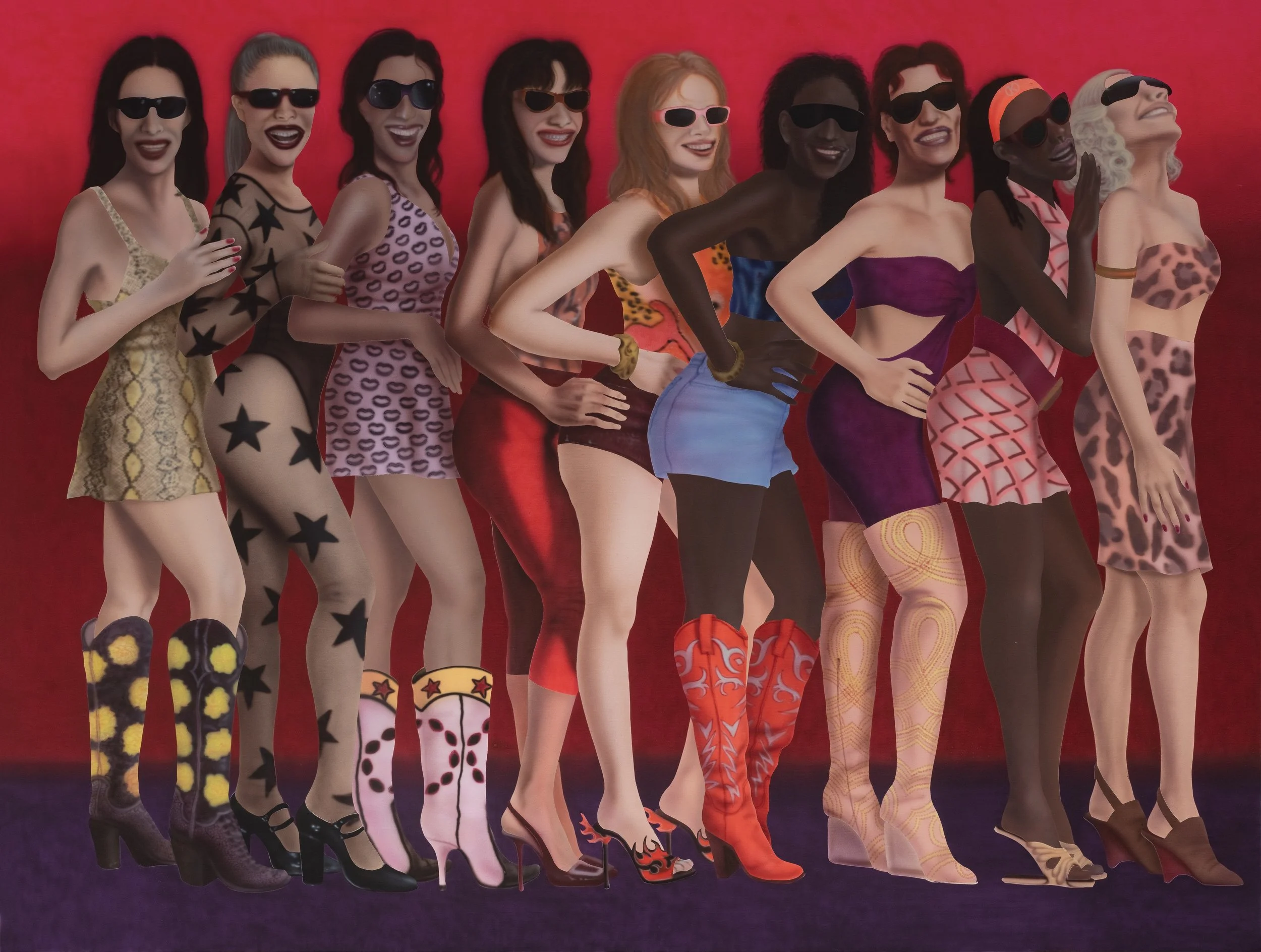
Much of this series captures private moments inside vehicles — reflections on glass, small gestures. Why is the car such a rich space for you emotionally?
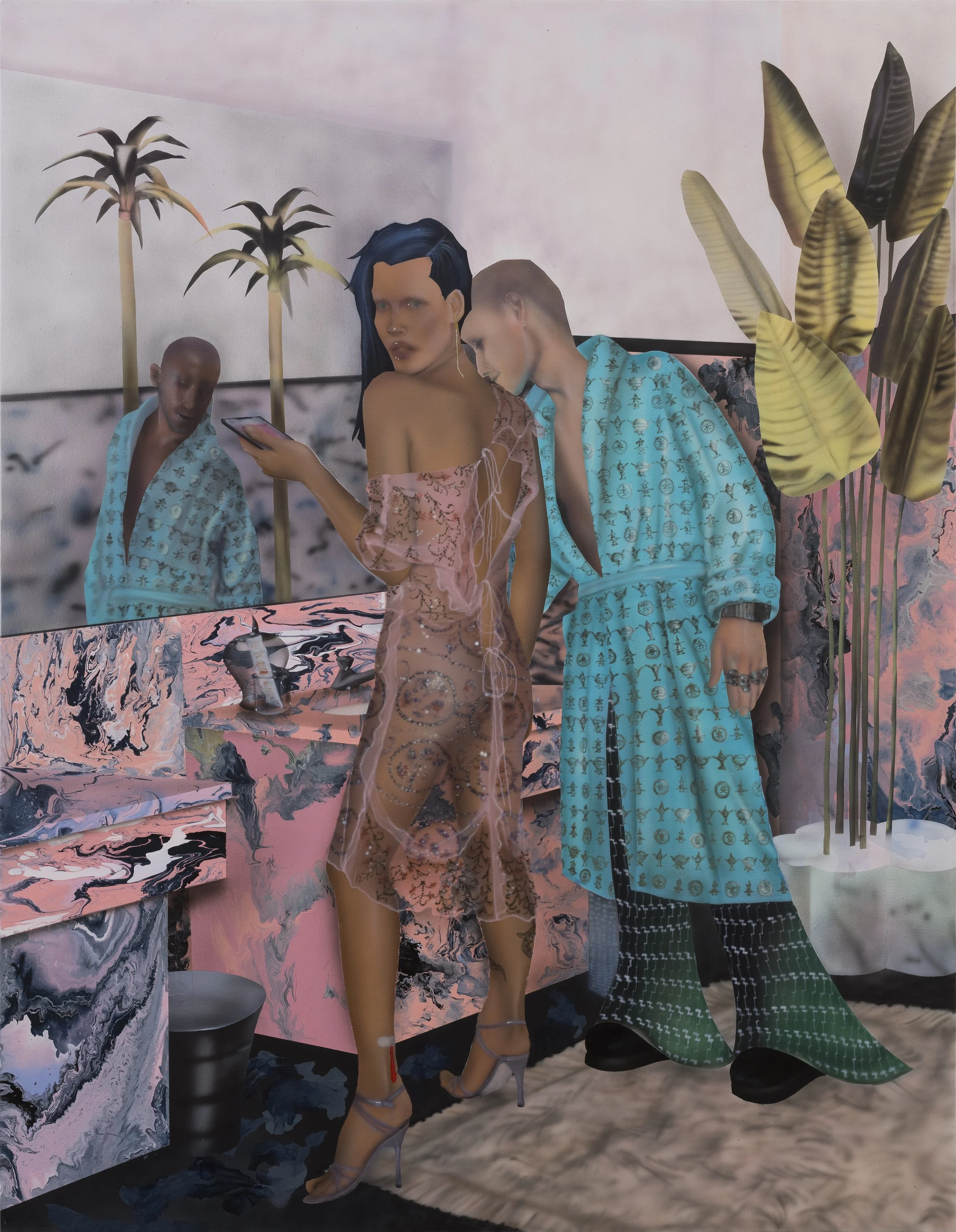
To me, a car is more than a means of transport. It is a mobile private container, an intermediate space between the public world and one’s inner self. This unique quality holds many emotions people cannot show outwardly.
The car shell and windows form a clear physical barrier. Closing the door shuts out the noisy urban streets; external passers‑by, traffic and social identities are temporarily kept at bay. Yet it is not total seclusion. Outside scenes, street‑level light and shadows still project through the glass. Reflections overlay the outside world onto the faces of people inside the vehicle.
It is a subtle condition: the body is sheltered within a private enclosure, while the mind still observes external reality. Home is a place of complete relaxation; the office is a regulated public domain. The car is a third space. Much exhaustion, melancholy, daydreaming and fragile vulnerability do not show up at home, nor in public. They reside inside the car. That is why I keep capturing these private in‑car moments.
The car window is not merely transparent glass. Streetscapes, neon lights and buildings merge with the faces of the occupants. Outer reality is mirrored on the glass, while personal feelings dwell inside the cabin. Reflections fuse external circumstances with inner emotion on a single surface. The bustling city outside represents real‑life circumstances, while the quiet figure inside the car stands for one’s true self. The car becomes a mirror: we witness the rushing outer world while confronting our own loneliness, struggles and yearnings. The louder the outside world, the more prominent the quiet emotion within the car.
You emphasize "the feel of tires moving against the earth." How do you translate a physical sensation like that onto a still canvas?
This is not simply depicting a rolling tyre in motion. It is a bodily physical sensation: the vibration of rubber grinding against pavement, tremors of friction, the weight pressing down, and the constant impact of movement. A canvas is a static flat surface. Instead of using simple motion‑blur effects, I translate fleeting physical impact into perceivable static imagery through material texture, light and shadow, composition, traces of wear, symbolic metaphor and emotional tension within the picture.
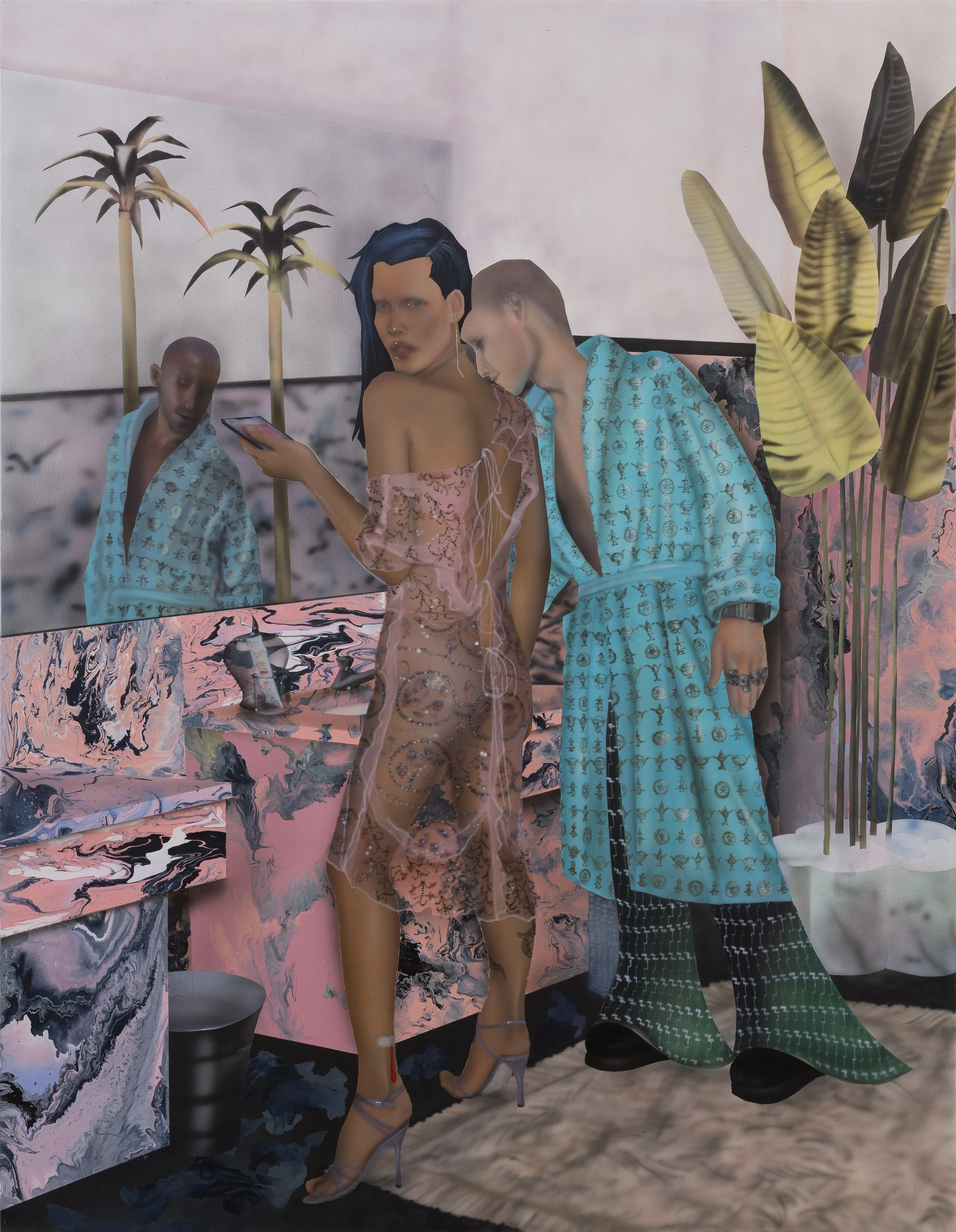
"In Motion" felt like an evolution from your earlier, more atmospheric style toward sharper detail. What prompted that shift?
This shift does not mean abandoning my past work; it is a contraction of grand allegories inward. I no longer observe the world through a mythological filter, and instead engage directly with contemporary everyday reality. I move away from depicting dramatic group revelry, to focusing on the subtle, solitary moments of the individual.
Mythological motifs recede, yet my inquiries into desire, displacement, and humanity’s constant forward motion continue, realised through tyres, car windows and fleeting physical gestures within ordinary objects.
Walk us through how a painting begins — do you start from an image, a feeling, or a scene you've observed?
I tend to work logically. First I define the theme for an entire body of work, then I develop pieces around that theme. Images, feelings or observed real‑world scenes can all be starting points for a painting, as long as they connect to the established theme.
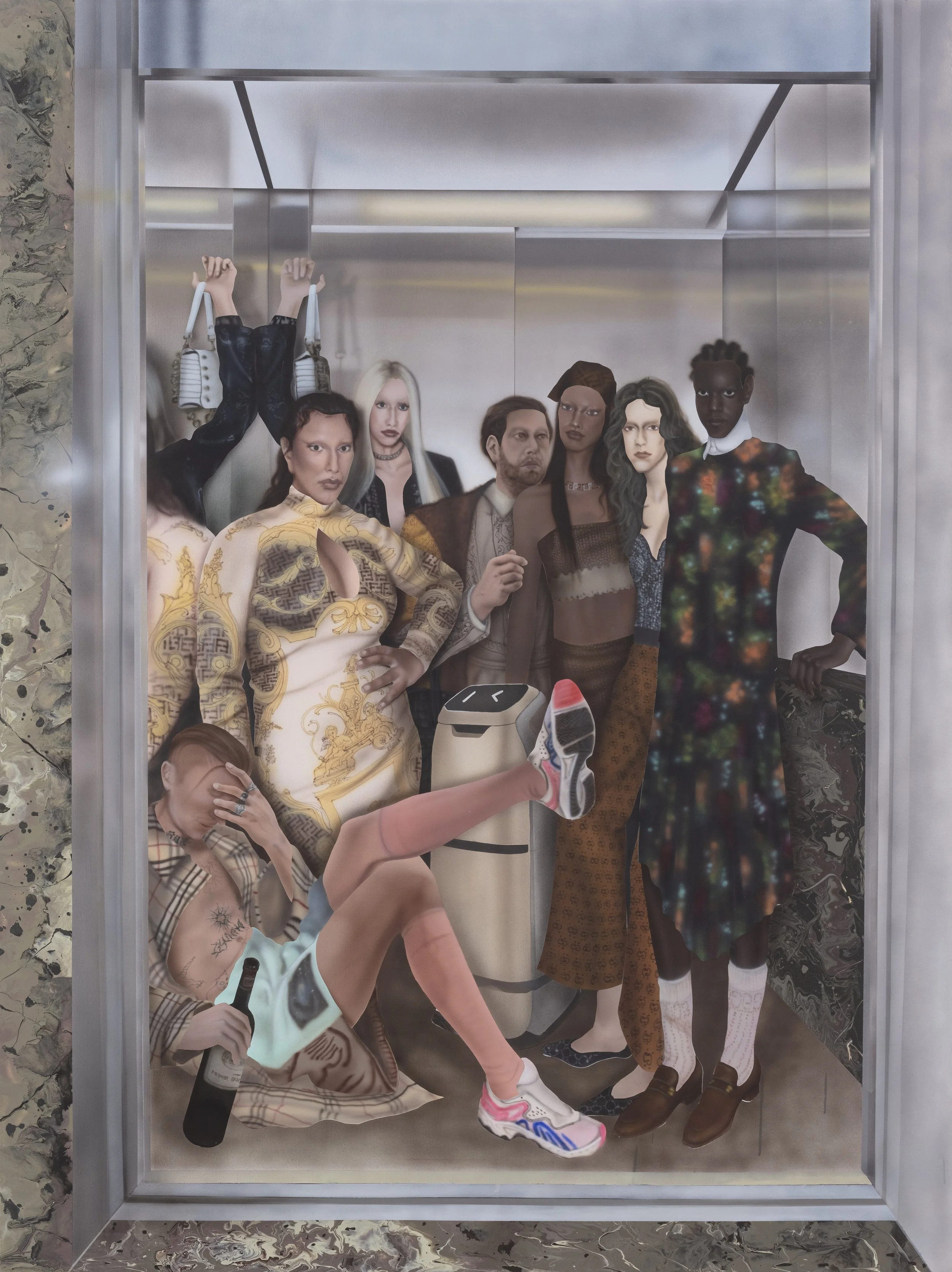
How do you decide when a work is finished?
For me, a painting may never be truly finished. The physical “completion” happens when it leaves my studio for an exhibition or enters a collector’s home.
What role does everyday life and observation play in your studio practice?
I place great importance on maintaining a consistent working rhythm. This keeps my sensitivity sharp and prevents me from becoming disconnected from the world around me.
A lot of your work sits between the ordinary and the surreal. What interests you about that tension?
I am drawn to drama, and much of that drama resides within this very tension.
Recurring characters and motifs show up in your work — how do they evolve over time?
They serve the themes of my works: desire, movement, human condition, progress and displacement.

What are you exploring next? Is there a subject or direction you're eager to move into?
I am leaning toward more abstract and inner‑feeling‑driven work. I am also experimenting with incorporating more materials, such as oil paint and modelling paste. I majored in film and animation for my undergraduate degree, so I still hold a filmmaker’s heart.
Showing at WOAW Gallery in Hong Kong and appearing at fairs like Art Basel — how has that visibility shaped your practice?
It reminds me to approach my creative work with greater clarity and caution.
What do you hope people take away when they stand in front of one of your paintings?
I hope that long after viewing my work, they will occasionally think back to it, even if they forget who the artist is.