Between Order and Entropy: Zhou Song on Painting the Posthuman Condition
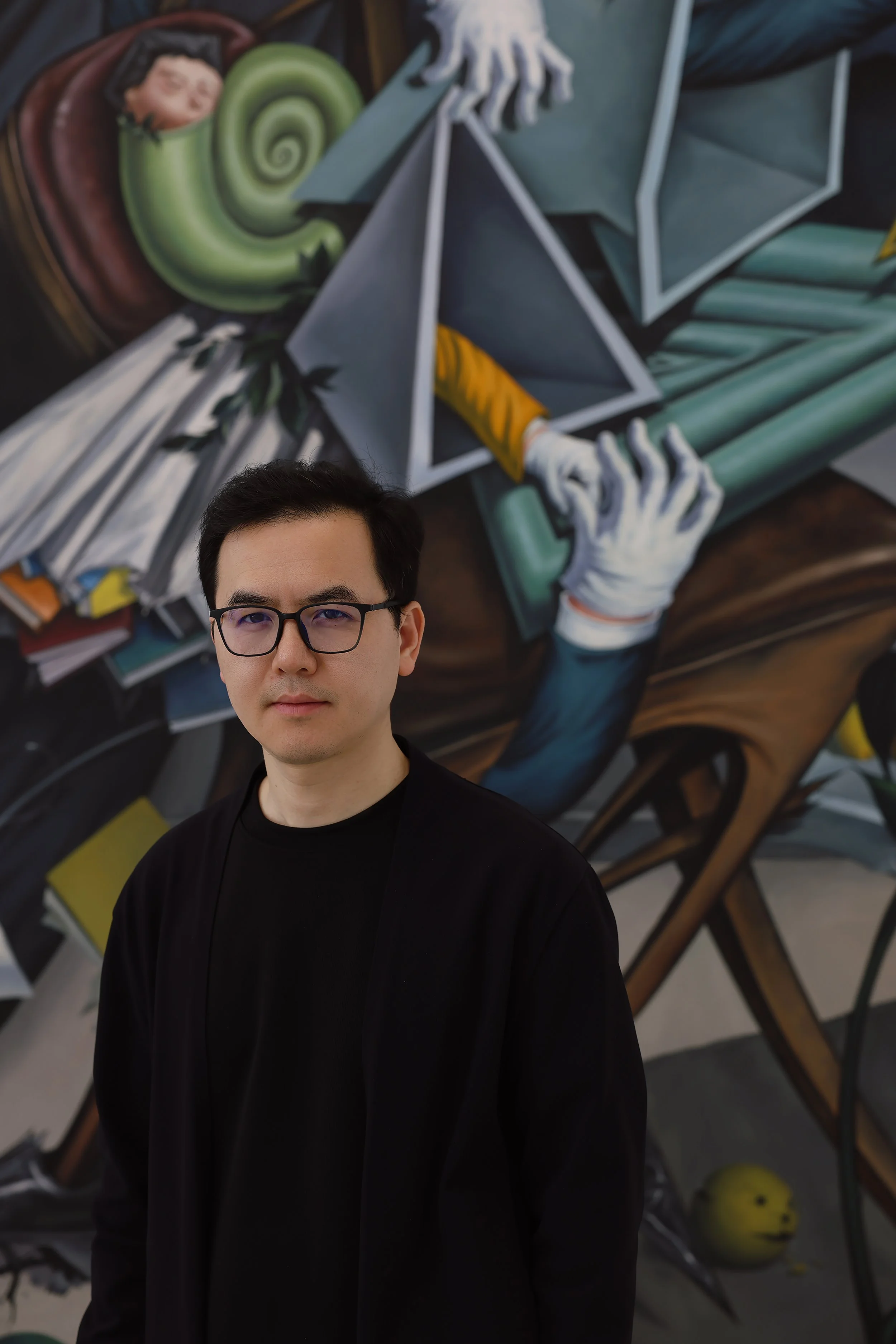
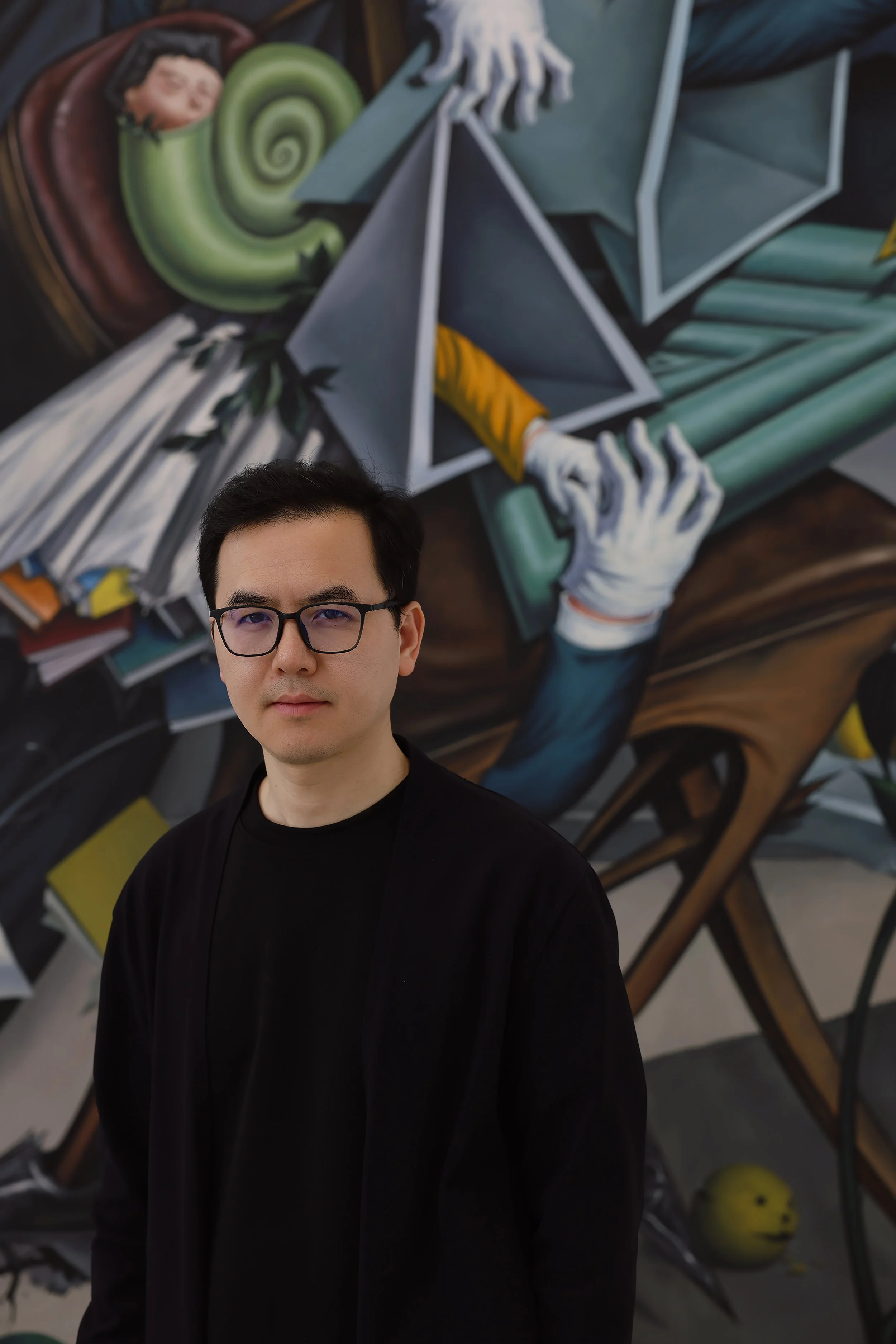
Born in 1982 in Jiangxi Province and trained at the Tianjin Academy of Fine Arts, Chinese artist Zhou Song has built a practice that refuses easy categories. His paintings — layered, restless, perpetually unresolved — navigate the charged territory where machine aesthetics meet biological form, where Eastern philosophy intersects with questions of artificial intelligence and cosmic scale.
With works held in collections from Harvard's CAMLab to the Fondazione Benetton, and a forthcoming solo exhibition at the National Gallery of Modern and Contemporary Art in Rome, Zhou Song has become one of the most compelling voices in contemporary painting. In this interview, he speaks about contradiction as a working method, the emotional landscape of the posthuman, and why a painting that feels too certain no longer interests him.
You were born in 1982 in Jiangxi Province and studied at the Tianjin Academy
of Fine Arts. What vision of art were you taught there — and how did you move
away from it?
At the academy, I received rigorous training in painting, including form, structure, color, and the control of materials. That foundation was very important to me, as it taught me how a painting is constructed.
Later, I gradually realized that painting does not have to remain at the level of technique or representation alone. It can also reorganize reality and even create new spiritual spaces. This led me to bring philosophy, science, cosmology, and posthuman questions into my work.
You graduated with first prize in 2006. Did you already have such a singular worldview back then, or did the conceptual depth of your practice develop later?
At that time, I already had certain intuitions, but they had not yet developed into the clearer system I have today. Through reading, travel, and continuous artistic practice, I gradually became more interested in artificial intelligence, entropy, cosmic structures, and Eastern philosophy. These concerns did not suddenly enter my work; they emerged slowly over many years of creation.
Your work sits at the intersection of art, science and philosophy — three
disciplines that rarely talk to each other. How did you arrive at that particular
crossroads?
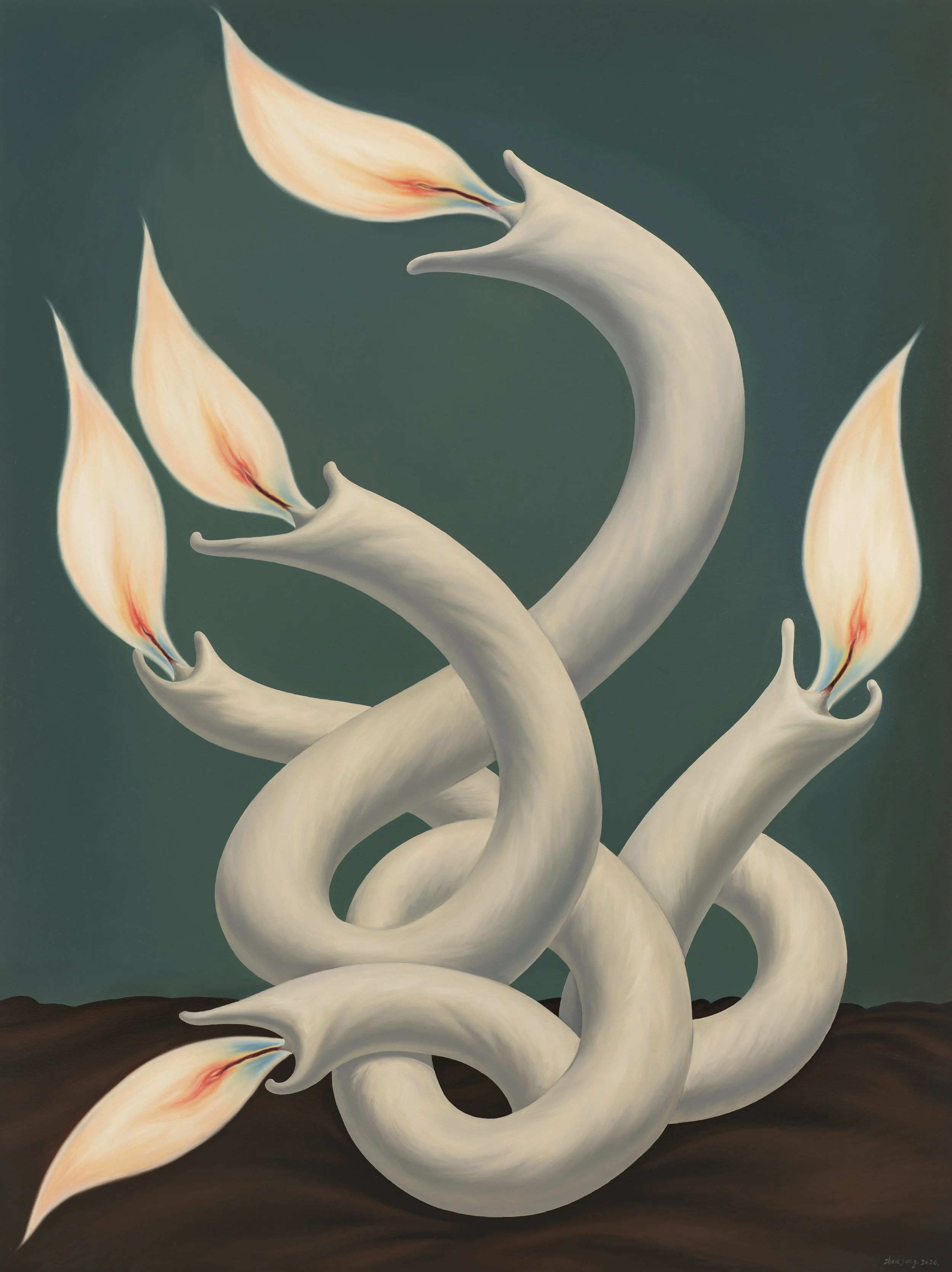
I have always felt that art, science, and philosophy are not entirely separate fields. Science attempts to understand the structure of the universe, philosophy asks questions about existence and consciousness, while art can transform these questions into sensory experience. I do not use painting to explain science.
What interests me more is how these ideas reshape human psychology, desire, and imagination.
You describe your paintings as exploring “machine aesthetics and biomorphism” In concrete terms, what does that look like in the studio — how do you build an image?
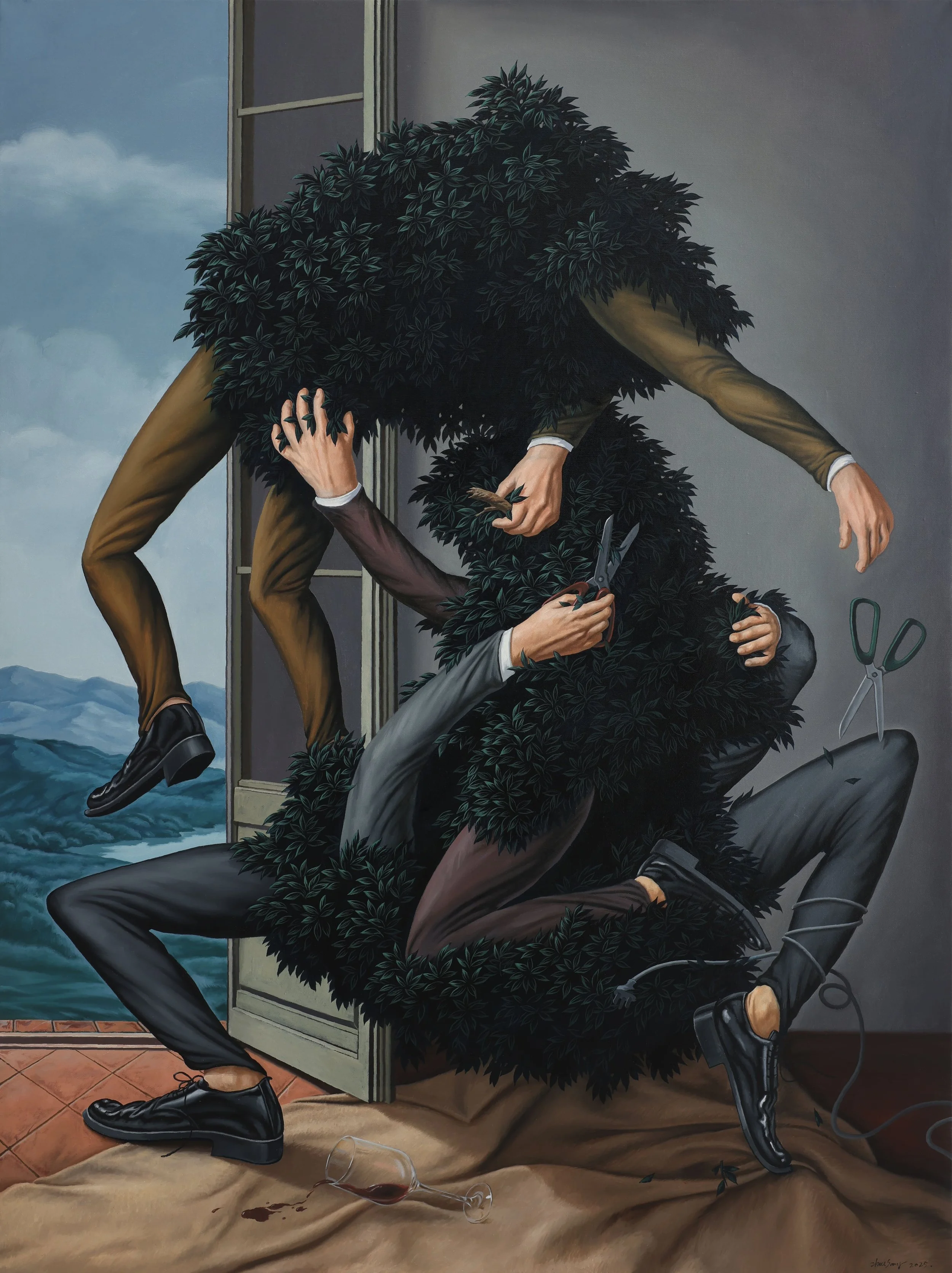
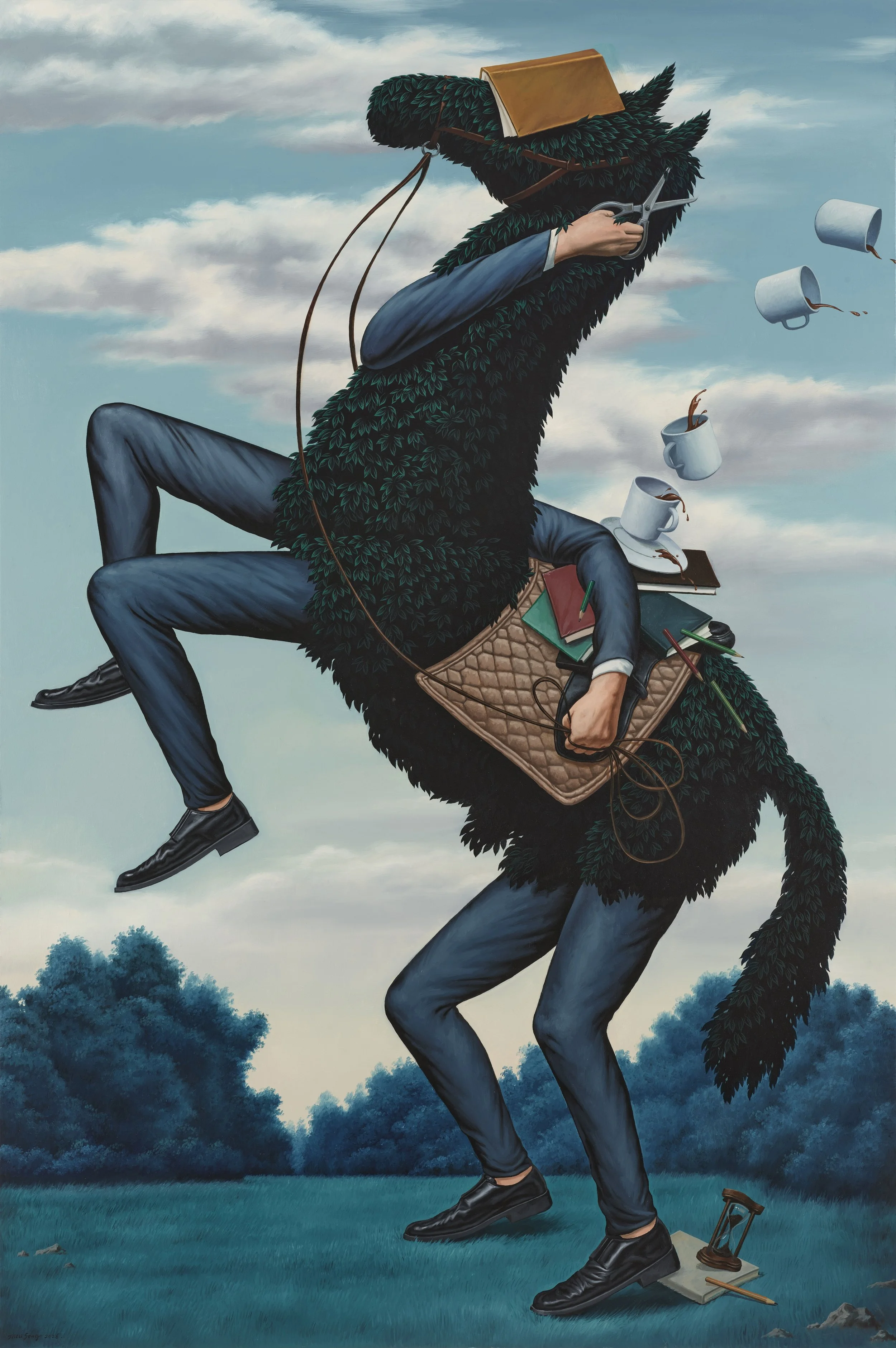
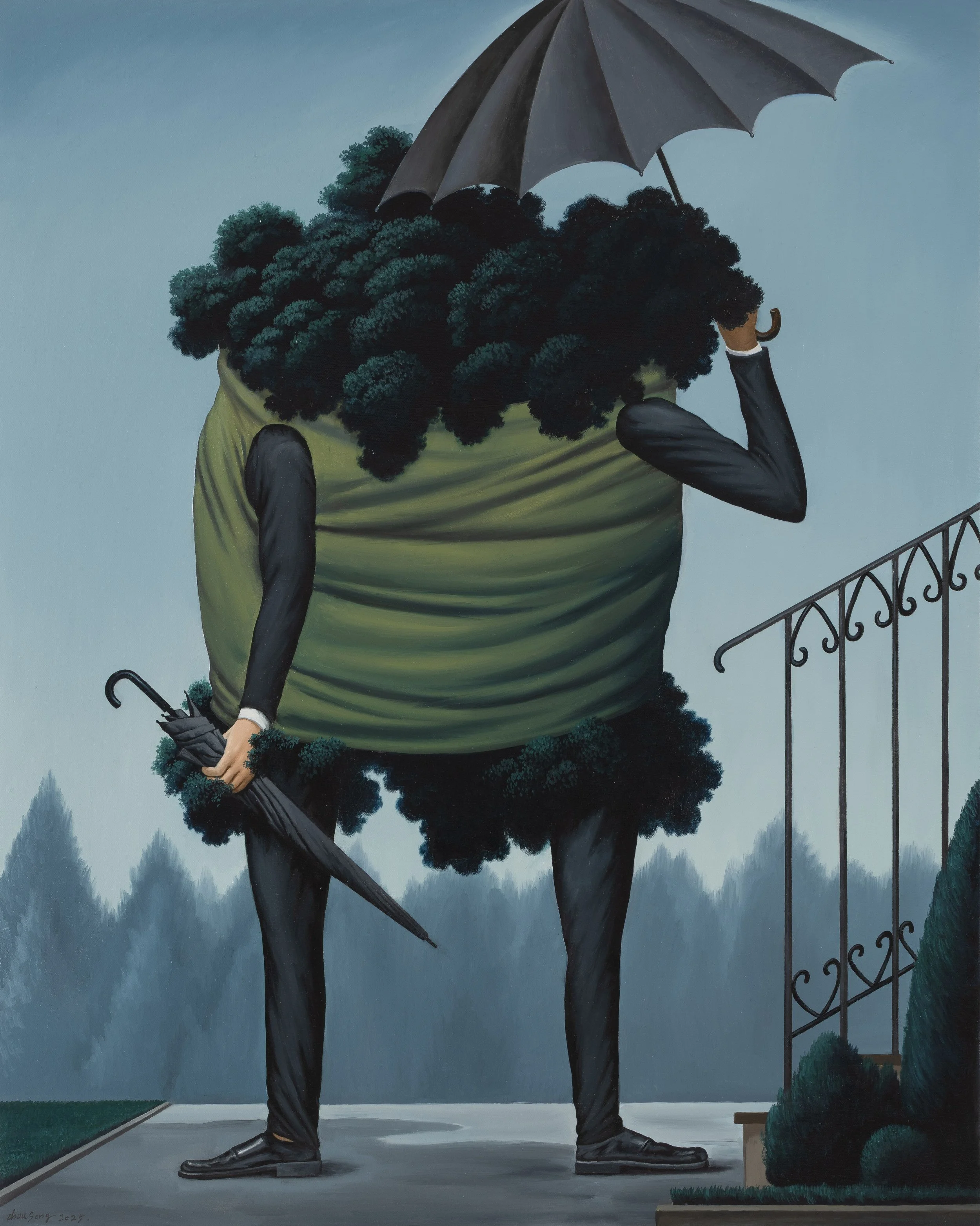
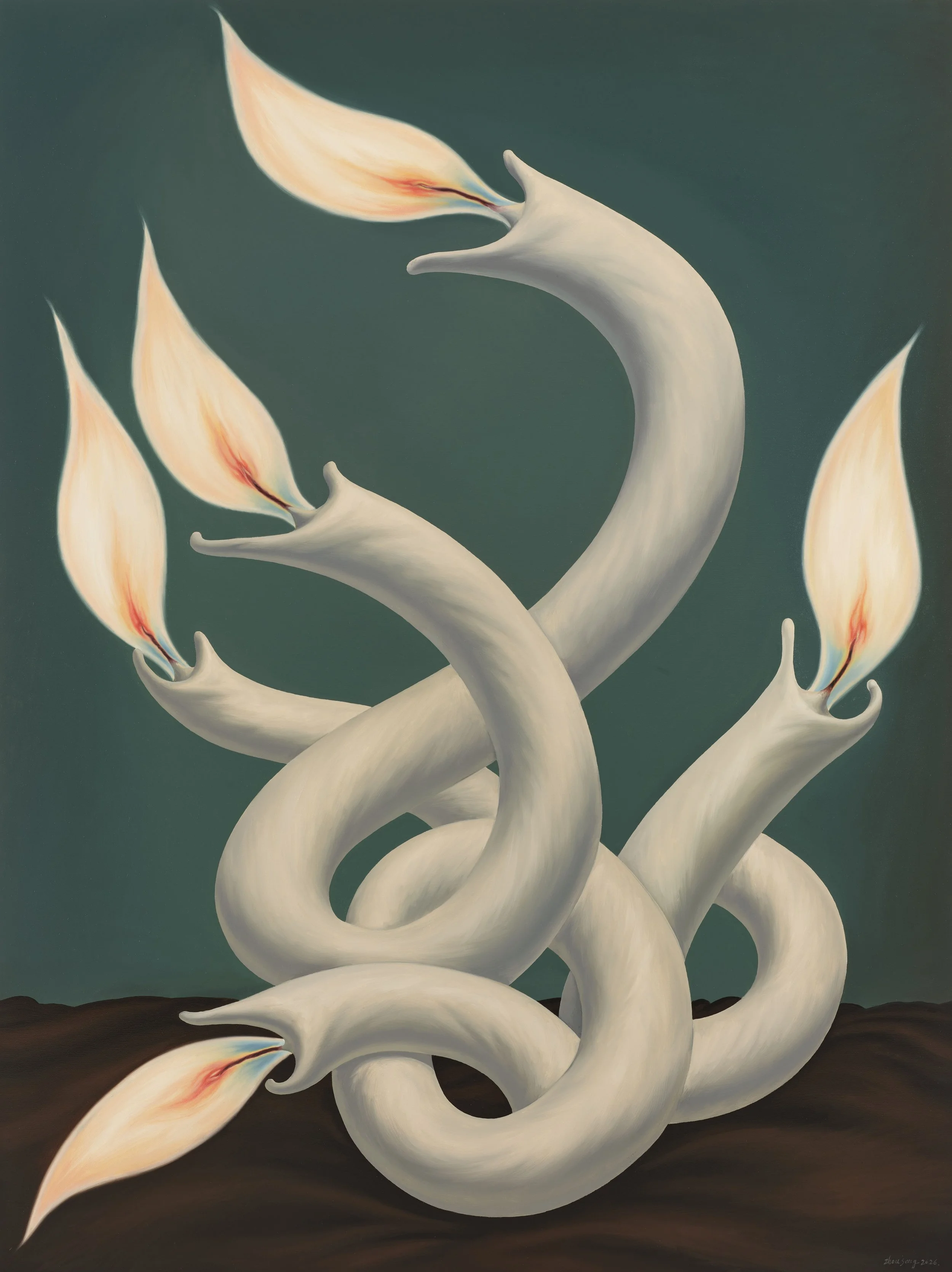
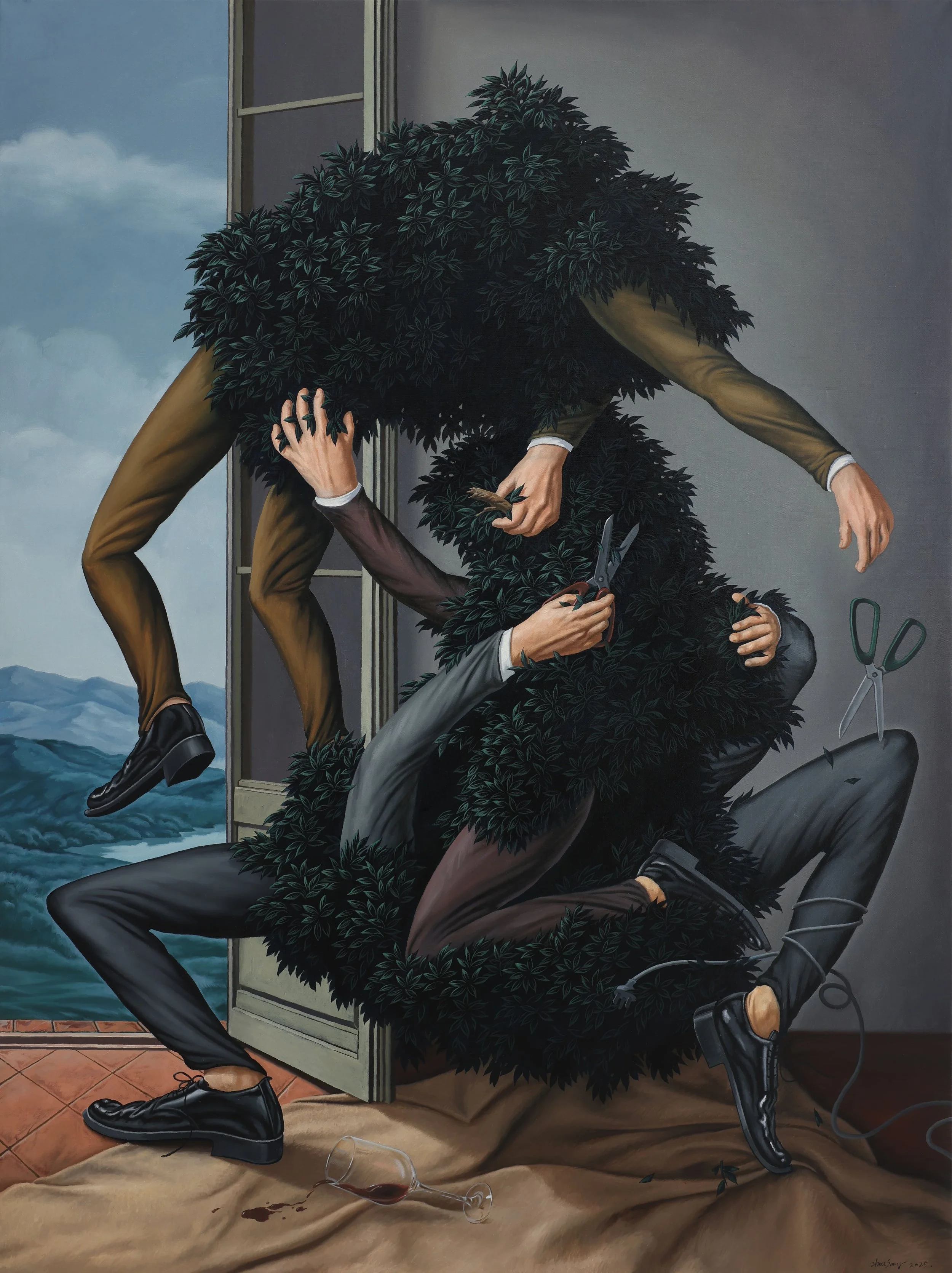
My paintings often begin with many fragments: mechanical structures, microorganisms, architecture, cosmic imagery, or accidental traces. During the painting process, the boundary between the mechanical and the biological gradually begins to blur. I constantly cover, disrupt, and rebuild the image, allowing it to resemble a living system that is still evolving.
Your paintings “thrive in a state of contradiction and openness” — that’s how
you put it yourself. What does contradiction feel like as a working method?
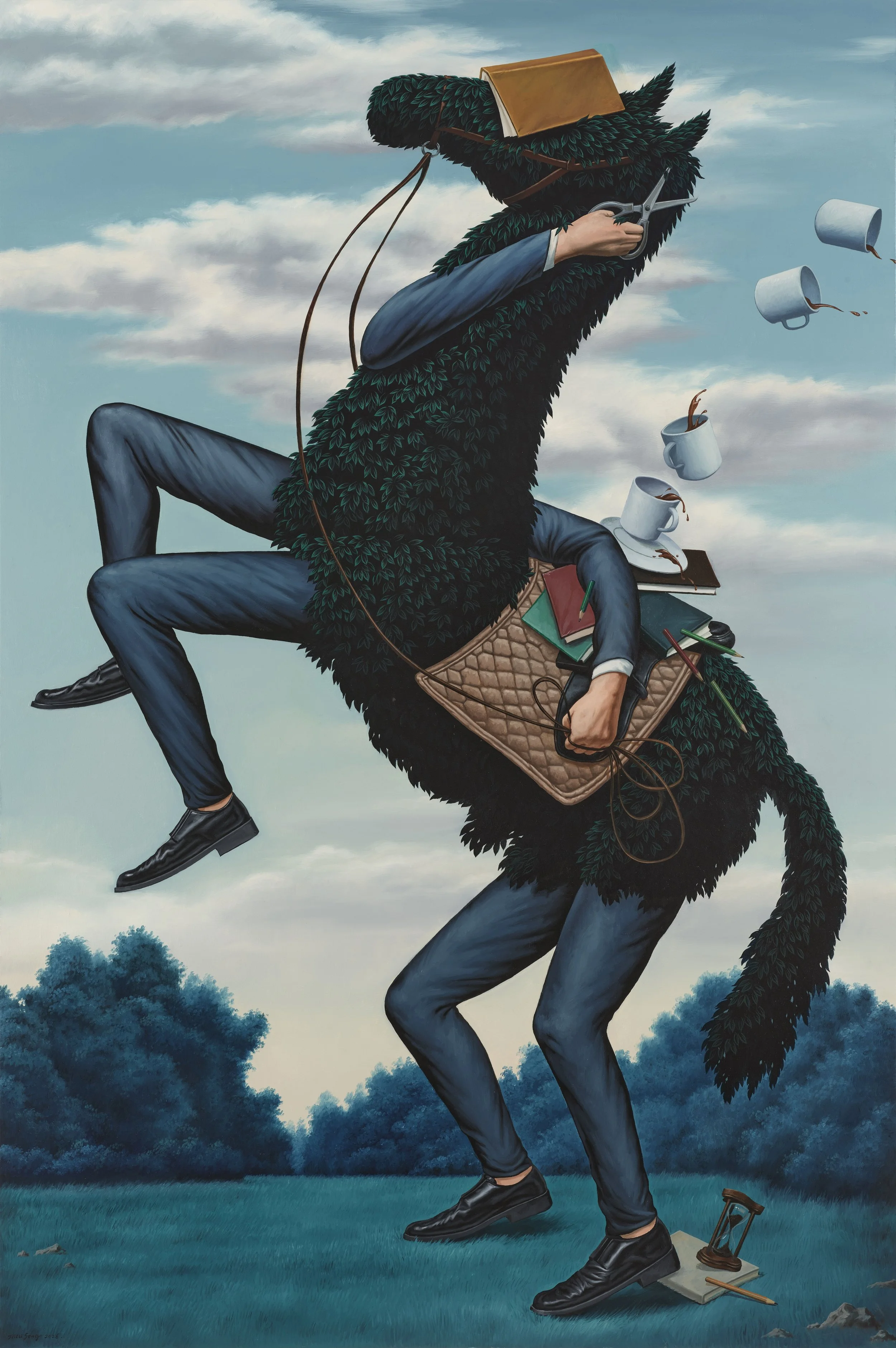
If a painting feels too complete or too certain, I tend to lose interest in it. I want the image to retain a certain tension, such as the relationship between order and chaos, elegance and anxiety, or machinery and life.
I believe these contradictions also reflect the psychological condition of contemporary life.
Your works imagine futures that are “at once posthuman and deeplyhumane” How do you hold those two things together in a single canvas?
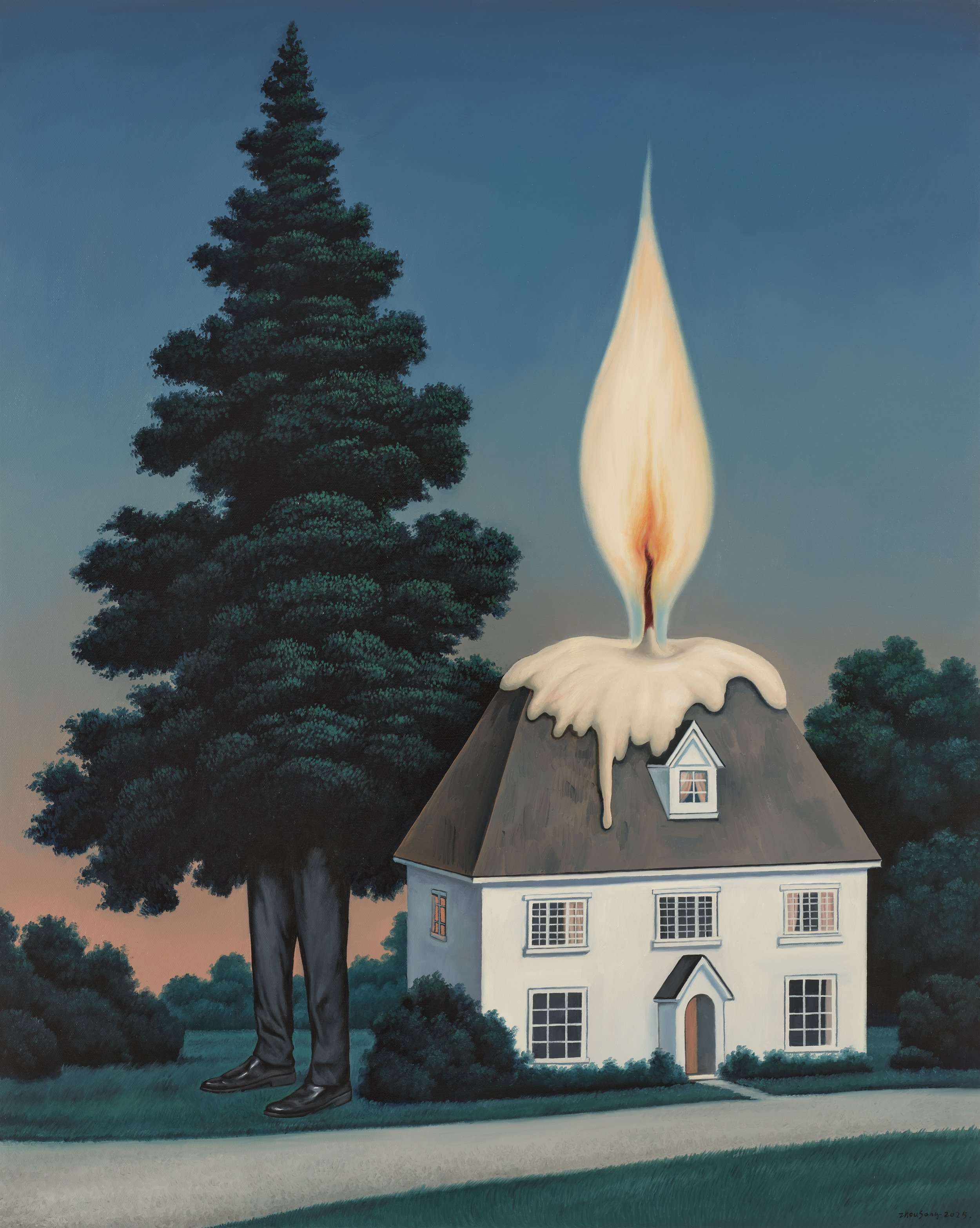
I do not believe that the posthuman means the disappearance of humanity. Even if the future is deeply shaped by AI and machine systems, human loneliness, desire, memory, and vulnerability will still remain. So when I paint technologized spaces, I continue to preserve a certain human sensitivity within them.
You have three distinct series — “New Nature”, “Entropy”, “Red Field”;What is each one asking that the others can’t?
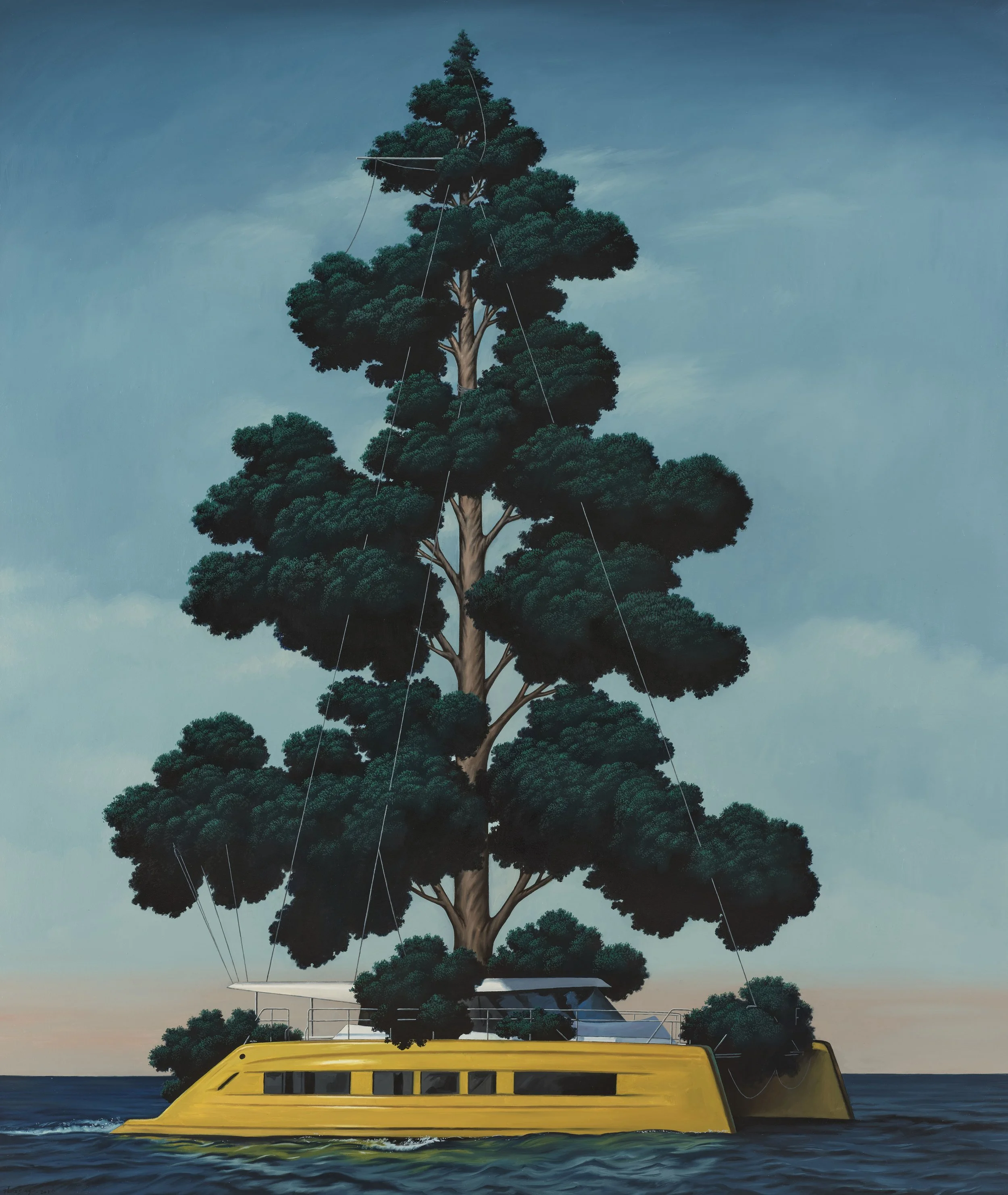
Red Field is more closely connected to human psychology and emotional states. Entropy focuses on the disintegration of order and the instability of systems. New Nature moves toward questions of technology, artificial intelligence, and future ecology. Together, they form a trajectory that extends from inner consciousness to future civilization.
You often question the impact of the universe’s constant expansion on human
desire and destiny. How do you translate something so abstract and cosmic into a
painted image?
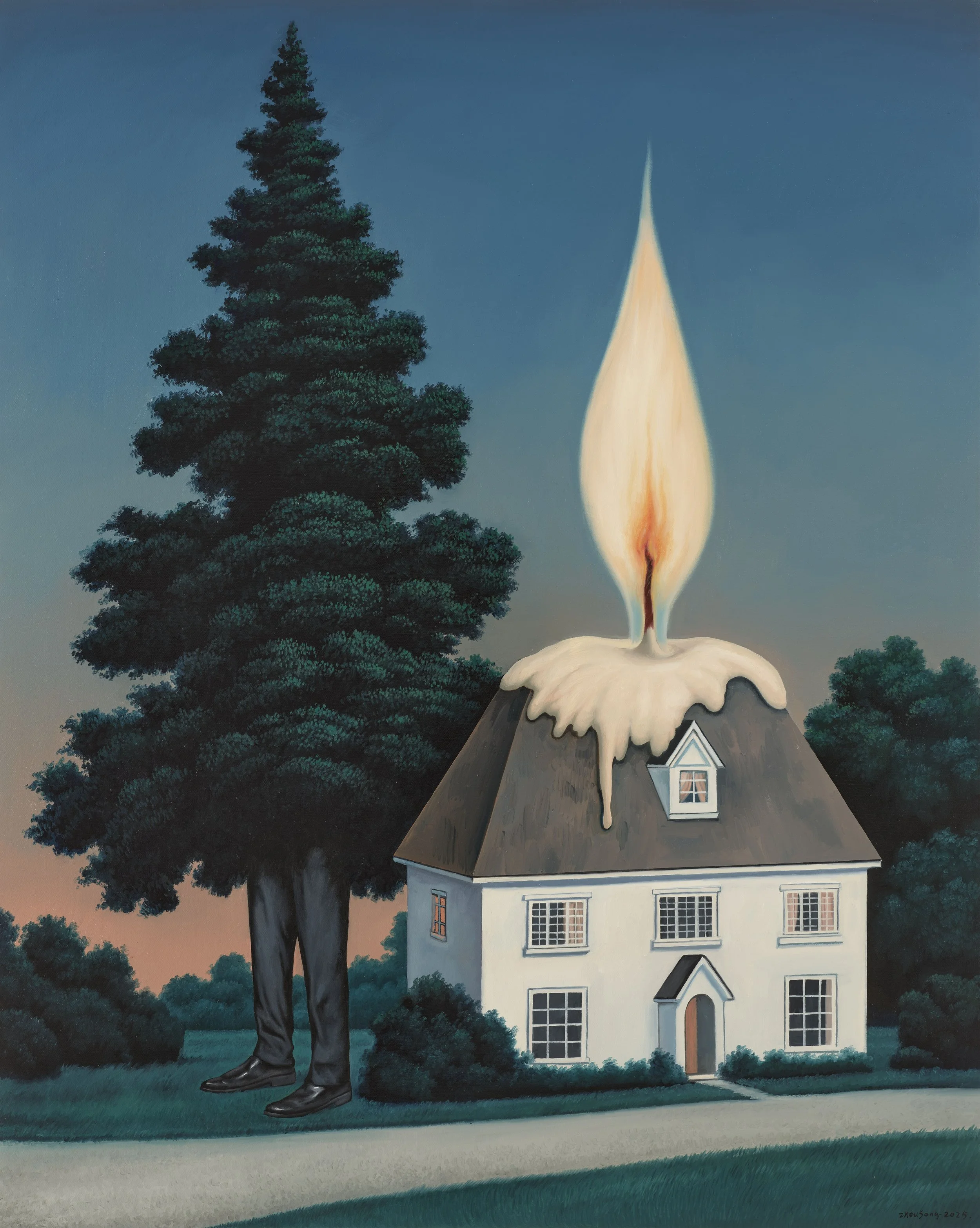
I do not paint the universe directly. Instead, I paint the human experience of standing before something vast and unknown.
Through spatial depth, floating structures, a sense of gravity, and fragmented forms, I try to create a state in which the viewer feels both drawn in and unsettled.
Your titles — “The Black Hole”, “Gravity”, “Walking on Thin Ice”, “An Escape to the Moon” — suggest existential anxiety. How would you define the central emotion you want to provoke?
I am not interested in creating pure pessimism. What concerns me more is a sense of uncertainty, in which awe, curiosity, anxiety, and vulnerability coexist. I believe this reflects a spiritual condition that many people share today.
You work across painting, sculpture, video and installation. Does painting
remain your primary language, or are you pushing toward something else?
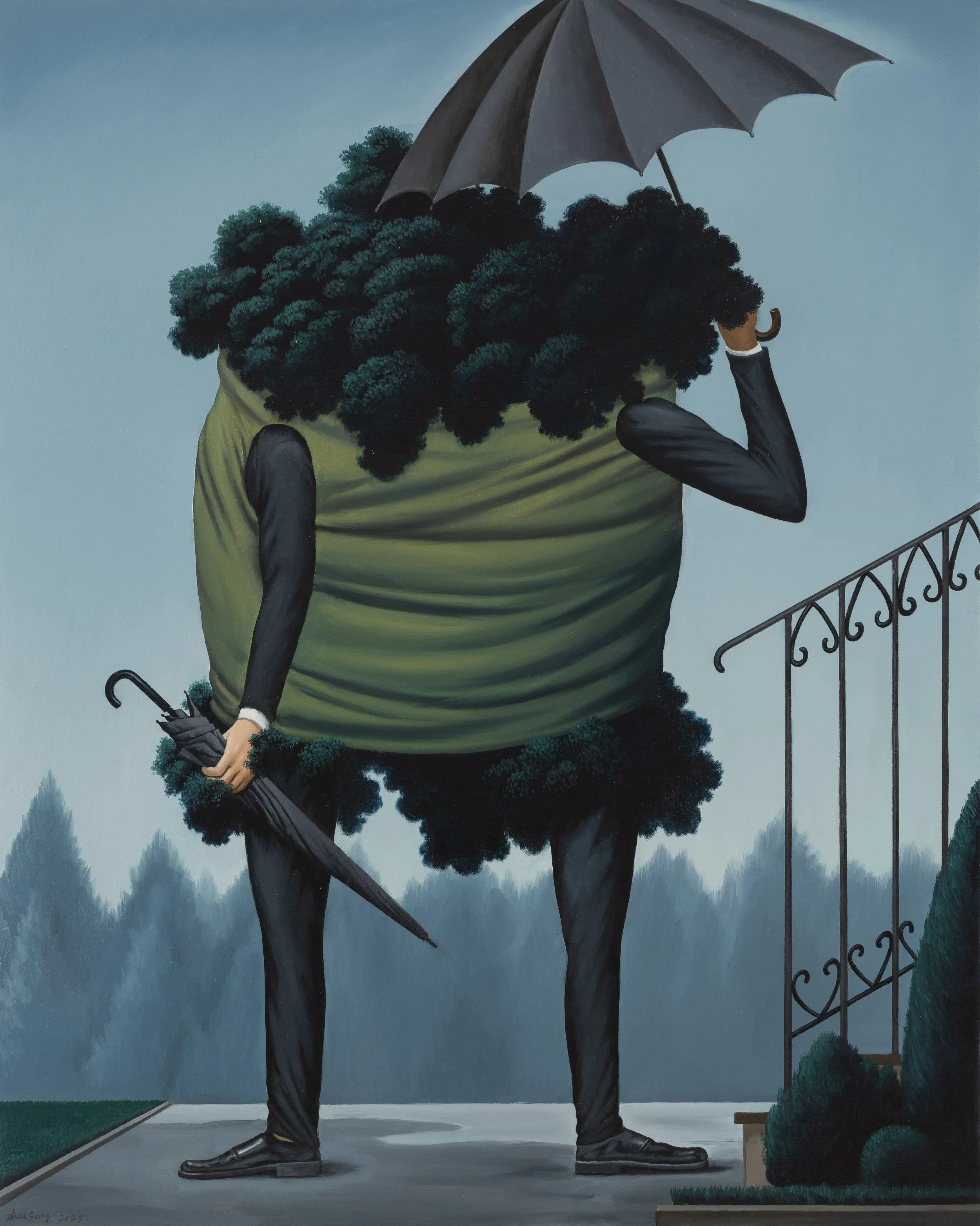
Painting remains my central language. At the same time, I want these images to enter real space, so sculpture, installation, and video have gradually become part of my practice. They do not replace painting; rather, they expand its spatial possibilities.
Your mirror-polished stainless steel sculptures contrast sharply with the painted surface of your canvases. What kind of dialogue are you seeking between these two radically different materials?
Painting is closer to an inner world, while mirror-polished stainless steel suggests an external system. Yet when viewers stand before the sculptures, they are reflected into the work itself. I hope these two forms create a dialogue around reality, the body, and technology.
Your work is held at Harvard’s CAMLab, Fondazione Benetton, Osthaus Museum — a wide range of institutional contexts. Does knowing where a work ends up change how you think about making it?
To some extent, yes, though it does not determine the work itself. I do not think about where a piece will eventually go while I am making it. However, when works enterdifferent institutions, I become aware that they are also entering different cultural and intellectual systems.
You’ve shown everywhere from Rome to Toronto, Budapest to Peru. Is there
a country whose response to your work genuinely surprised you?
What has surprised me is that viewers from very different cultural backgrounds often resonate with the sense of futurity and existential presence in the work. Their points of entry may differ, but many of them respond to the broader condition of being human.
You live and work in Beijing but exhibit globally. Do you feel any tension between being rooted in China and the international reception of your work?
Yes, there is a tension, but I do not necessarily see it as negative. I do not want to turn “Chineseness” into a visual symbol. Instead, I hope to begin from within Eastern philosophy and address global questions about technology, the future, and the human condition.
How do you bring traditional Chinese philosophy into a conversation about AI, posthumanism and the cosmos — without it feeling like a stylistic gesture?
For me, Eastern philosophy is more a structure of thought than a visual ornament. I hope it becomes an internal operating logic within the work, especially through ideas of change, cycles, and relationality.

You have a forthcoming solo show at the National Gallery of Modern and
Contemporary Art in Rome. What does showing in a classical institution like
that mean for work that’s so focused on the future?
Rome carries an extraordinarily deep history of civilization, while my work is concerned with the future and the posthuman condition. When these two temporal dimensions are placed together, I believe they can create a very compelling dialogue.
After “New Nature” and “Entropy” — what’s the next question your work is trying to answer?
I am becoming increasingly interested in the question of consciousness itself. As AI begins to participate in the production of images, language, and even emotion, how will human beings redefine the self, the body, and memory? This is the direction that interests me most now.
If you had to explain your work to someone who had never seen it — in a single sentence — what would you say?
Through painting, I seek to reconstruct imagination and explore the spiritual landscape of human civilization and consciousness in the posthuman age.